
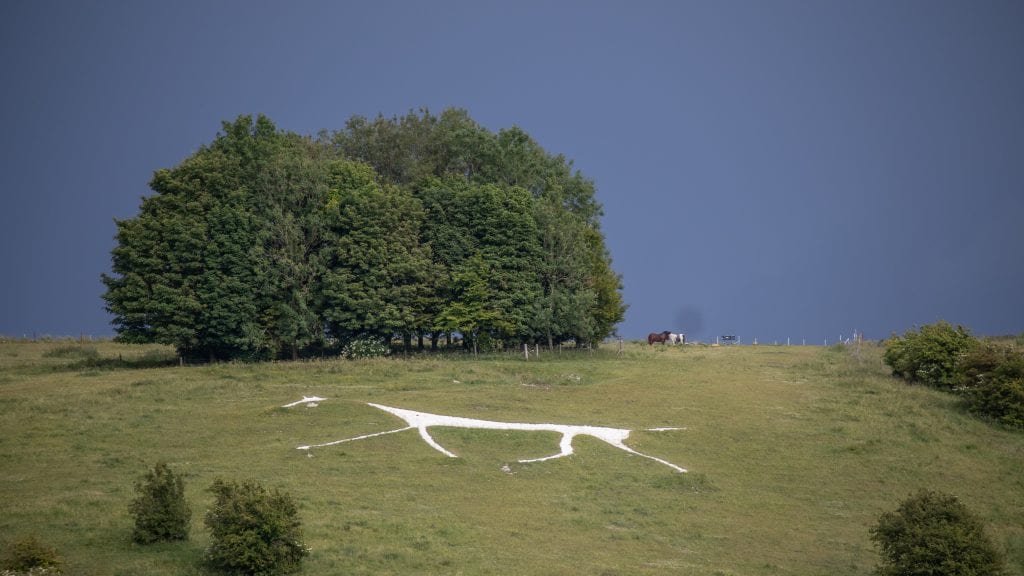
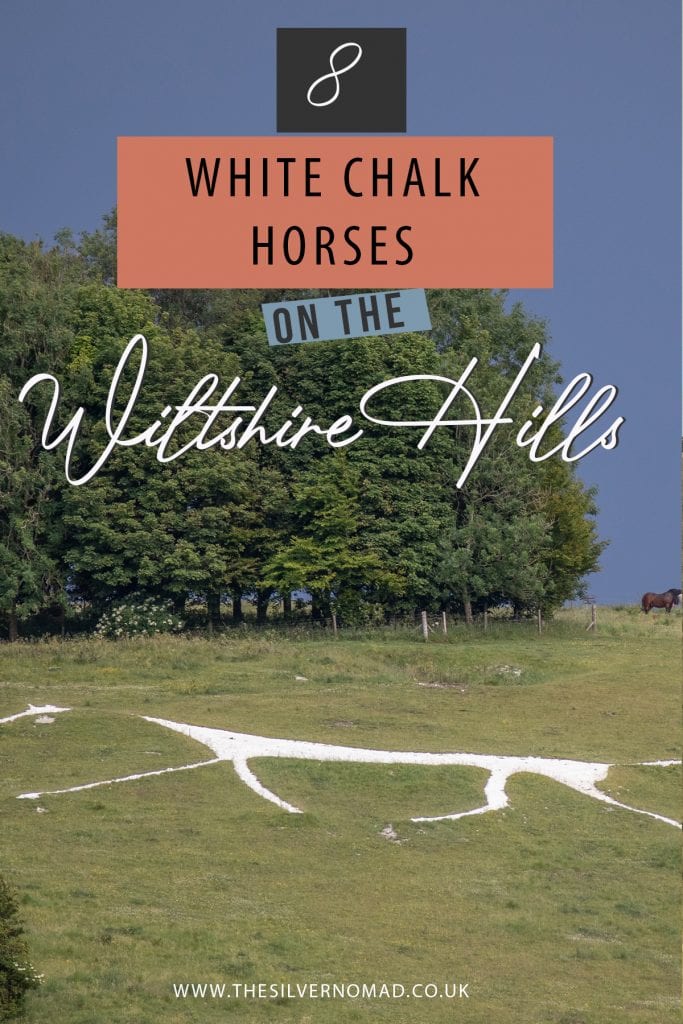
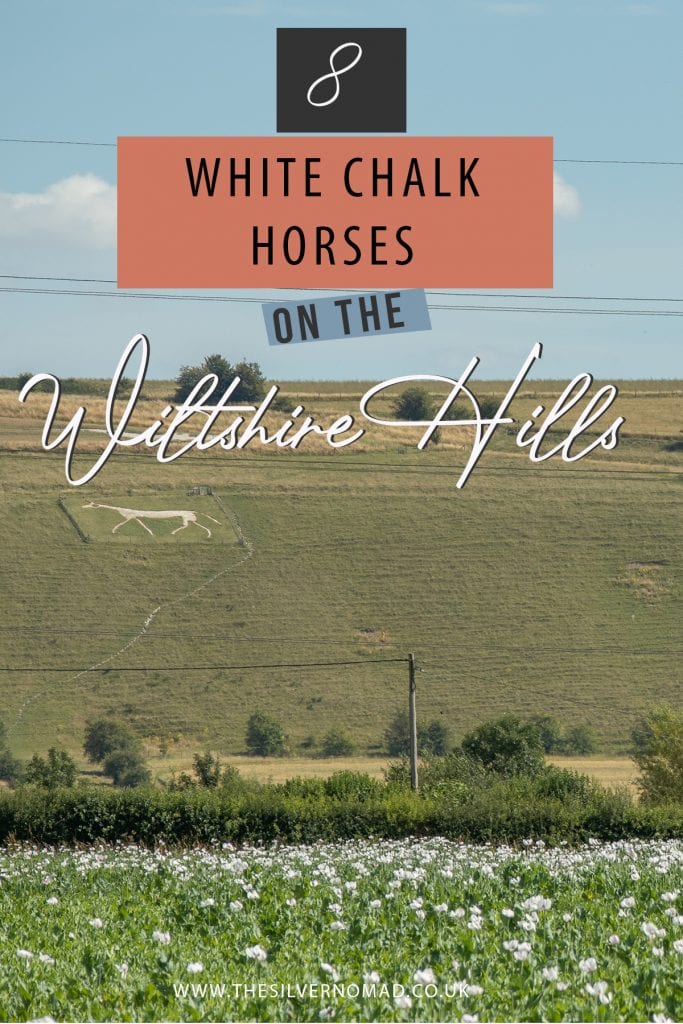
Wiltshire in the south west of England is renowned for its rolling green hills, honey coloured villages and ancient woodlands. Here and there you will see patches of white chalk shining through the hills. Over the years around thirteen white horses have been carved out of the chalk. Out of that thirteen, only eight white chalk horses are still visible today. The ones that have been lost have not been maintained or washed away by the rain on the hillsides.
Unless you know where to look, you may drive past without noticing them, some partially hidden by trees or at the wrong angles to the roads. Most of the white chalk horses are better seen from far away, or from the air, but you can walk along paths to see them.
*This site uses affiliate links and I may earn a small commission when you use my links and make a purchase without incurring an additional fee yourself.
Thank you for supporting this website. See my disclaimer page for more details.
It is a misconception that these white giants stepping across the hills of Wiltshire are ancient monuments but actually most have been carved in the last few centuries, the earliest in the 18th century.
Walking the White Horse Trail
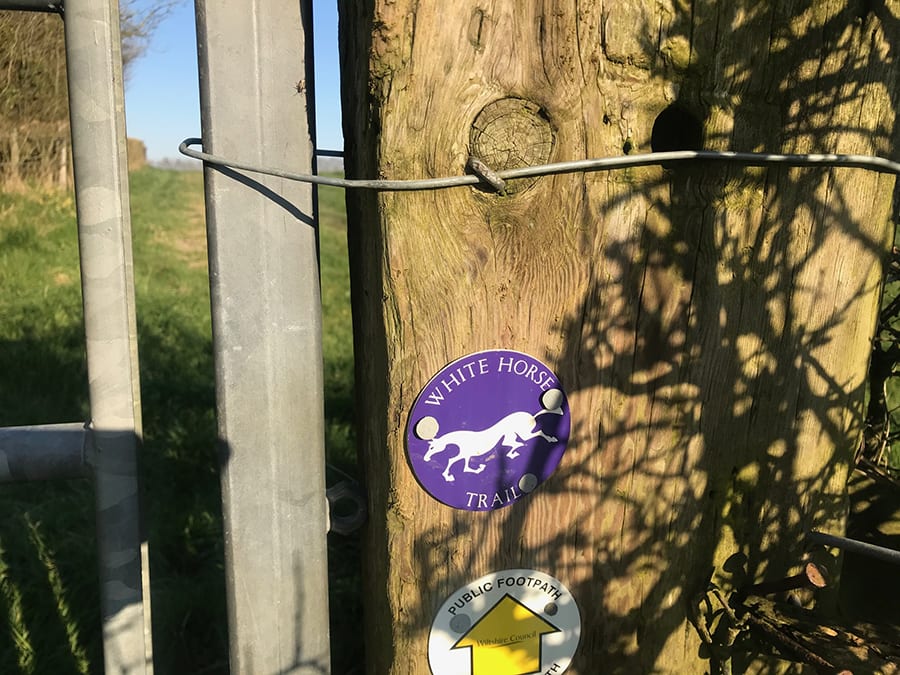
The White Horse Trail takes you on a 90-mile route around the Wiltshire countryside to see all eight of the horses. You can either do it over six or seven days, or as a series of shorter walks. The route takes in part of The Ridgeway, goes past Avebury Stone Circle, the market towns of Devizes and Marlborough in a loop.
The trail is marked by white horse markers and tend to follow public footpaths.
Wiltshire’s White Chalk Horses in Date Order
Westbury Hill White Horse, Bratton Camp (1778)
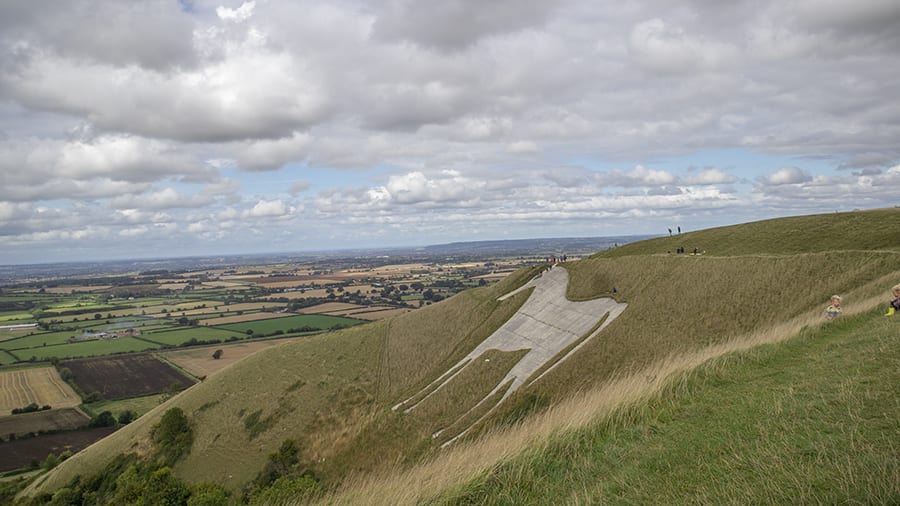
The Westbury Hill Chalk Horse (1778) is the oldest of the White Chalk Horses in Wiltshire and one of the best. It is on the side of the English Heritage site of Bratton Camp, an Iron Age Hillfort. The Bratton white horse may have been originally cut into the side around 400 years ago. This may have been to commemorate the Battle of Ethandun, King Alfred’s victory over King Guthrum of East Angles in May 878 AD.
On closer look, you will notice that the horse does not look as if it is made of chalk. Originally it was, and had to be scoured – a method of rechalking – to keep it pristine and white. The last recorded time the Westbury horse was scoured was in 1853. To preserve the horse it was covered in white-painted concrete in the late 1950s.
Near to the town of Westbury, Bratton Camp and the Westbury White Horse make a pleasant day out, walking around the hillfort and barrows and burial mounds, and seeing the horse. There is plenty of parking next to Bratton Camp and when the wind is up, kite flyer and model aircraft fill the skies.
Address: Port Way | Bratton | Westbury BA13 4TA
Cherhill White Horse, (1780)
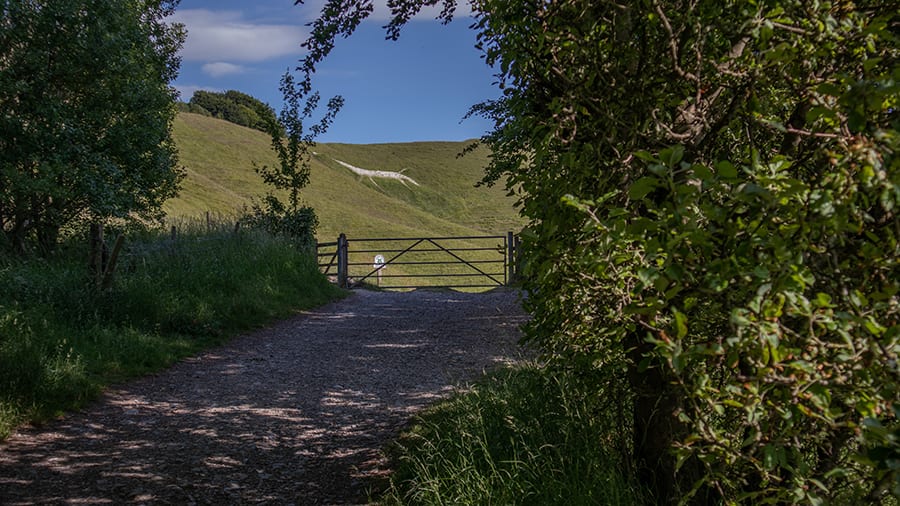
Depending on which way you are driving down the A4, you might miss seeing the Cherhill horse on the hill. Just to the east of Cherhill village, on the edge of Cherhill Down, the white horse was first cut in 1780 and is the third oldest white horse in the country. If the story is to be believed, Dr Allsop directed the layout by shouting instructions through a megaphone from the road!
Sitting just under the Oldbury Castle Iron Age earthworks, the Cherhill Horse – also known as the Oldbury White Horse – is a short walk along the footpaths from the road up to the site. The horse is 131 feet (40 metres) long and 142 feet (43 metres) high. Cherhill White Horse was restored by Cherhill Parish Council in 2002. 150 tonnes of natural graded chalk and 900 metres of timber were used in the restoration.
Cherhill Down is a Site of Social Scientific Interest (SSSI) due to the range of chalk downland flowers and plants found in the area.
There is parking in lay-bys on both sides of the A4, just please be careful crossing the road as it can be very busy.
If you want to continue exploring local landmarks, Silbury Hill and the amazing Avebury Stone Circle is closeby.
Address: Calne | SN11 8XY
Marlborough White Horse, (1804)
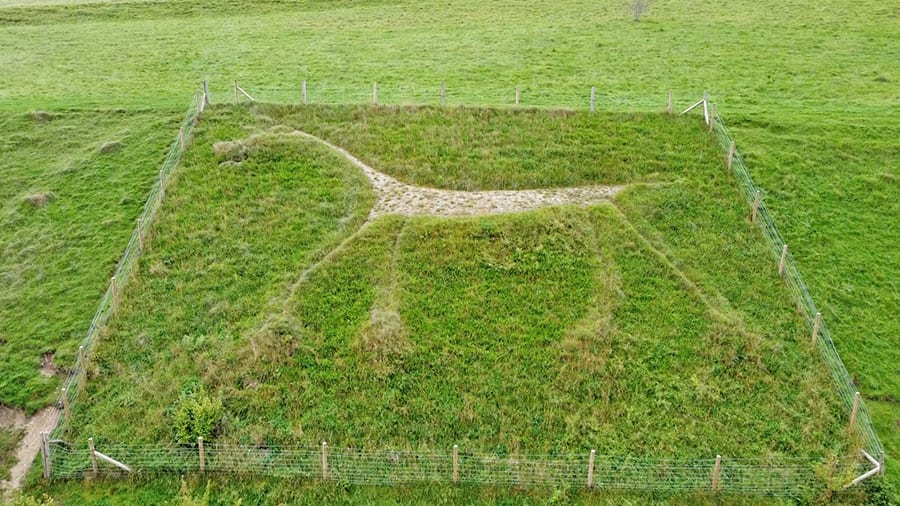
The Marlborough horse is the smallest of the horses in Wiltshire at only 62 feet long and 47 feet high. While most of the other chalk horses are clearly visible from below, the Marlborough small white horse is partially obscured by trees, though you can just about see it from the front to Marlborough College.
In 1804, a group of pupils from Marlborough College cut the horse on Granham Hill behind the college to a design by fellow schoolboy William Canning. Originally it only had two legs and no eye, but in 1873, a former pupil arrange the restoration of the horse and an eye and two more legs were added.
The horse is beginning to get a bit overgrown and the white chalk has gone a bit greyish. There is fencing around it to prevent any further damage to it.
You can park in Marlborough High Street and walk from there.
Address: Marlborough | SN8 4DN
Alton Barnes White Horse, (1812)
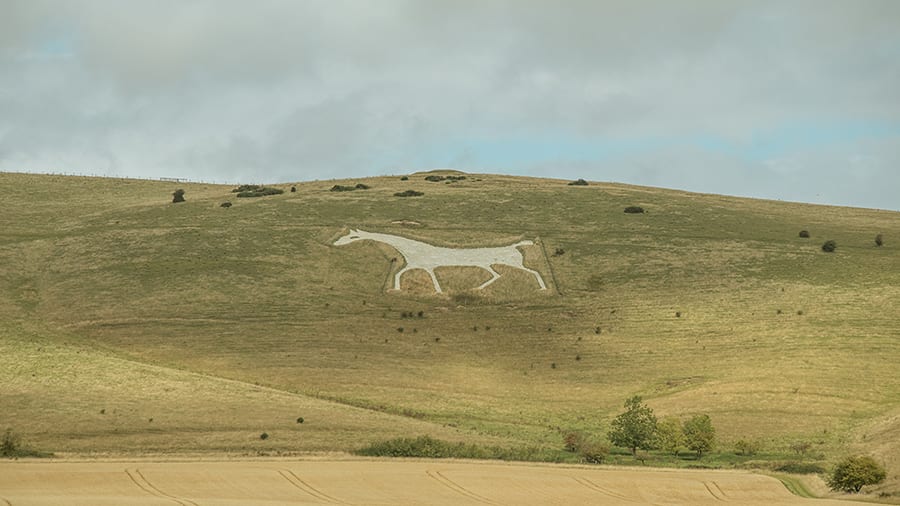
The Alton Barnes Chalk Horse is on Milk Hill, about a mile north of the village of Alton Barnes. For the best views, you can see it from Alton Barnes itself or from the road from Alton Barnes to Lockeridge. It stands 180 feet high and 160 feet long and was commissioned in 1812 by local farmer Robert Pile.
Overlooking the Vale of Pewsey and the new Pewsey White Horse (see below), the horse dominates the landscape. The horse has been well looked after and scoured regularly. In 2010 the chalk was refreshed with 150 tonnes of new chalk which was airlifted into place by helicopter.
The design of the Alton Barnes white horse is based on Cherhill White Horse.
There is parking at the top of the hill and then paths will take you to the horse.
Address: 30 Long St | Devizes |Marlborough | SN10 1NW
Hackpen White Horse, (1838)
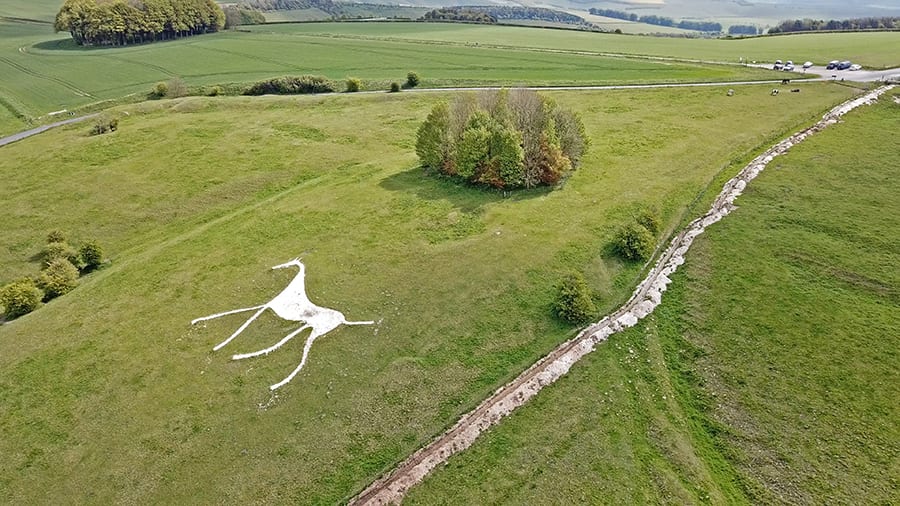
This was the first of the White Horses that I saw over 12 years ago. It still makes my heart soar every time I see it and the one that I visit the most.
Up on the hill just off the A361 road from Wroughton to Avebury, the horse at Hackpen was cut in 1838. It is thought that it was cut by Henry Eatwell who was a parish clerk in nearby Broad Hinton village, to commemorate the coronation of Queen Victoria. He may have had help from the landlord of one of the local pubs.
The hill itself is quite shallow, so the horse can be seen properly from the road below. It is on the edge of the Marlborough Downs with The Ridgeway passing along the top of it.
There is a car park at the top of the hill behind the horse. Opposite the car pack, there is a path leading down to see the horse. Be careful as there is normally real live horses in the field who might be inquisitive and follow you.
Address: 45 Wiltshire Cres | Swindon | SN4 9PF
Broad Town White Horse, (1864)
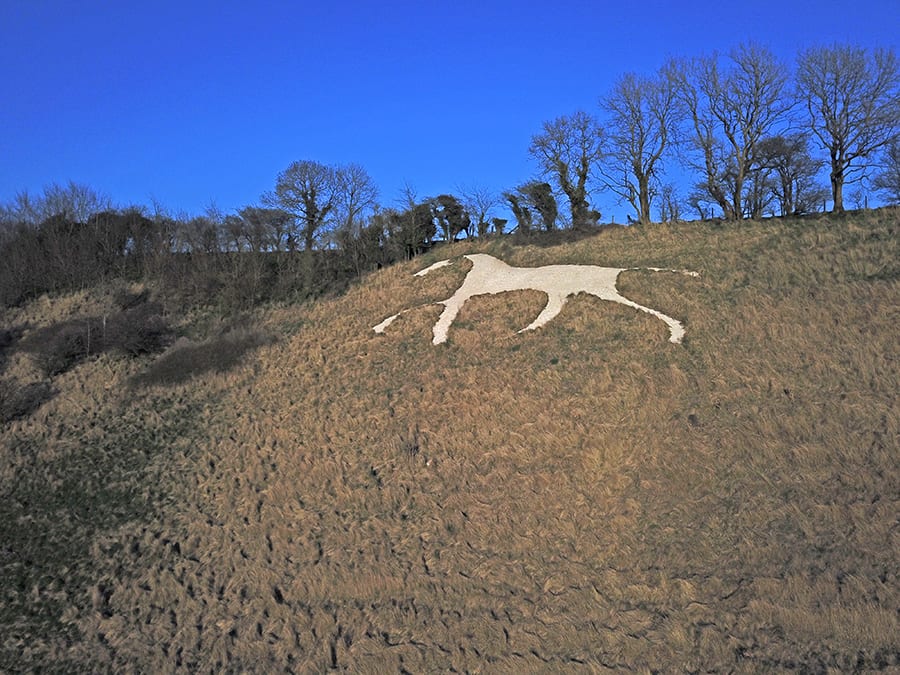
The Broad Town White Horse is visible from the Broad Town village which is about three miles south of Royal Wootton Bassett. Over the years it has been neglected and not scoured. In 1991, Broad Town White Horse Restoration Society was formed and the horse is now regularly scoured and maintained.
There is some confusion about when exactly it was first cut.
There is no real parking nearby, but the Horse there are footpaths from the village which take you up to it.
Address: Broad Town | Swindon | SN4 7RJ
Pewsey White Horse, (1937)
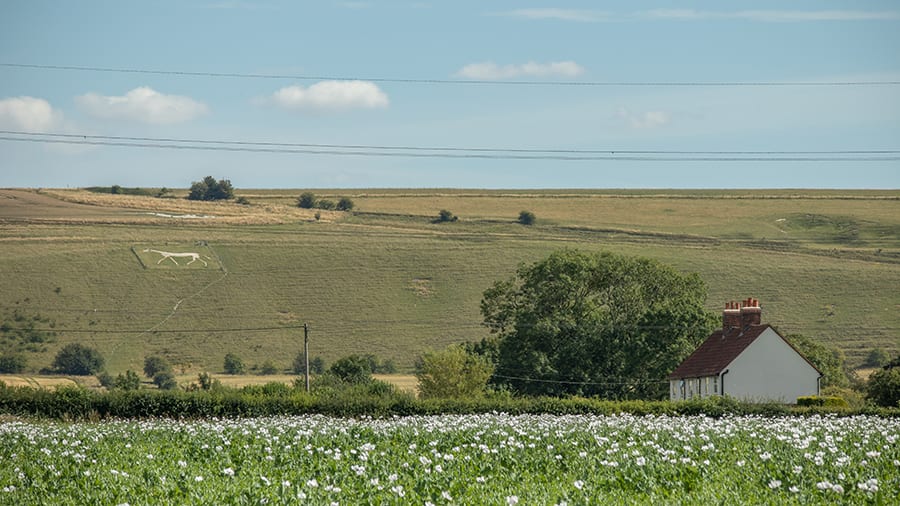
The new Pewsey Horse was cut in 1937 and is on the hill about a mile outside of Pewsey village on the A345 towards Everleigh. The new horse is very close to the original White Horse, a little above and to the left of the old site.
In 1937, a committee was formed to commemorate the Coronation of King George VI and a replacement for the old horse was suggested. At the time, an authority on hill carvings, George Marples was doing research on the old horse and was contacted for recommendations. Marples came up with three drawings, one of which was approved by the committee.
In late April 1937 volunteers from the Pewsey Fire Brigade cut the horse to Marples’ design. Originally the date was also cut i above the horse, but sadly over time this has disappeared.
There is parking further up the hill on the other side of the road or you can walk up the rather steep path from the village.
Address: Pewsey | SN9 5AF
Devizes White Horse, (1999)
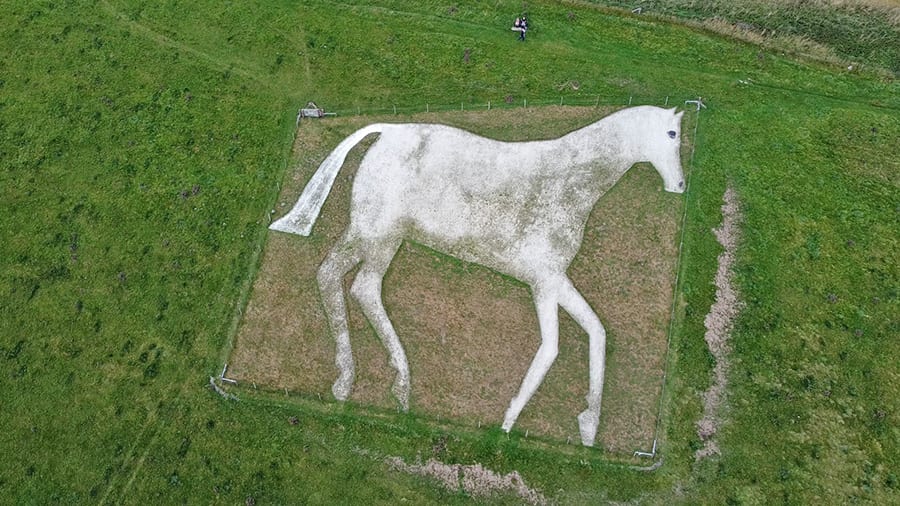
The most recent addition to the white chalk horses in Wiltshire is the Devizes Horse which was cut in 1999 on Roundway Hill above the town. It is unique in that it is the only Horse in Wiltshire to be facing to the right.
The Devizes horse was designed by Peter Greed, and cut by around two hundred local volunteers and was cut as a celebration of the millennium. It also replaces the old white horse which was cut about 1 mile away under Oliver’s Castle an iron-age hill fort.
The horse is well kept and is maintained well. It is also protected by a fence to protect it.
There is parking behind the horse for plenty of cars and benches to sit and admire the view.
Address: Roundway | Devizes | SN10 2HZ
Other Chalk Figures to See Around the South of England
While there are many rolling hills around Great Britain, the concentration of chalk ones are in the South of England, Wiltshire, Oxfordshire, and Sussex. While the cluster of white horses of Wiltshire are amazing to visit, there are other horse figures to explore in the south of England, as well as a few non-horse ones.
Uffington White Horse
Just over the Wiltshire county border, Uffington in Oxfordshire is the site of the original white horse. In the care of the National Trust, the Uffington Horse, was originally created during the late bronze age to early Iron Age – between 1380 and 550 BC.
On White Horse Hill in the Berkshire Downs, the Uffington White Horse may not be the most anatomically correct of the horse figures, there is a elegance and beauty to it. White Horse Hill is part of The Ridgeway which links Avebury (Wiltshire) to Ivinghoe Beacon (Buckinghamshire) and is thought to be Britain’s oldest road.
Just below the White Horse is Dragon Hill, which is associated with the legend of St George and the Dragon.
Cerne Abbas Giant
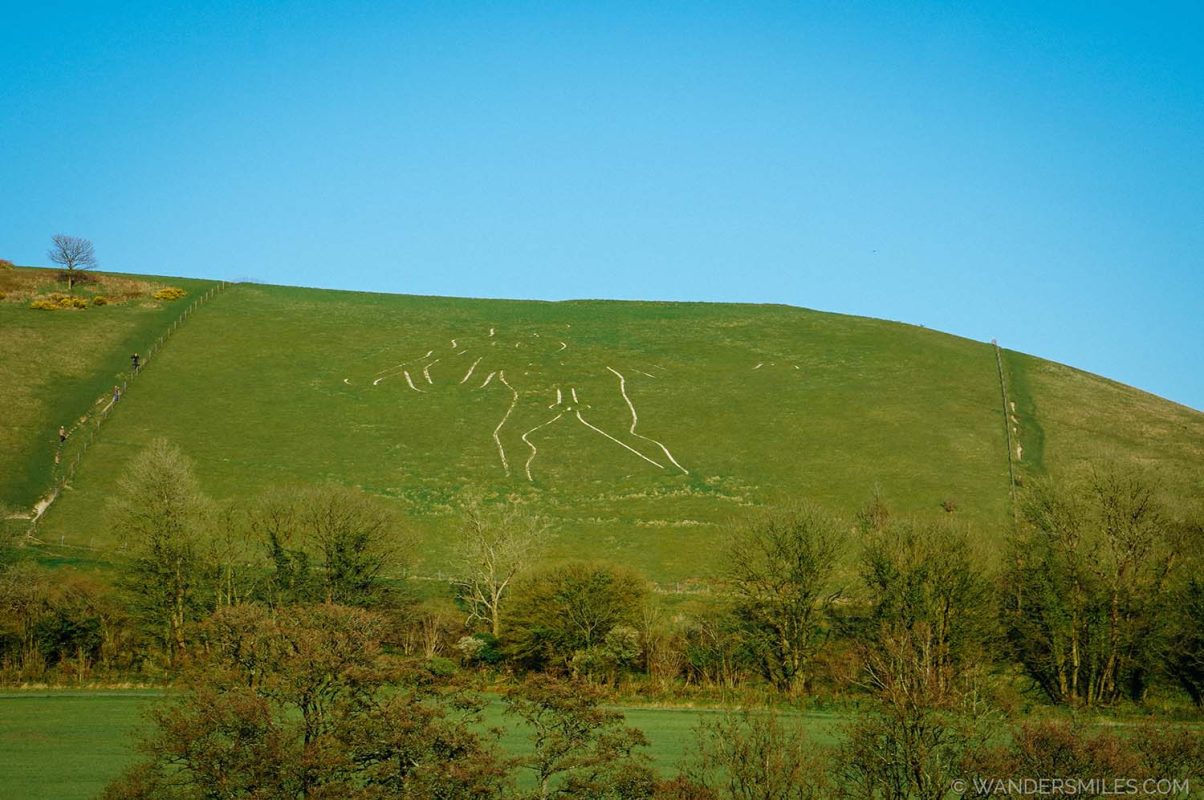
There are many equine hill figures across the chalk hills, but the Cerne Abbas Giant is the largest and possibly the most famous chalk figure, for one rather prominent feature.
On the Dorset hillside above Cerne Abbas, the 55 metre (180 foot) tall bald figure with a club in his right hand (left as you are looking at it), has a large erection and is often associated with fertility!
Bulford Kiwi
Horse figures are not the only animal cut into the hills. In 1919, just after World War One, a giant Kiwi was cut into Beacon Hill above Bulford Camp on Salisbury Plains in Wiltshire. A large N.Z. next to it, ensure you don’t forget where the kiwi is from!
Final Thoughts
When I was living in Wiltshire, I used to visit the white horses often, but now as a visitor myself, I love walking around them and discovering their beauty and history again.
Whether you are just passing by or making a special journey, do look out for these wonderful chalk figures.
Have a look at these books – Wiltshire White Horses – if you would like to read more about the Wiltshire horses.
Have you travelled to visited any of the Wiltshire chalk horses or planning a trip soon? Share your thoughts or questions in the comments below — I’d love to hear from you!
Use these England Travel Tips to plan your adventure!
- Plan your trip with these England Travel Guides.
- Get the best deals on flights with Skyscanner.
- Find the perfect place to stay in England on Booking.com.
- Buy your e-sim before you go with Airalo
- Take your own portable wifi with you
- Explore more of England with local experiences.
- Don’t forget to arrange your travel insurance.
Don’t forget to pin this article so you can come back to it later

I saw two while on the train from Taunton to London – wow!!
Maybe if I’m lucky enough to get another trip to the UK…..
Amazing! Which ones did you see?
I am looking to do this walk in a few weeks, hoping for 4 or 5 days, great to get more history before I go. Thanks
I hope you enjoy seeing all the horses, they are amazing!
How fascinating that horses have been carved out of the white chalk in the hills. It might be fun to walk to a few. But we are probably not walking the whole 90 mile route! I am sure it would be fun to come across them if you did not know what they were. How fun that new horses are still being added.