
When you think of exploring rural Kerala, cycling through winding lanes, coconut groves and fishing villages might come to mind. Alphonso Stories offers just such an experience with their Village Rubble by Cycle tour.
But in my case, thanks to my long-term neck injury, two wheels wasn’t an option. Instead, I experienced this immersive journey by tuk-tuk – and it turned out to be the perfect way to enjoy the relaxed pace of village life without missing a single detail.
*This site uses affiliate links and I may earn a small commission when you use my links and make a purchase without incurring an additional fee yourself.
Thank you for supporting this website. See my disclaimer page for more details.
Picked up by taxi from my hotel in Kochi at 7.30am, I was soon heading twenty minutes south to meet up with Dax Gueizelar, my guide for the day. What followed was a gentle, fluid few hours full of moments that revealed the everyday rhythms of life in Kerala’s backwaters.
A special thank you to the team at the Alphonso Stories for hosting me during my trip in Tail Nadu. All opinions expressed above are entirely my own.
A Different Way to Travel: Tuk-Tuk over Cycle
The tour is designed as a 25 km cycle ride, but Alphonso Stories are wonderfully flexible. For travellers who can’t or don’t want to cycle, the tuk-tuk alternative works beautifully.
Instead of pedalling, I was free to sit back, watch the scenery roll past, and take in the early-morning atmosphere. The breeze carried the smell of wet earth and coconut trees, and the faint calls of birds drifted over the water.
The tuk-tuk also gave us the flexibility to stop whenever something caught our attention, like a wedding -a bonus that made the day feel spontaneous, open, and more like being part of village life than rushing through it.
The Bustle of the Fish Auction
Our first destination was the village fish auction in the village of Chellanam. We walk through the village towards the harbour and the fish auction.
With his long salt and pepper hair pulled up into a bun and his exuberant smile, Dax explains the meaning of the Village Rubble Tour, that the tours pick through the everday Kerala village life, each day is different depending on what is happening in the villages.

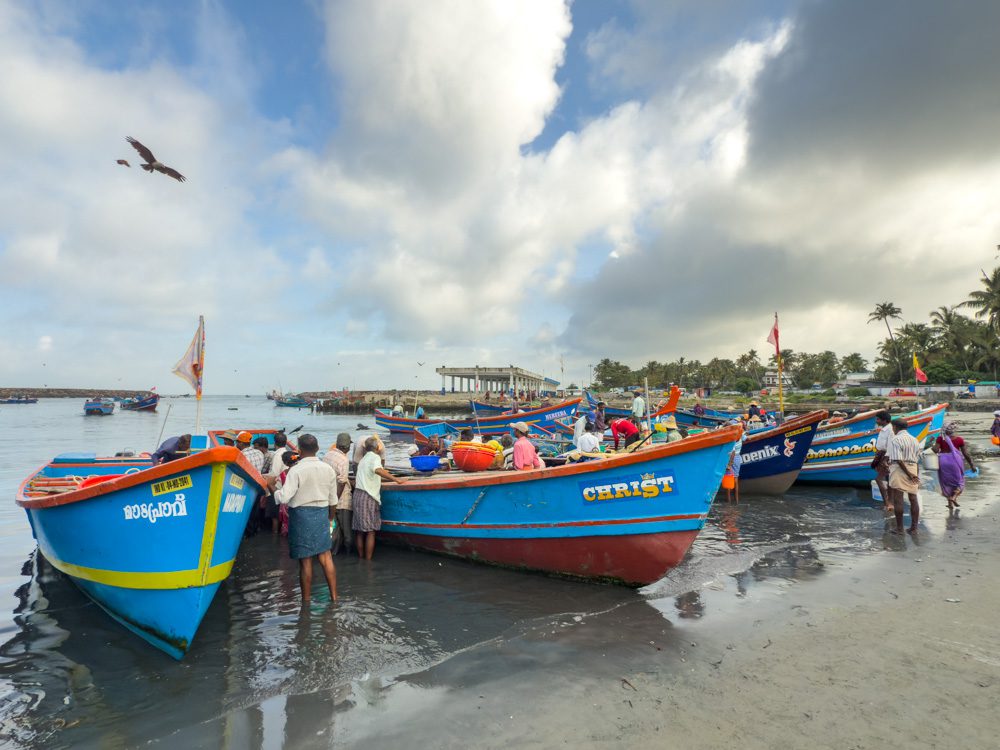
We took a walk up a small hill above the harbour. Dax talked about the rough seas on one side and how the harbour on the other protected the boats with calmer waters, explaining how the boats were colour-coded: blue for Kerala and green for Sri Lankan boats.
Even before stepping inside the fish auction, I could hear the voices: a chorus of shouts, bargaining and laughter. The air was thick with the scent of saltwater and freshly caught fish, and the energy was infectious. Overhead seagulls, crows and the occasional sea eagle kept an eye out for an easy breakfast.
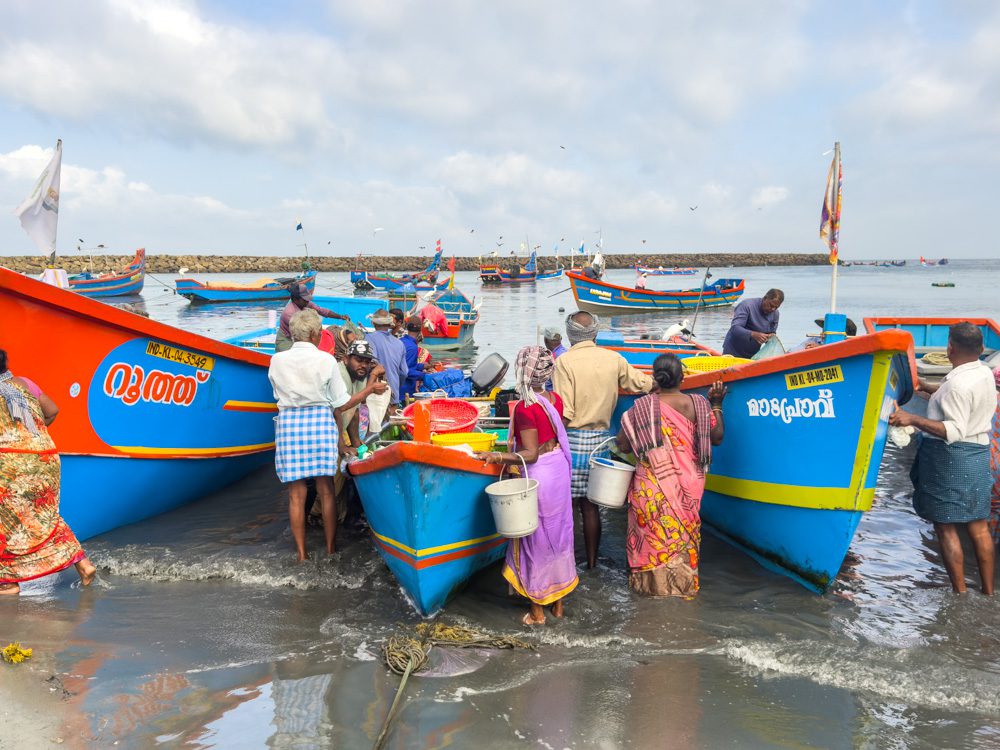
Dozens of fishermen and buyers crowded into the space, inspecting baskets of glistening prawns, anchovy, cuttlefish, crabs and a cornucopia of different fish. As the boats come in, the fish are sorted and the baskets are taken off to be auctioned.

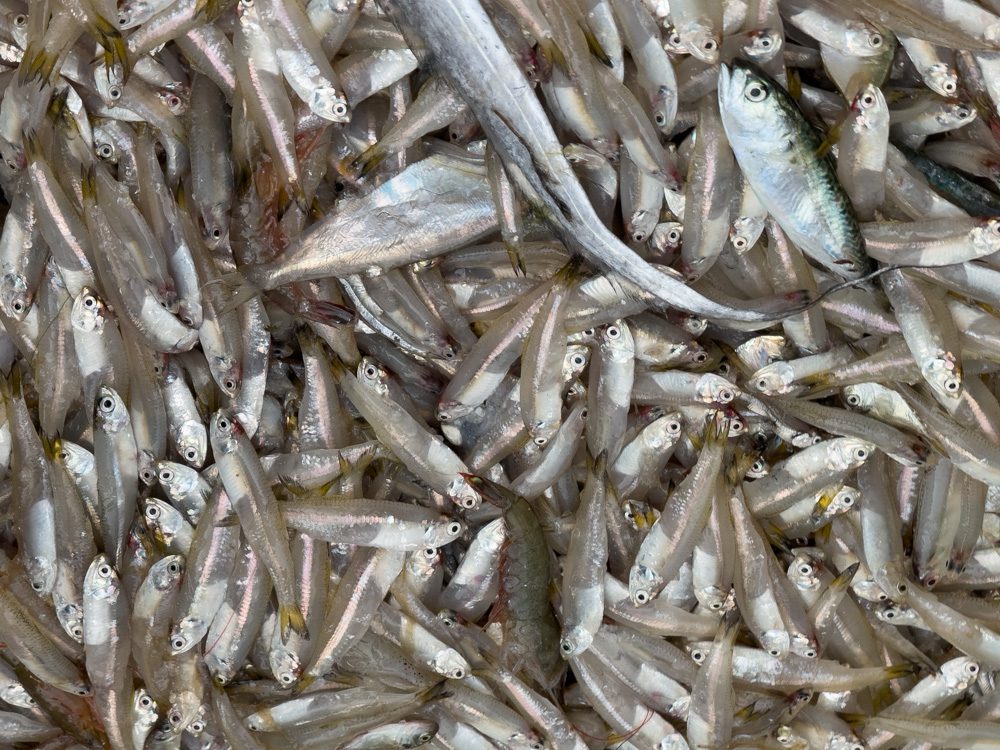
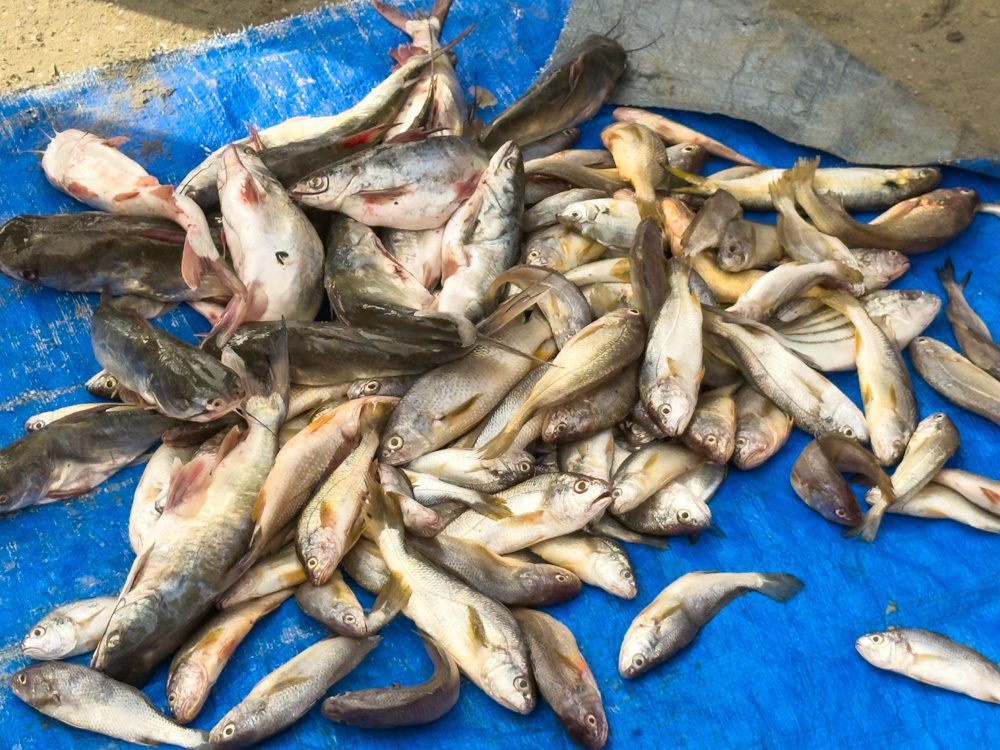
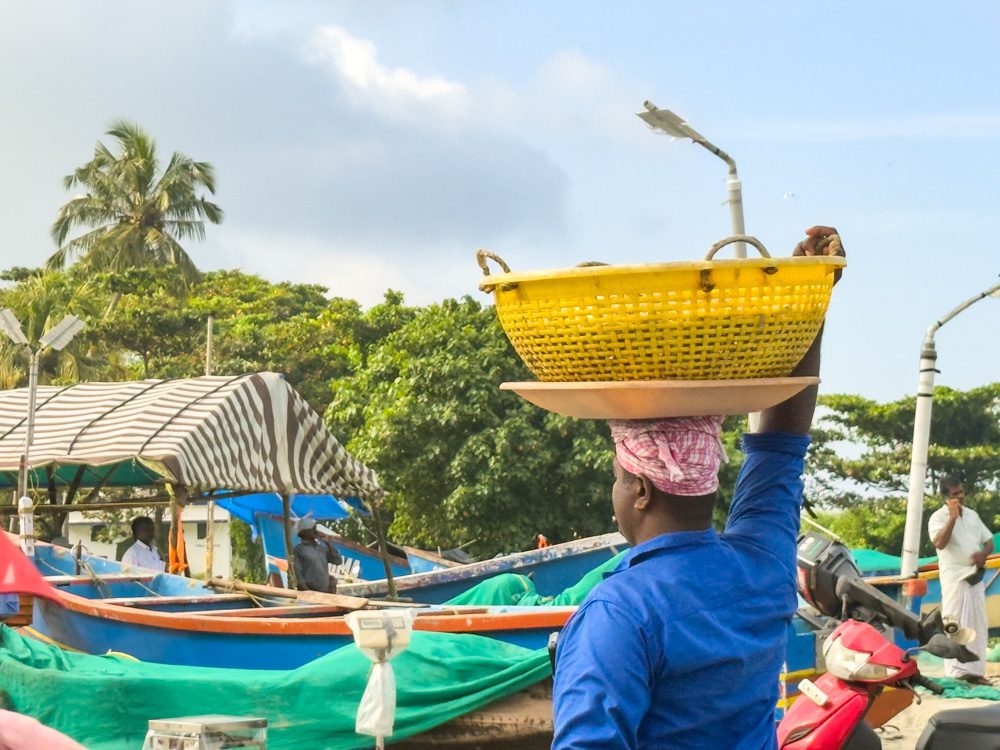
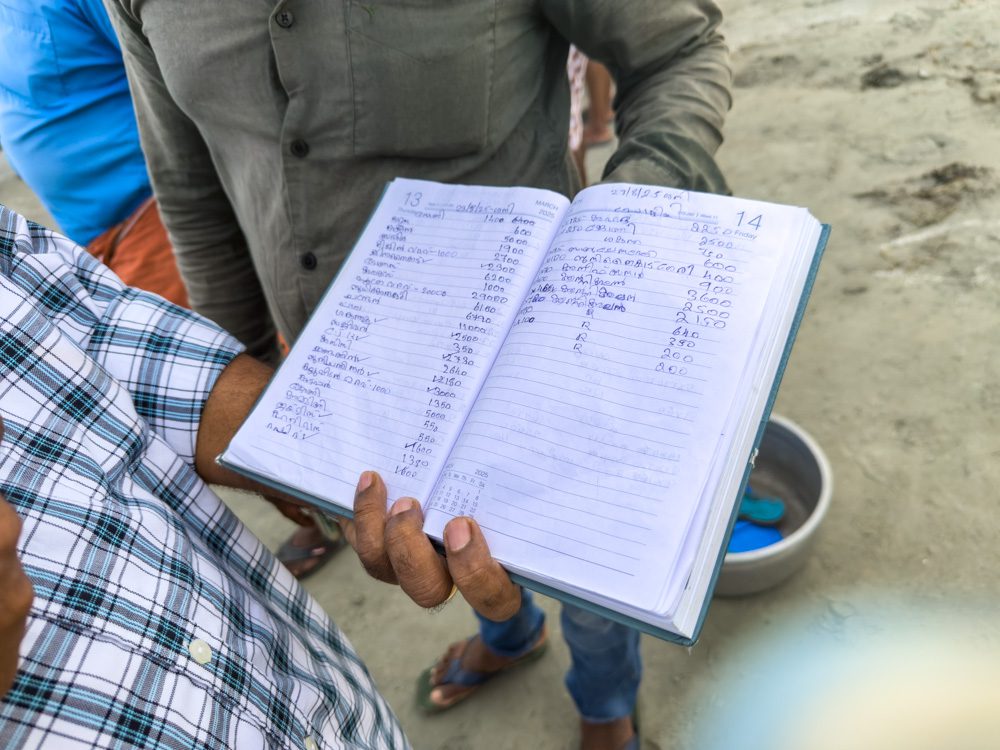
Dax explained how the auctions work, with buyers competing fiercely for the day’s catch before it heads to markets or restaurants. Watching the rapid-fire exchanges, I couldn’t help but be drawn into the theatre of it all – part commerce, part performance, and entirely captivating.
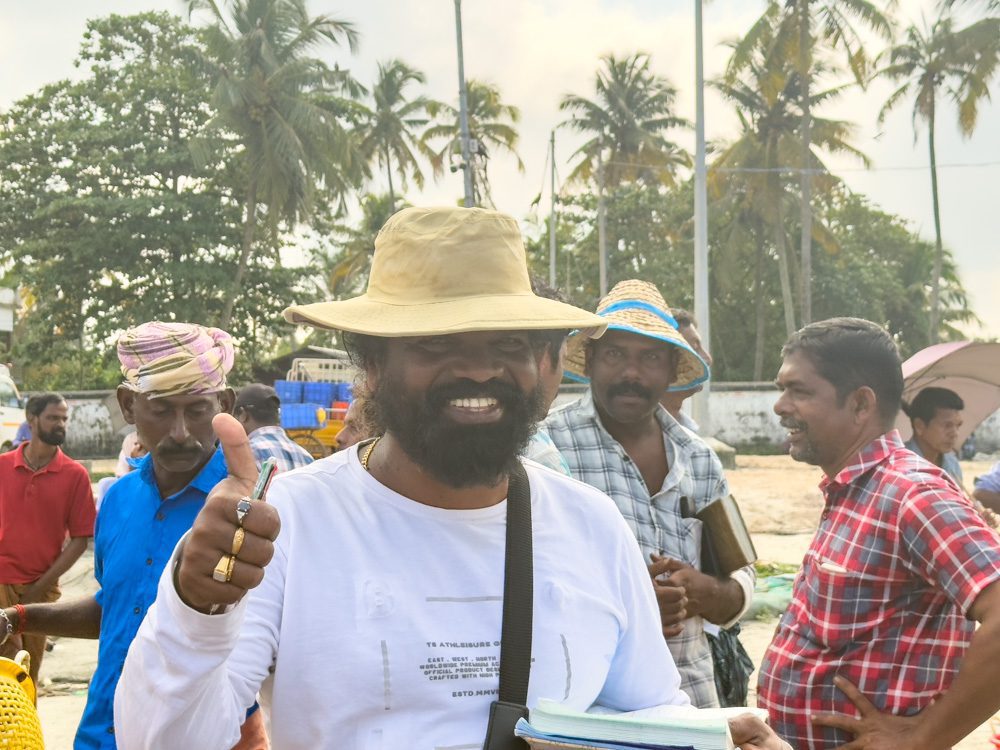
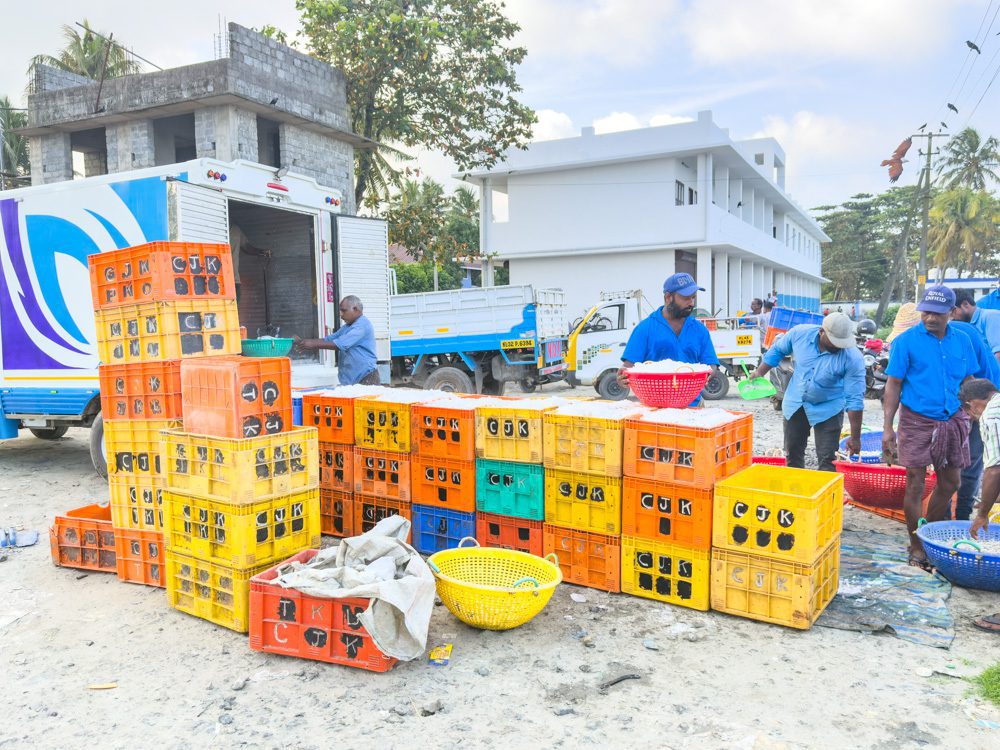
There are several levels of buyers. The commercial buyers who send trucks with trays to fill with ice and fish. Then there are the individuals in their tuktuks and motorcycles who buy several basket loads to take to the local markets. The last are the older ladies and people who buy smaller quantities to sell door to door.
Some people cannot afford to buy fish, but borrow a little money from a moneylender, then sell the fish they have bought and repay the the money on the same day with a very small amount of interest. There are no promissory notes, no check, it is all done on a trust basis.

Everyone who comes on to the harbour pays a fee. Yes, even us on foot just watching everything, a nominal few has to be made. We are number 10 on the first list above – per person, 10 rupees (approx 8p)
The fish auction benefits the whole community; the fishermen, the auctioneers, the buyers, the accountants, the people in the surrounding village who provide breakfast for anyone who needs it.
Breakfast with a Local Family
After the bustle of the market, having breakfast with a local family offered a moment of calm. Welcomed into their home by Dhansa and her husband. The family were warm and curious, keen to know about me and happy to share stories of their own lives.

We were served a traditional Kerala dishes for breakfast – fresh fluffy appam, vegetable curry with chickpeas, garlic, green chilli and fenugreek, pittu, spiced chutneys, and steaming masala chai – it was so delicious I forgot to take photos. Our meal was rounded off with bananas fresh from the garden.
It was one of those moments where travel transcends sightseeing and becomes connection. Sitting there, surrounded by the sounds of the village, I felt less like a tourist and more like a guest.
Alphonso Stories has a group of villagers who open their houses to guests for breakfast and to get to know Kerala’s village life from the grass roots.
Exploring the Fish Farm and Chinese Nets
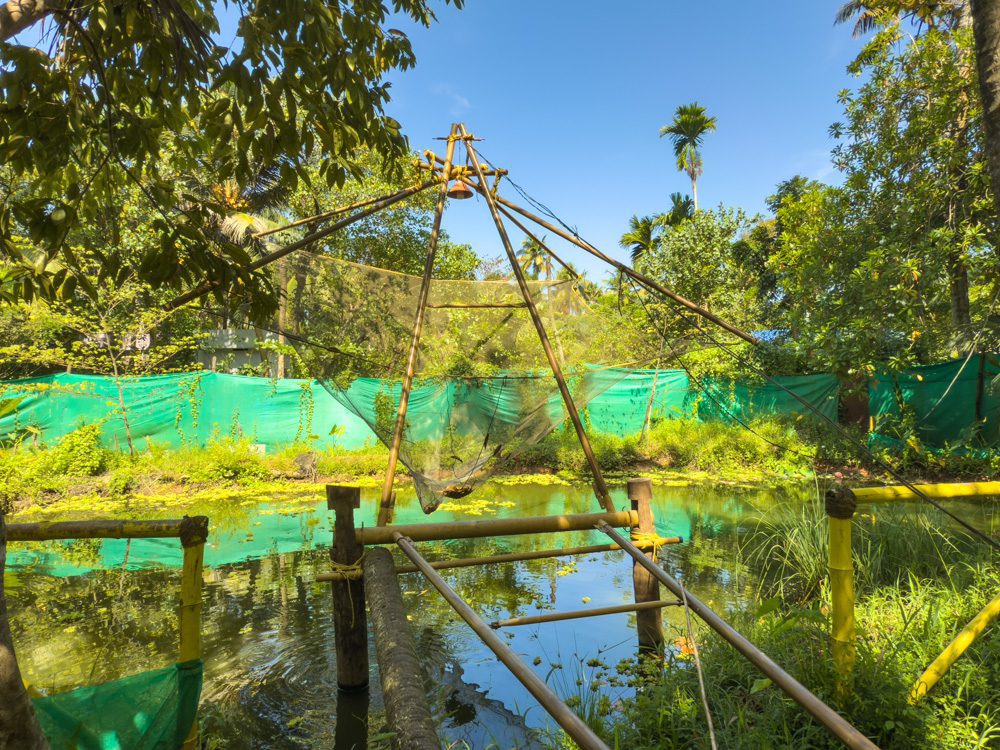
Breakfast over, we visited the family’s fish farm. Spread out in wide, still ponds, the farm provided an insight into how communities here balance traditional fishing methods with more sustainable aquaculture.
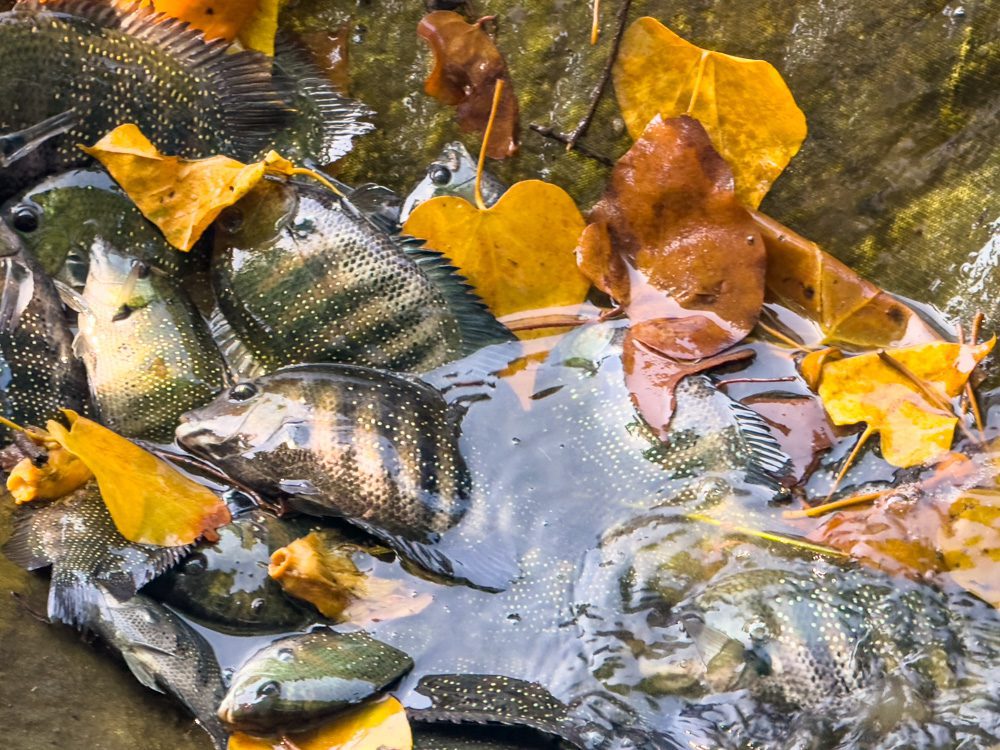
Dax explained how families supplement their income through fish farming, raising species such as prawns and tilapia. The fish are caught and moved to smaller ponds so they are available for the neighbours to buy.
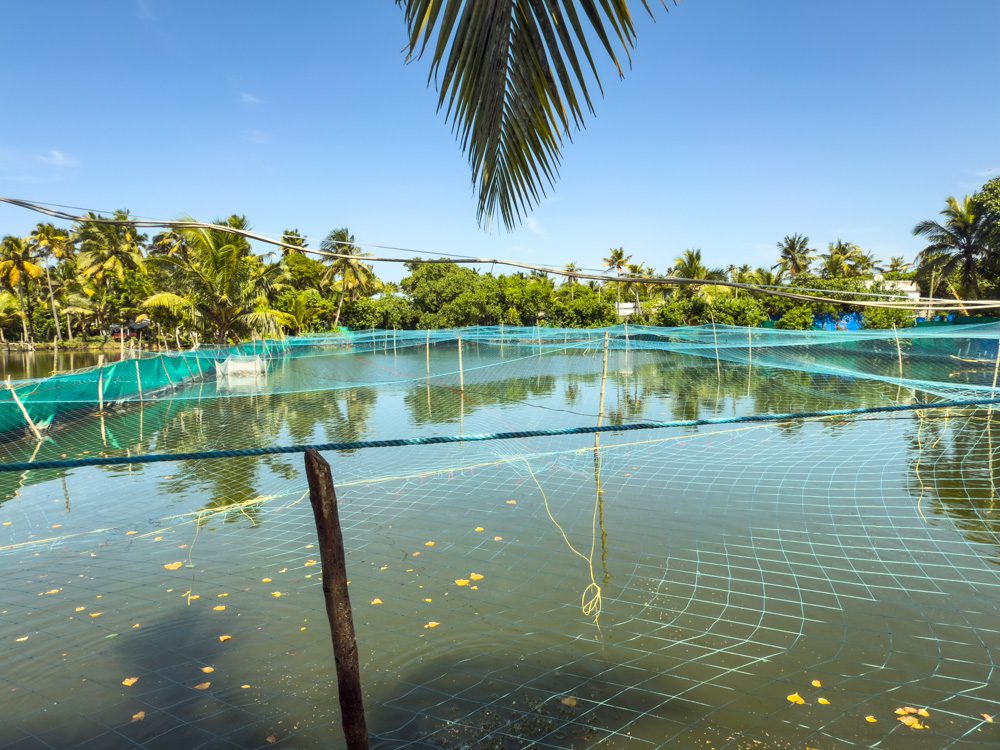
Nearby, I saw Kerala’s famous Chinese fishing nets – huge, cantilevered structures that creak and groan as they are raised and lowered into the water. Though now largely symbolic, they’re still a striking reminder of Kerala’s centuries-old maritime traditions.
After saying our goodbyes, we hopped back into the tuktuk drove on through the villages and hamlets.
Tasting Toddy at the Local Shop
No visit to rural Kerala is complete without sampling toddy – not the whisky drink, but the fermented sap of the coconut palm. We soon stopped again at some paddy fields.
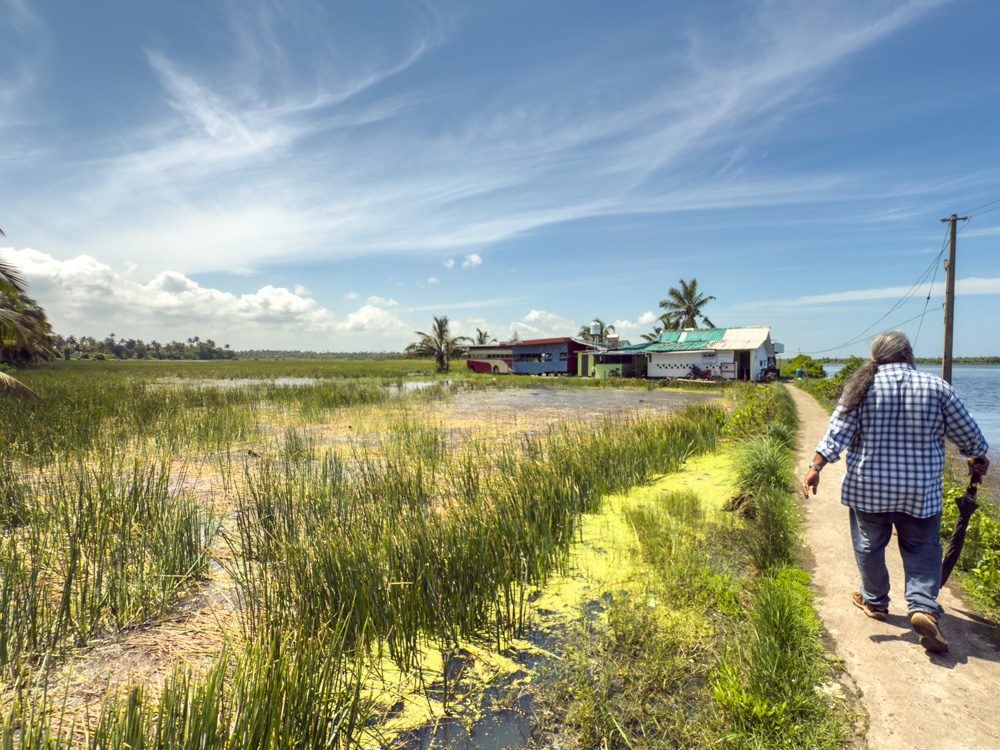
Dax led me down a raised path between paddy fields to a small toddy shop where I tried a freshly tapped glass. Slightly cloudy, with a mild fizz, toddy has a gentle sourness that pairs beautifully with spicy curry that is provided with it. The saltiness of the curry encourages you to sip a bit more of your toddy.
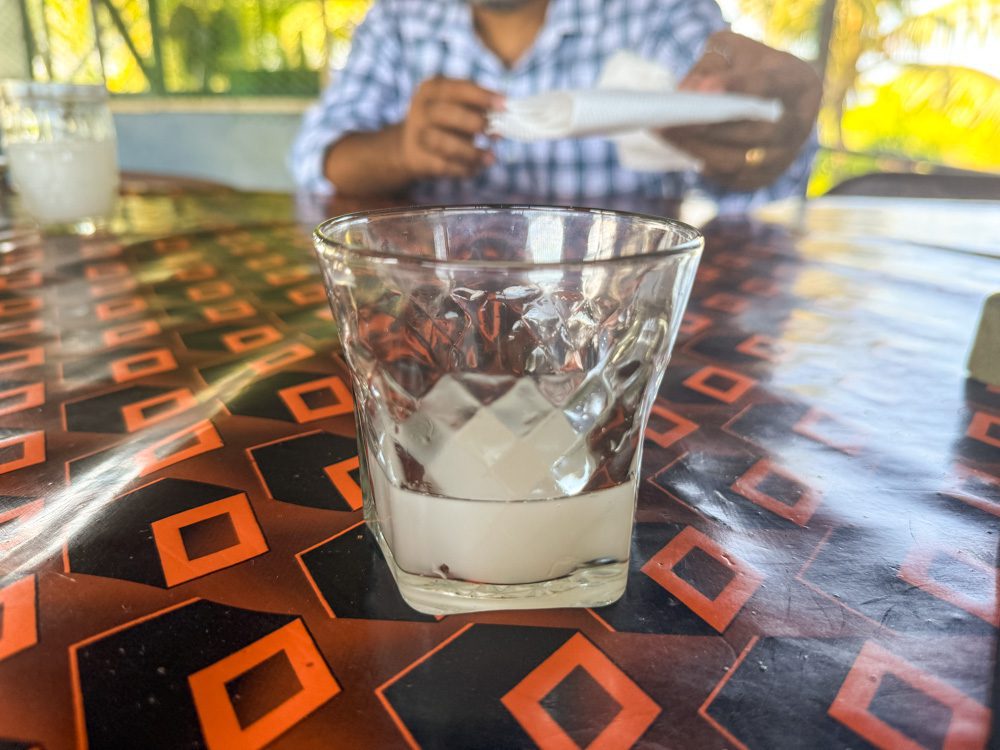
The toddy shops are not conventional shops, but tend to be tucked away where you get served your toddy and curry. The building was extended with an old bus serving as more seating area.
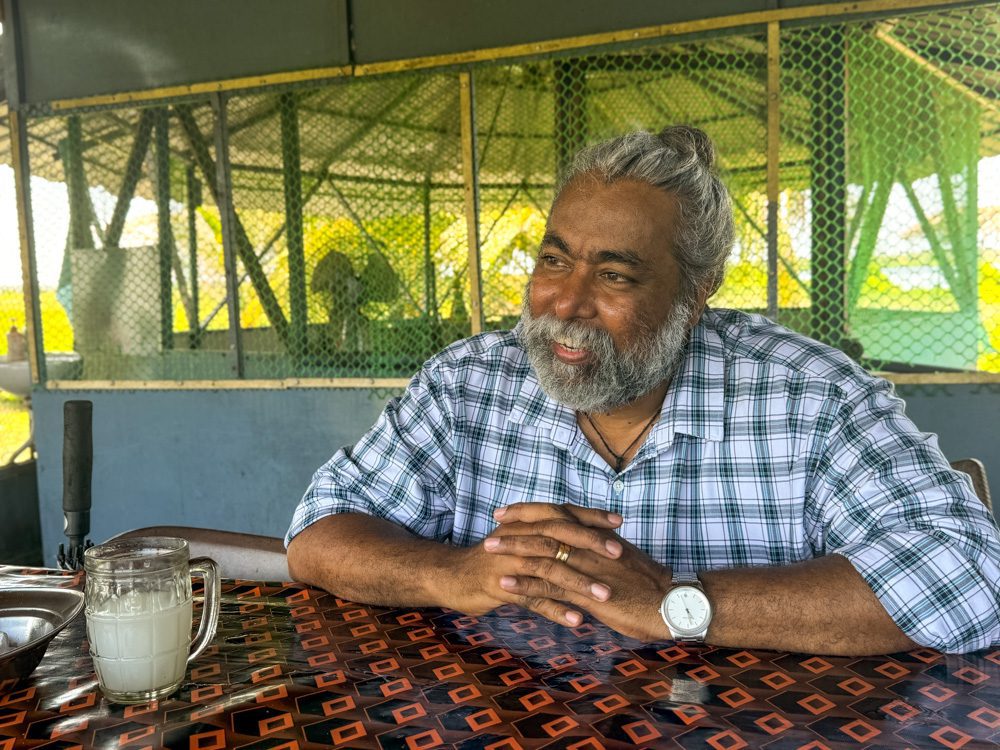
It was fascinating to see how these shops act not just as drinking holes, but also as social spaces for villagers. For me, it was a chance to taste something so deeply tied to the land and its people.
A Wedding Along the Way
One of the unexpected joys of tuk-tuk travel is the ability to stop for the unplanned. As we rolled past a village temple, we spotted a wedding in full swing. Colourful saris shimmered in the sunlight, garlands of flowers framed the entrance, and music drifted across the street.
We paused for a few minutes to watch. Though we were only spectators, it felt like a gift—to catch a glimpse of such a vibrant and joyous moment of community life.
Women Shelling Prawns
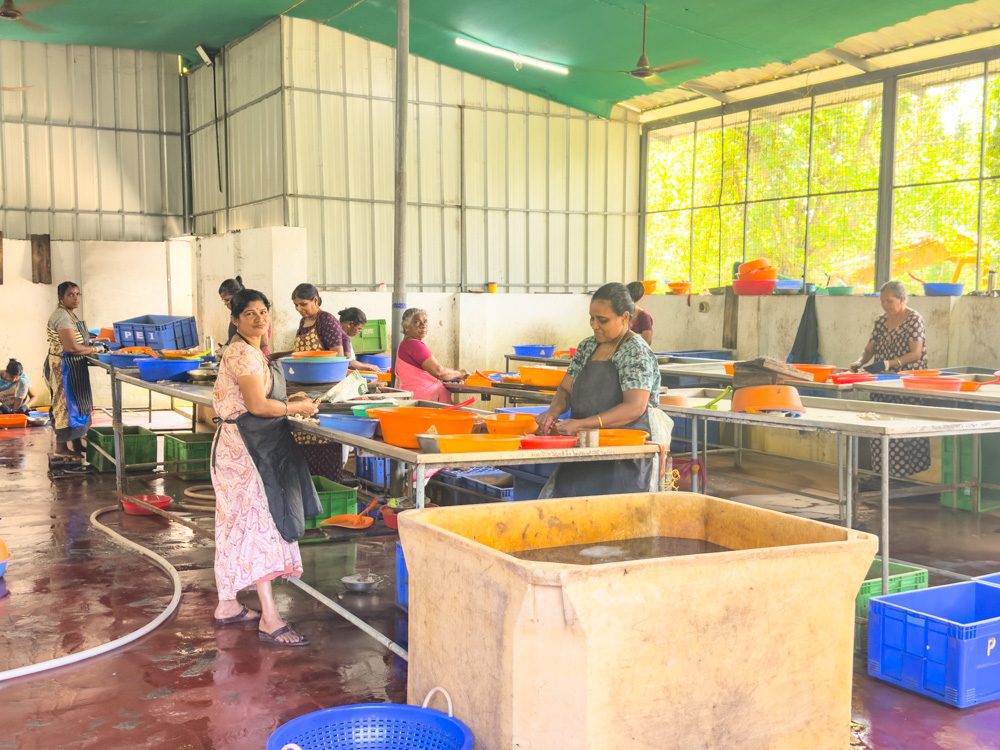
Further along, in Kuthiathode, we came across a group of women in a shaded open shed, rhythmically shelling prawns. Their hands moved with practised ease, cracking and peeling at a pace I could barely follow, the shells and peeled prawns landing in separate bowls. They laughed and chatted as they worked, their camaraderie adding to the scene.
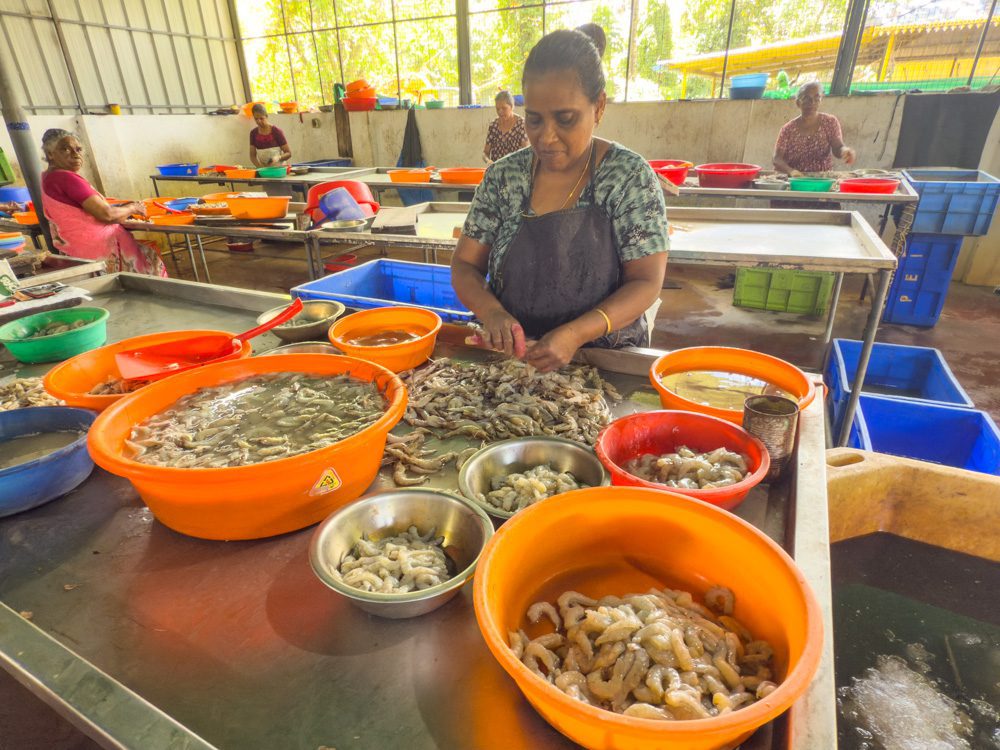
There were around 30 women around the shed, some sitting, some at tables, but all shelling away. They are paid by the kilo, so speed is of the essence.
This was Kerala’s village life at its most authentic: work, yes, but shared in a way that felt communal and almost meditative.
A Temple Under Reconstruction
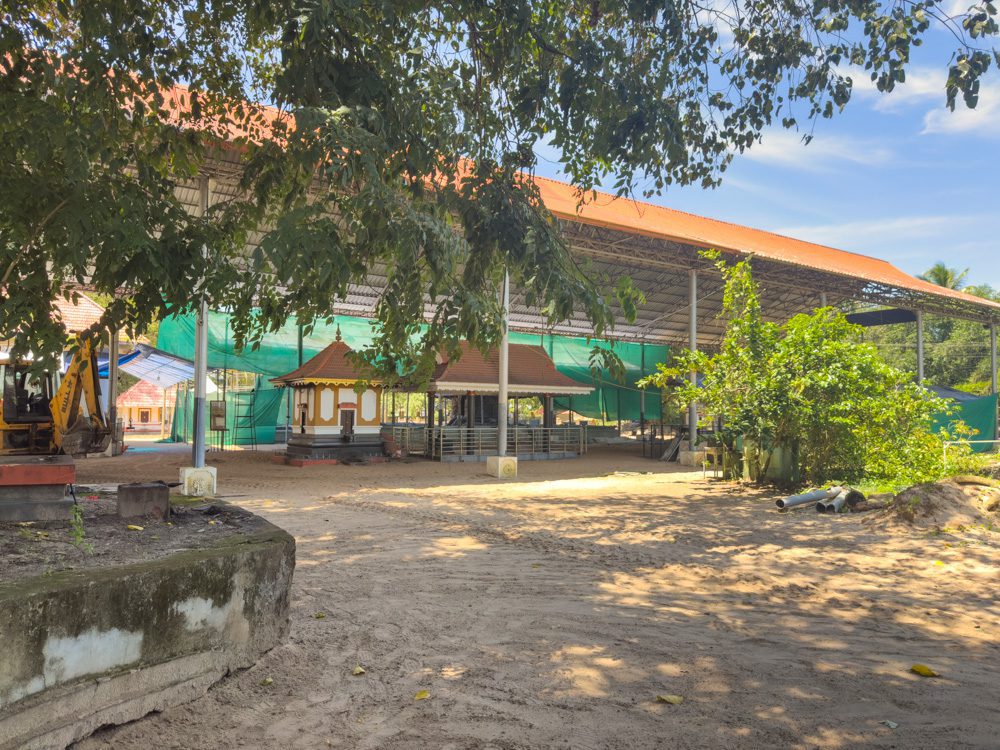
Another stop took us to a temple in the midst of being rebuilt. Scaffolding rose around the sanctum, lorries brought sand and blocks to be piled ready to use.
Dax explained that temples here are often restored by the local community, both as acts of devotion and as a way to preserve heritage.
Even half-finished, the temple was impressive – a symbol of faith, continuity, and resilience.
The Village Grain Store
From spirituality to sustenance: our next stop was the village grain store in Kodamthuruth.
Here, sacks of rice and grain were stacked neatly, ready to be distributed to locals. Dax pointed out how important these stores are in ensuring food security, especially during monsoon seasons when harvests can be unpredictable.
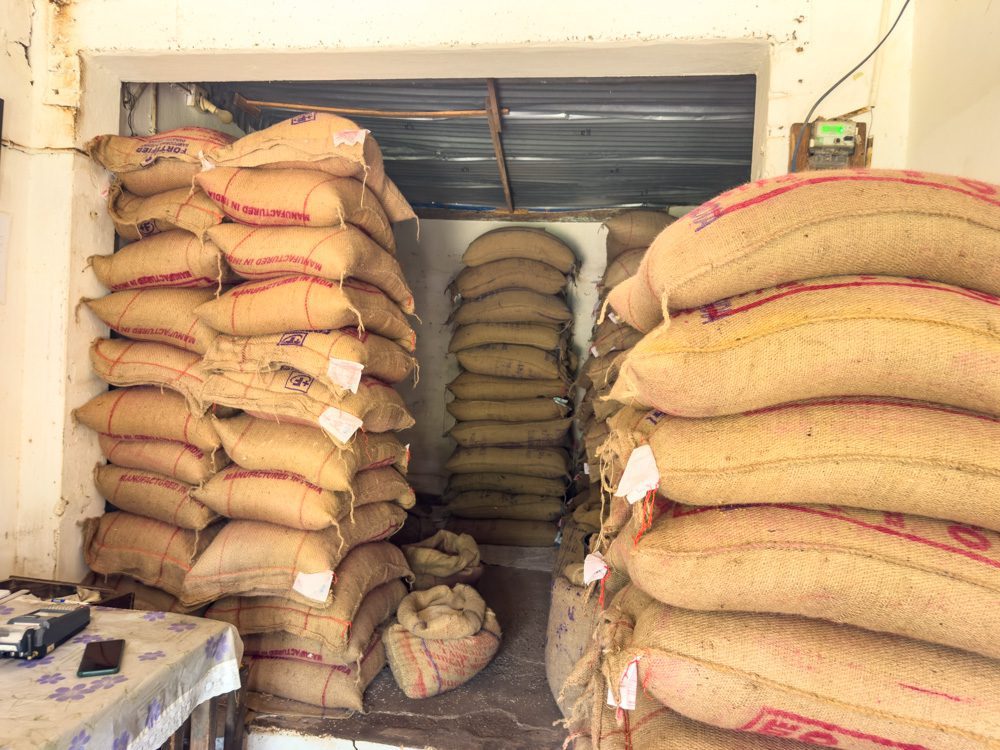
It was another reminder of how village life functions as an interconnected system, with every element – from fishing to farming to food distribution – playing a vital role.
Lime Soda and Snacks
Before heading back, we made one final stop for refreshment. A small shop round the corner served up cold lime sodas alongside plates of banana chips, dried jackfruit and spiced chickpeas. The tangy fizz of the soda was the perfect way to cut through the heat of the late morning.
Sitting there, snacking and watching the village go about its day, I felt a sense of contentment. This wasn’t sightseeing in the traditional sense—it was slipping into the rhythm of a community and letting it unfold around me.
Ferry across the river
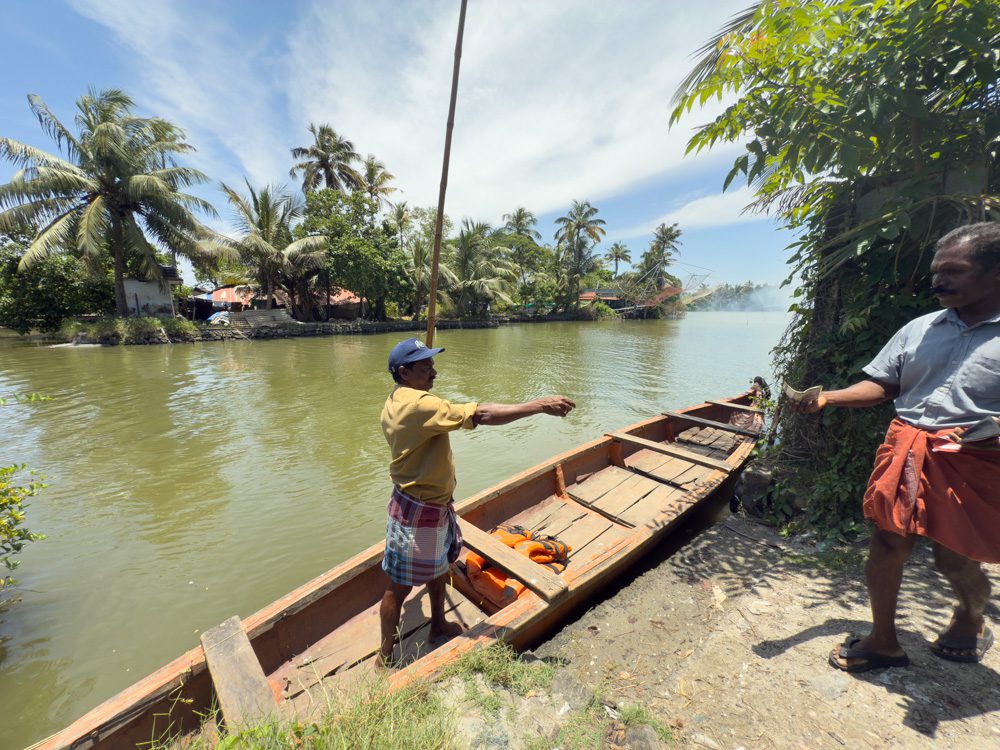
Our last treat. We say goodbye to our tuktuk driver and stepped into a ferry to take us across the canal passing more Chinese fishing nets on our way. The trip was only a few minutes, but it was tranquil end to an insightful morning.
Returning to Kochi
By one o’clock, it was time to climb back into the taxi and head to Kochi. The ride back felt slower, as though my senses wanted to linger over the images of the morning: the auction’s cacophony, the warmth of breakfast, the laughter of women shelling prawns, the vibrant flash of a wedding sari.
Reflections on the Experience
Doing this tour by tuk-tuk instead of bicycle gave me something precious: the ability to fully engage without the physical strain. I could focus on conversations, notice small details, and pause for unexpected moments. While cycling might bring its own rewards, tuk-tuk travel offered accessibility and spontaneity.
Above all, what struck me was how everyday life in Kerala is so richly textured. From temples to toddy shops, from fish auctions to grain stores, each stop told part of the story of how this community lives, works, and celebrates.
Practical Information
- Tour: Village Rubble by Cycle (adapted by tuk-tuk)
- Company: Alphonso Stories
- Guide: Dax – knowledgeable, warm, and attentive
- Duration: Half-day (around 4–5 hours)
- Best For: Anyone curious about rural Kerala; suitable for those who prefer not to cycle.
Other tours offered by Alphonso Stories
Alphonso Stories offers a wide range of tours around Kochi, including foodie tours, delving behind the scenes of the Kathakali dancers and finding out more about Kochi.
- Kochi Café Crawl
- Cooking Demo – Home hosted Lunch & Dinner
- Kochi By Cycle
- The Muzuris Trail
- Cochin Royal Heritage Trail
- Kumbalanghi Village Tour
- Good Morning Kochi
- The Women of Kathakali
- Kochi Food Crawl
- Village Backwater Tour – A Trip down Backwater Lane
- The Spice Trail in Kochi
- Sadya in Thrippunithura
- Kadamakudy: The Living Islands Experience
- Bamboo Trail of Mamalakandam
- Legacy of Royalty: Mattancherry Palace Walk by its Descendant
- Street Food Trail: Flavours of Mattancherry
- Cook with Rosy: A Home-Kitchen Experience in Kochi
- Mangrove Kayaking at Kochi
- Flavours of Cochin: An Anglo-Indian Culinary Journey
As well as arranging day tours and experiences, Alphonso Stories and its parent company, Distinct Destinations, arrange tours and trips in India, Sri Lanka, Bhutan and Nepal.
Final Thoughts
Travel isn’t always about big monuments or famous sights. Sometimes, the most memorable experiences are found in the small details of everyday life. My morning exploring Kerala’s villages with Dax and Alphonso Stories reminded me of that truth.
Whether you go by bike or, like me, by tuk-tuk, this tour offers a window into the heart of Kerala – its food, its traditions, and its people. And that, surely, is the essence of travel.
Use these India Travel Tips to plan your adventure!
- Plan your trip with these India Travel Guides.
- Take a guided tour with one of G Adventures India trips
- Get the best deals on flights with Skyscanner.
- Find the perfect place to stay in India on Booking.com.
- Buy your e-sim before you go with Airalo.
- Explore more about India with local experiences.
- Don’t forget to arrange your travel insurance.
Don’t forget to pin this article so you can come back to it later



This sounds absolutely magical ✨ The way you’re exploring Kerala’s village life through Alphonso Stories feels so authentic and heartwarming. I love how you highlight the simple rhythms of local life — it makes the culture, people, and traditions feel so alive and real. Reading this makes me want to slow down and experience Kerala beyond the usual tourist spots. Truly beautiful storytelling! 🌿💛
Thank you. It was such an amazing experience.
Beautifully said! 🌿✨ I couldn’t agree more — it’s often those quiet, everyday moments that capture the real soul of a place. Your experience in Kerala sounds so heartfelt and authentic; exploring by tuk-tuk must have been such a wonderful way to connect with the local life and culture. 💛🚴♀️
I am so pleased you enjoyed my post
This tuk-tuk tour sounds utterly captivating! Who needs to cycle when you can ride in comfort, chat with the knowledgeable Dax, and stumble upon a wedding or a fish auction like its the worlds most spontaneous reality show? The descriptions of the fishy smells, colour-coded boats, and the sheer energy of the auction are infectious. And lets be real, breakfast with a local family and tasting that gentle sourness of toddy sounds like the kind of experience that makes your travel photos actually *mean* something beyond just pretty scenery. Its the kind of authentic chaos youd probably miss if you were pedaling too hard! Highly recommended for anyone wanting to skip the tourist traps and dive into the real rhythm of Kerala.
I am really touched that you enjoyed my post, thank you.