When you think of Uganda, – the pearl of Africa – your mind might immediately jump to gorilla trekking, the natural beauty of the national parks, or the bustling streets of Kampala. But, one of the most memorable parts of any Ugandan adventure are the must-try foods – rich, hearty, and full of cultural significance.
Uganda’s food reflects its diversity: with more than 50 ethnic groups. Each region and tribe adds its own specialty dishes, cooking methods, and ingredients to the table, not to mention the influences of the British and the Indians.
*This site uses affiliate links and I may earn a small commission when you use my links and make a purchase without incurring an additional fee yourself.
Thank you for supporting this website. See my disclaimer page for more details.
A special thank you to Joseph and the team at Valiant Safaris for hosting me during my trip in Uganda. However, all opinions expressed are entirely my own.
Whether you’re in rural villages, bustling local street markets or exploring local eateries in urban areas, you’ll find traditional food made with love and shared during family gatherings or celebrations.
Before you head off to explore (perhaps starting in Entebbe or planning a safari through Queen Elizabeth National Park), here’s a guide to Uganda’s best foods — from hearty stews and savoury sauces to crispy street snacks and sweet breakfast delicacies.
What to Eat in Uganda
Main Dishes and Staples
Uganda’s cuisine is grounded in comfort — think stews, rich sauces, and starchy staples. In most Ugandan homes, meals are served with a dough-like consistency of maize flour, millet, or banana as the base, alongside flavourful stew or vegetable sauces.
Matooke – The Heart of Uganda’s National Dish
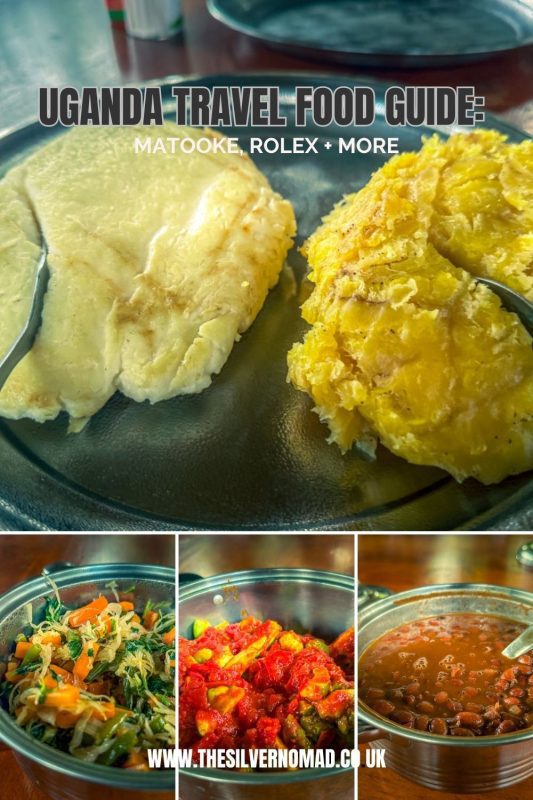
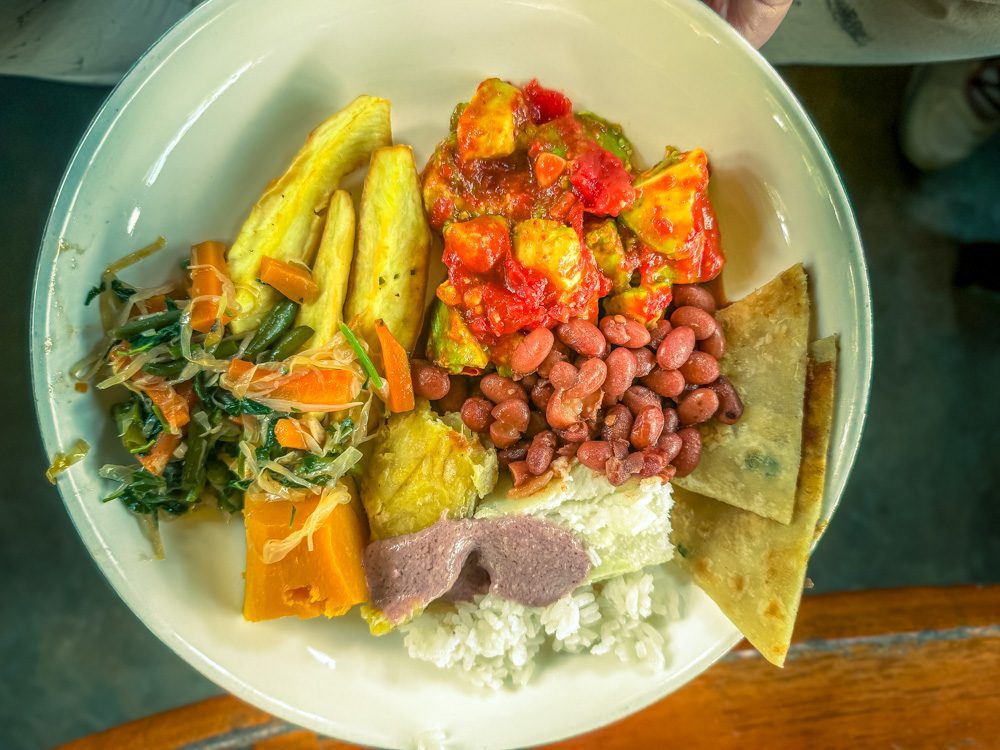
In the central region, matooke (green plantains) is more than just food — it’s part of daily life. This beloved staple is made by steaming and mashing green bananas until they form a smooth, dough-like consistency.
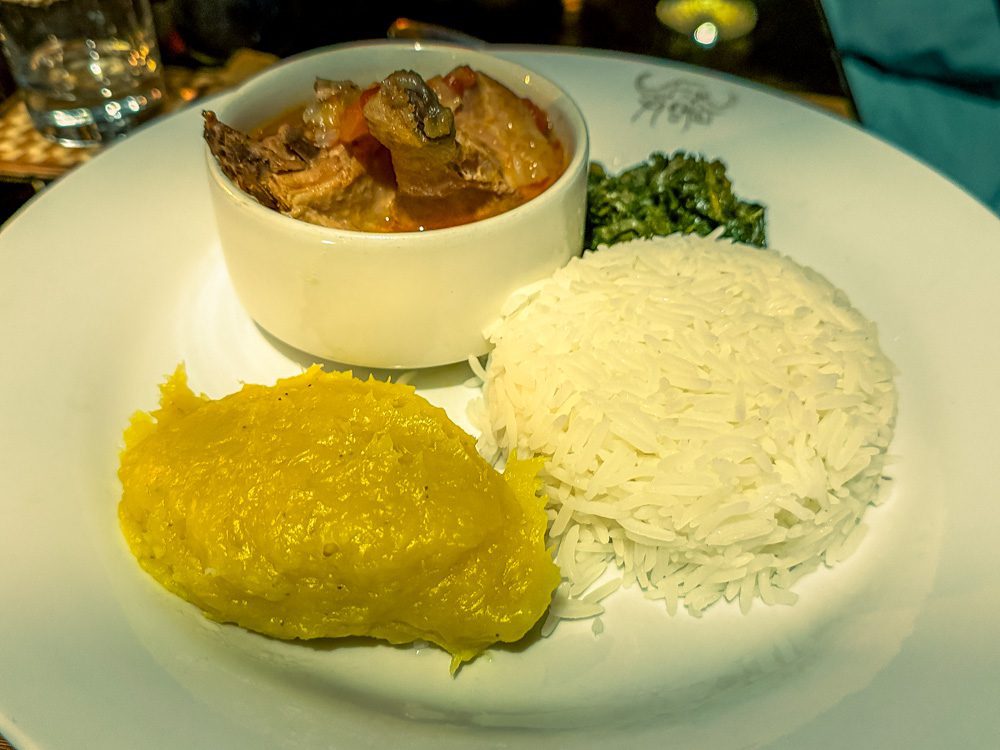
Often described as Uganda’s national dish, matooke is typically paired with savoury sauces like g-nut sauce (groundnut or peanut based) or a hearty beef stew.
It’s a vegetarian-friendly dish but can also accompany chicken, fish, or beef. Every tribe prepares it a little differently, giving you the chance to taste several variations throughout the country.
Not only that is can be spelled differently matoke, matooke or in the Buganda language, it is amatooke.
Luwombo – The Traditional Ugandan Stew
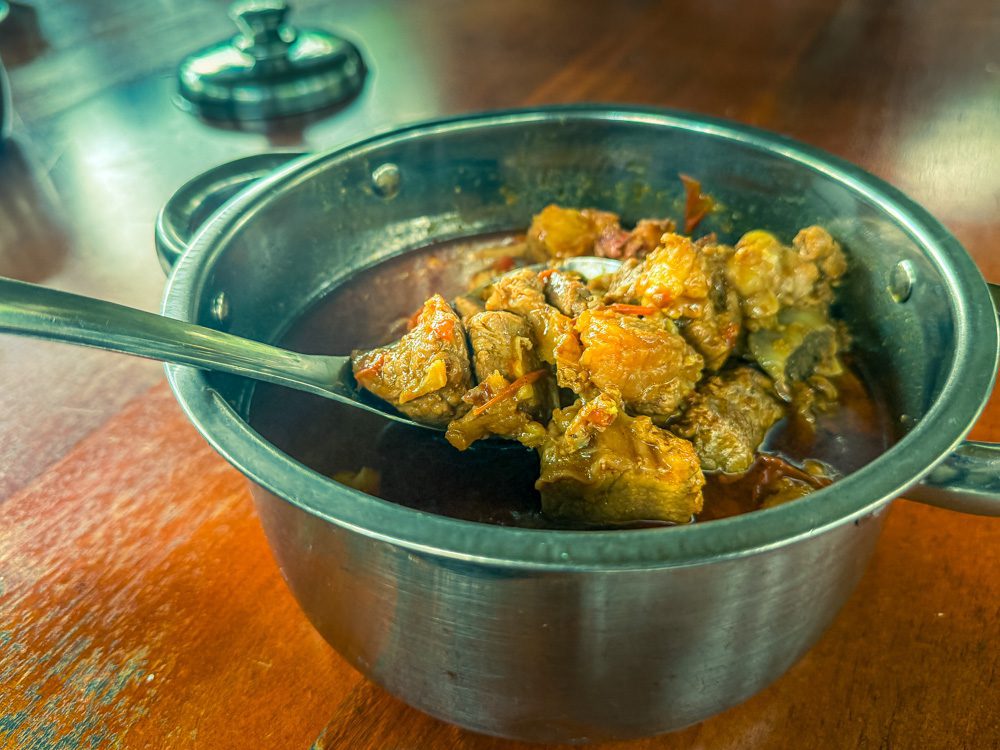
Luwombo is one of Uganda’s most traditional dishes, dating back to the 19th century. This flavorful stew is often prepared for special occasions and has deep cultural significance across various Ugandan tribes.
It’s made by slowly cooking chicken, beef, or fish with peanut butter (groundnut paste), vegetables, and spices, all wrapped in banana leaves. The result is a rich sauce with a creamy consistency that tastes like home-cooked heaven.
You’ll find luwombo at traditional restaurants and even some upscale Ugandan eateries — it’s one of Uganda’s best dishes to try.
Posho – The Everyday Staple Food
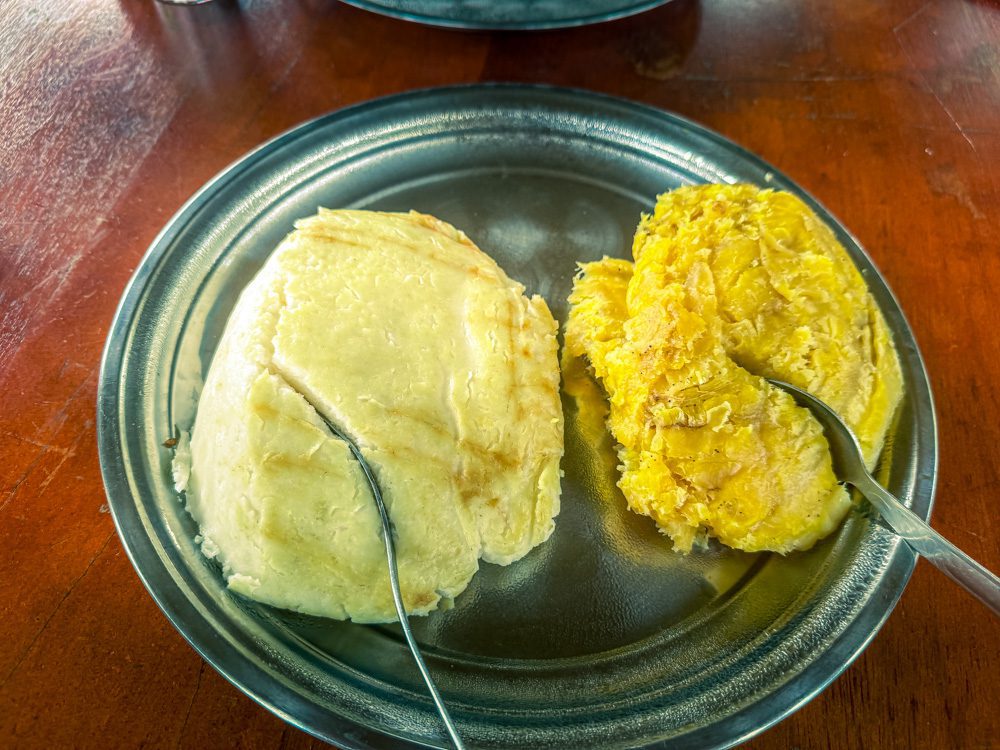
Found in almost every Ugandan home, posho (also known as ugali in other parts of East Africa) is a thick porridge made from maize meal or cassava flour. It’s a simple side dish with a neutral taste, making it the perfect accompaniment to spicy sauce or vegetable stews.
In rural villages and urban areas alike, posho plays a central role in daily meals — a humble but essential element of Uganda’s food culture.
Kikomando – Street Food Comfort
Kikomando might sound fierce, but it’s really a fun and filling street food. It’s a mixture of beans and chopped chapati, creating a dish that’s both satisfying and affordable.
You’ll find kikomando everywhere — from roadside stalls to local eateries in the bustling streets of Kampala — often enjoyed in the late afternoon or as a quick lunch.
Muchomo – The Ugandan Barbecue

If the smoky scent of roasted meat draws you in from a distance, it’s probably muchomo. This Ugandan take on barbecue features skewered meat grilled over open flames, seasoned with salt and local spices.
If you are allowed to go behind the kiosks at the front, you will find rows of cooks barbecuing over hot coals.
It’s best enjoyed with a cold Nile beer, a side of fresh salad, or perhaps a serving of matooke. In many parts of East Africa, roasted meat is a communal affair — in Uganda, it’s a social event.
Eshabwe – Creamy and Luxurious
A traditional dish from western Uganda, eshabwe is a rich, creamy sauce made from ghee (clarified butter). Served cold with millet bread, it’s considered a delicacy and often reserved for cultural ceremonies and special events.
Its smooth, buttery texture makes it stand out — a true taste of Uganda’s regional diversity.
Popular Street Food and Snacks
If you really want to experience Ugandan food culture, head to the streets. The sizzling pans, vibrant colours, and laughter of locals around makeshift stalls capture the spirit of Uganda’s culinary heart.
Sellers walk about with wicker platters of fried plantain, chicken on sticks or hot chapati and rolex. Behind the stalls are ready to make fresh rolex, hot groundnuts topped with ground rock salt, or to keep the piles of chicken.
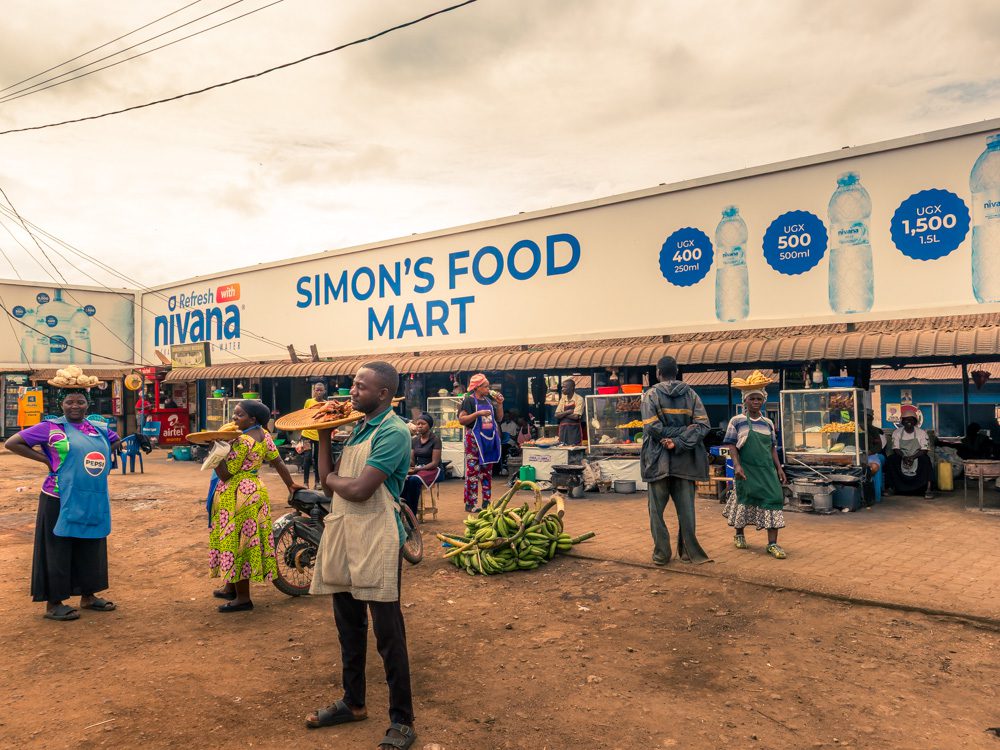
Rolex – The Street King
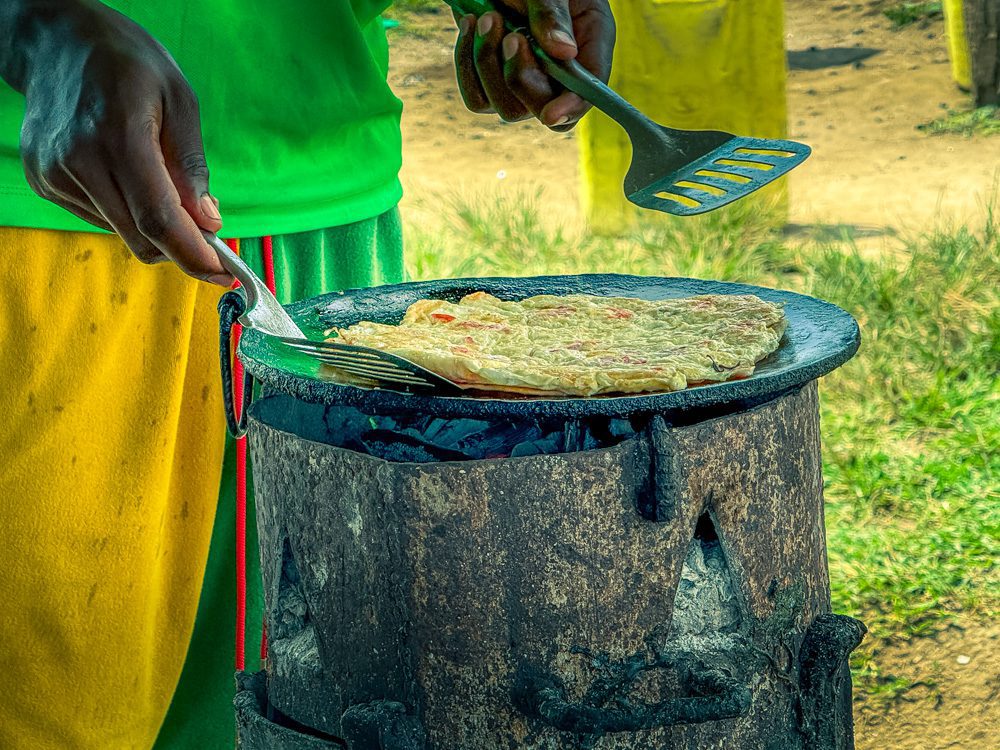
No visit to Uganda is complete without tasting a rolex. Despite the luxury name, this is a humble yet delicious snack — a rolled chapati wrapped around an omelette, usually stuffed with onions, tomatoes, and cabbage.
The “rolex guy” on the corner can make it just the way you like it — spicy, simple, or with added vegetables. It’s a go-to breakfast delicacy and also a favourite during the late afternoon when hunger strikes.
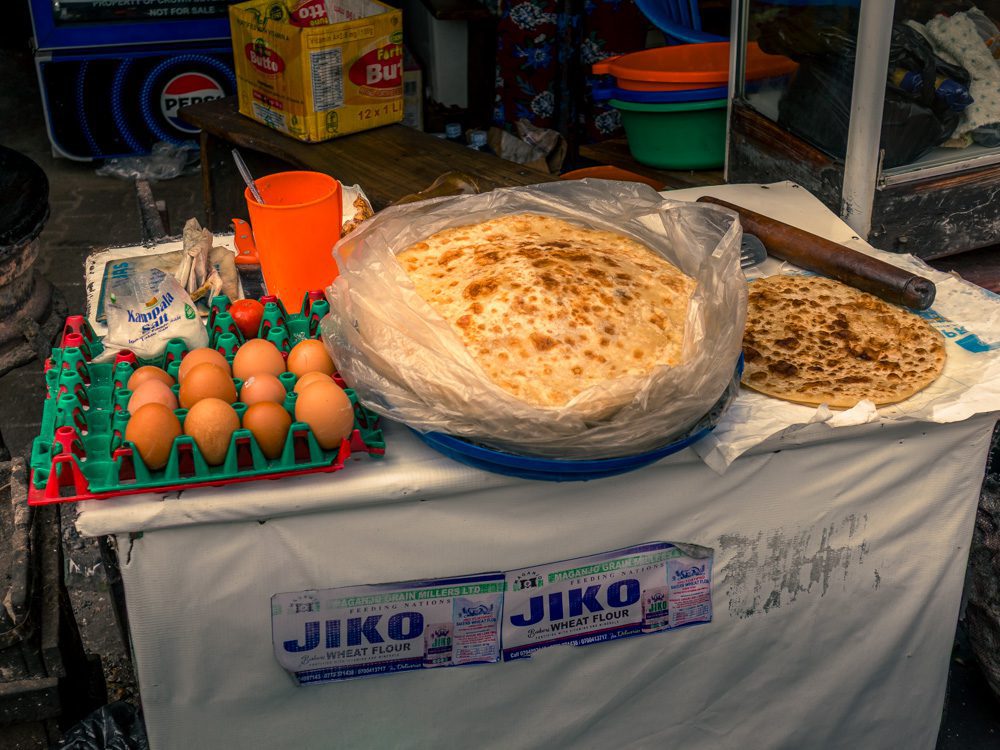
If you are lucky, you may be able to make your own rolex. Flip your omelette, roll your chapati around it and then tuck in… delicious!!
Sumbusa – Ugandan Samosas
Drawing on Indian heritage, the Ugandan version of a samosa, often filled with spaghetti and cow peas.
Nsenene – The Adventurous Bite
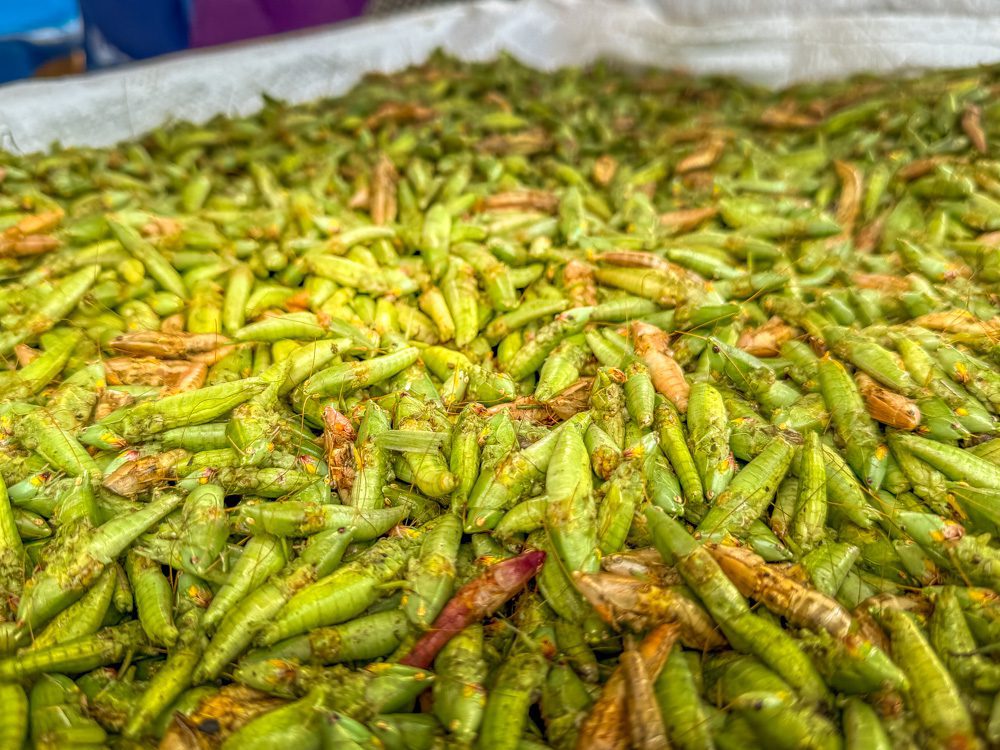
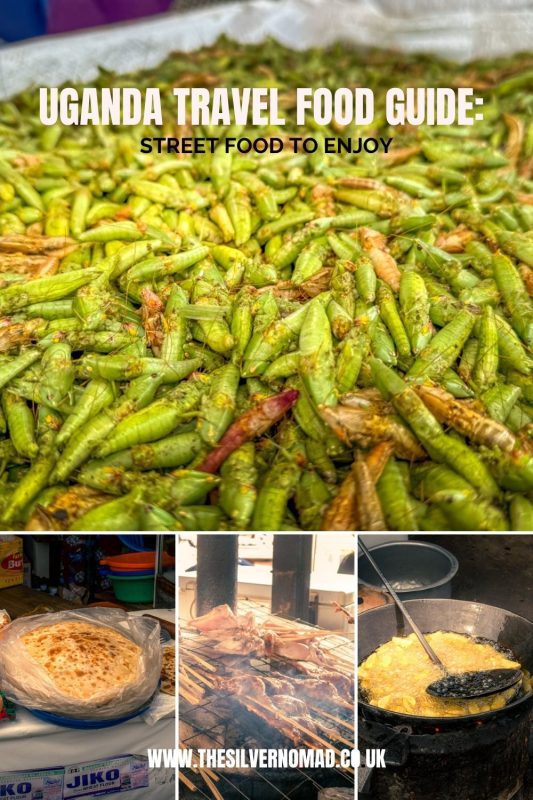
Seasonal and full of crunch, nsenene (fried grasshoppers) are a local delicacy with a surprisingly nutty flavour. They’re usually available during the rainy season and are considered a treat in central and eastern Uganda.
Fried with onions and seasoned with salt, they’re a must-try food if you’re feeling adventurous. (And yes, they pair beautifully with a cold beer!).
You will see the ladies by the side of the road taking the wings and legs off the grasshoppers.
If the Nsenene get you intrigued to try unusual “foods” in Uganda, you can also try white ants. These are actually flying termites and are seen as a source of nutrition and a delicacy.
Mandazi – Sweet and Simple
Soft, slightly sweet, and golden brown, mandazi are fried dough snacks — similar to doughnuts but less sugary. Often eaten with tea or coffee, they’re a comforting morning or afternoon snack.
In Uganda’s urban areas, you’ll find them fresh at roadside stalls, filling the air with that irresistible fried dough aroma.
Mkate na Mayai – Bread and Eggs, Ugandan Style
Translating to “bread and eggs,” mkate na mayai is a popular dish in different cuisines across East Africa. It’s a satisfying blend of sweet and savoury — think chapati, eggs, and sometimes minced meat or vegetables.
It’s filling, portable, and perfect for travellers on the go.
Fresh Fish, Fruits, and Vegetables
Uganda’s natural beauty extends to its fertile soils and abundant lakes, meaning fresh produce and fish are part of everyday life.
Fresh Fish from Lake Victoria
If you’re exploring Entebbe or the Lake Victoria region, don’t miss freshly caught tilapia grilled or fried to perfection. It’s one of the country’s most popular dishes, especially around fishing towns.
Some restaurants even serve it with sweet potatoes, matooke, or a side of fresh salad — a true taste of local Ugandan food.
Fresh Fruits
Uganda is blessed with some of the juiciest fruits in Africa — passion fruit, mangoes, pineapples, papayas, and avocados are all wonderfully sweet and inexpensive.
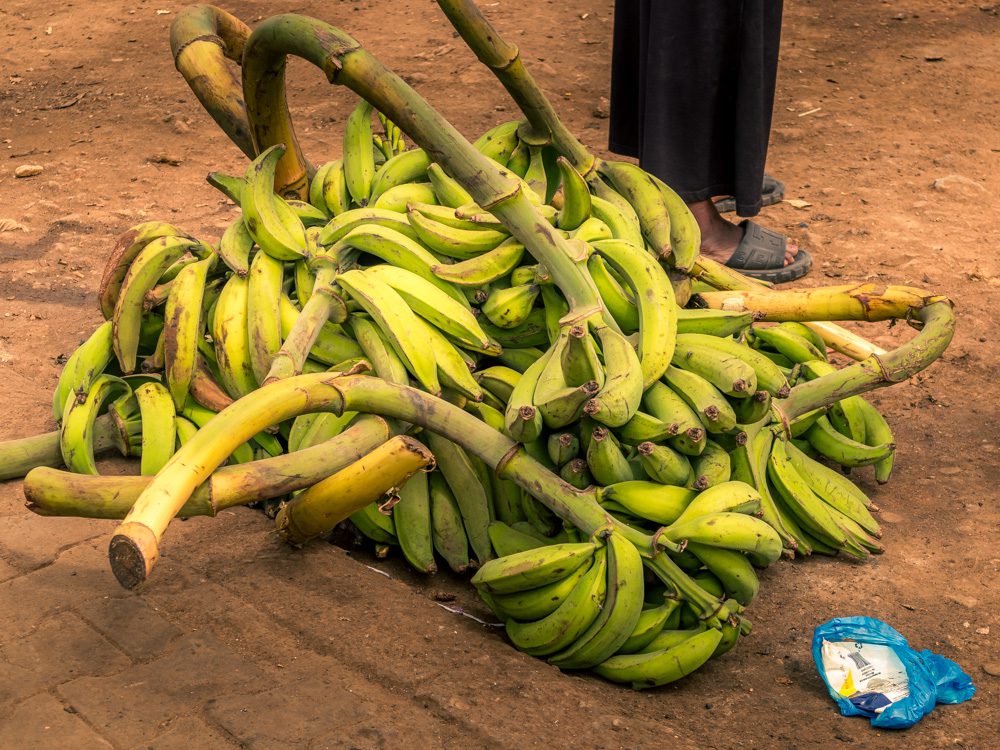
There are three types of bananas in Uganda. The starchy cooking banana are matoke. Gonja are the green plantain variety used for roasting which you often see piles of being sold in the local markets. The ones we are more used to are the smaller ndiizi, a sweet, dessert banana.
Vegetables
Traditional leafy greens like dodo (amaranth leaves), nsugga (colocynth leaves), and bamboo shoots are common in home cooking, often served as part of vegetable stews or savory sauces.
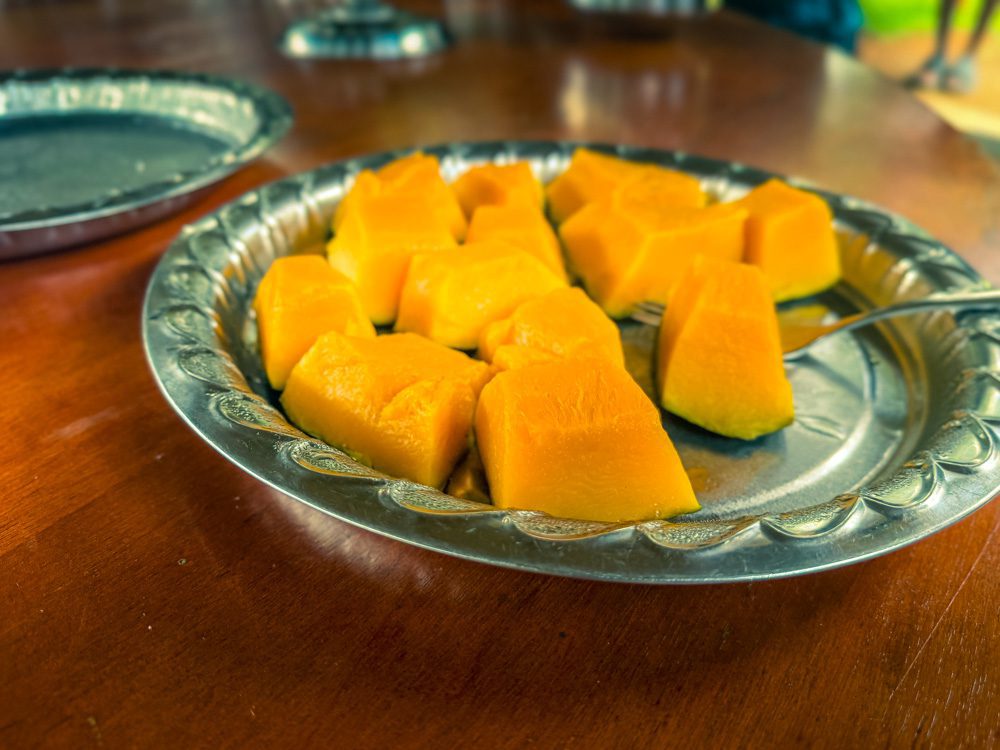
Look out for the green-skinned pumpkin which is served boiled. Fresh avocados
In many rural villages, fresh maize (corn) and root vegetables like cassava, yams, and sweet potatoes form the foundation of a meal.
Sauces and Vegetarian Options
Groundnut Sauce (Binyebwa) – The Creamy Classic
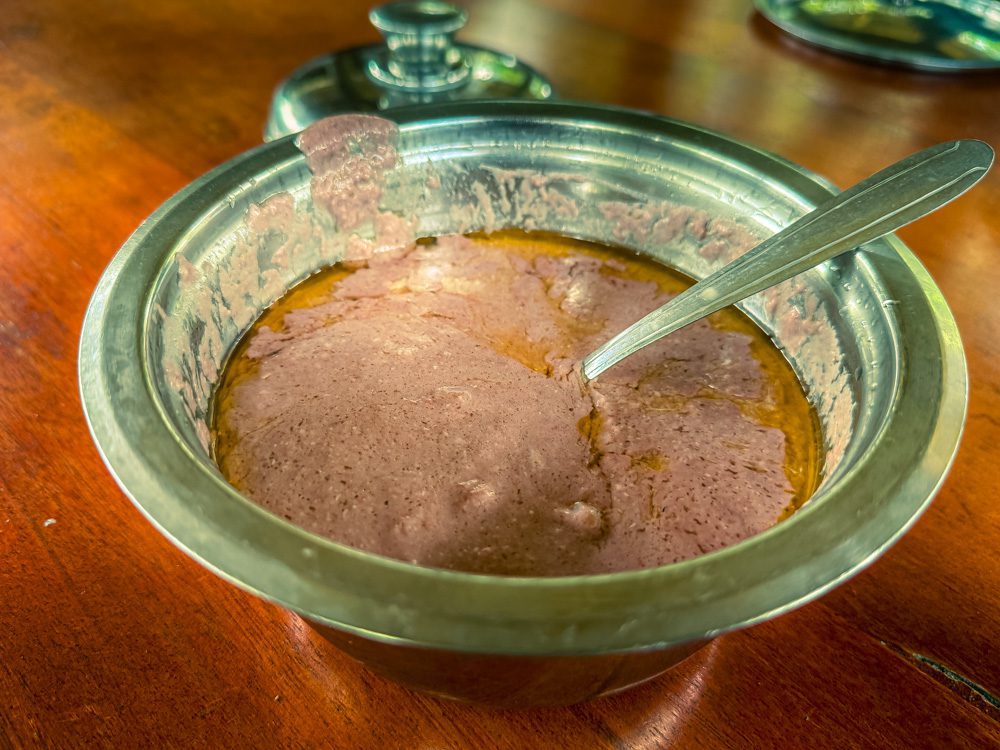
A cornerstone of Ugandan cuisine, groundnut sauce — also known as g-nut sauce — is made from roasted peanuts, creating a creamy nutty sauce that pairs beautifully with matooke, posho, or millet bread. It is served hot and is pink in colour, due to the red skins from the peanuts. If you only try one sauce in Uganda, make it this one!
Vegetable and Bean Stews
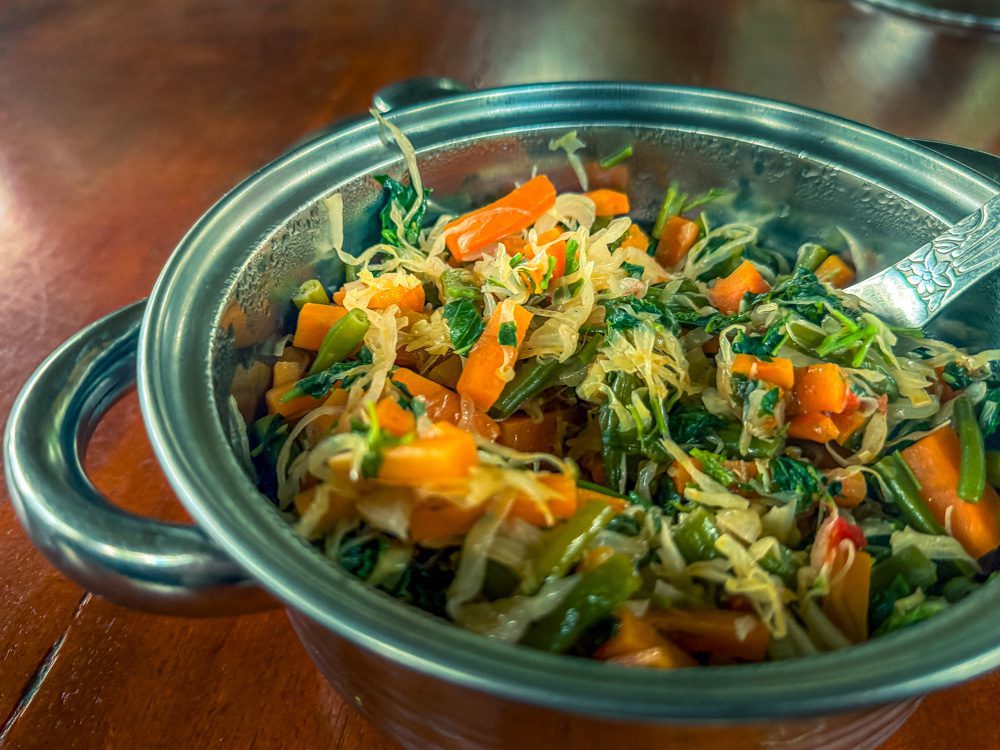
Vegetarian travellers will love the range of vegetable stews found across Uganda. These dishes often include local greens, beans, and sesame seeds cooked in peanut butter or tomato-based sauces.
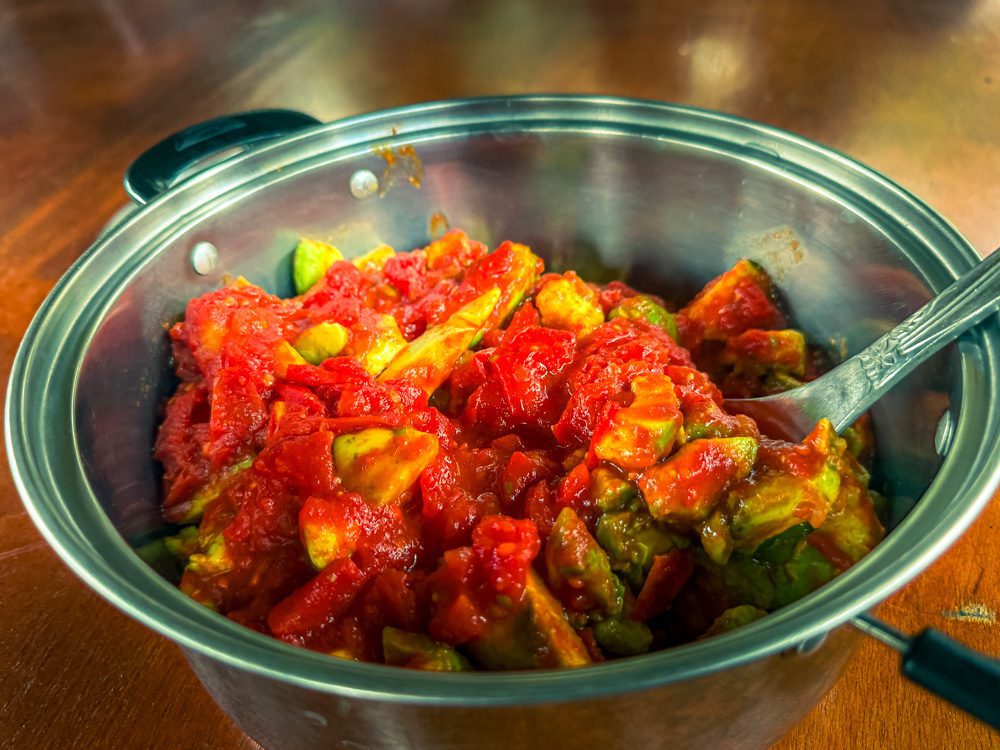
Whether you’re at a traditional Ugandan restaurant or eating in someone’s home, you’ll always find a vegetarian option — a reflection of Uganda’s warm hospitality.
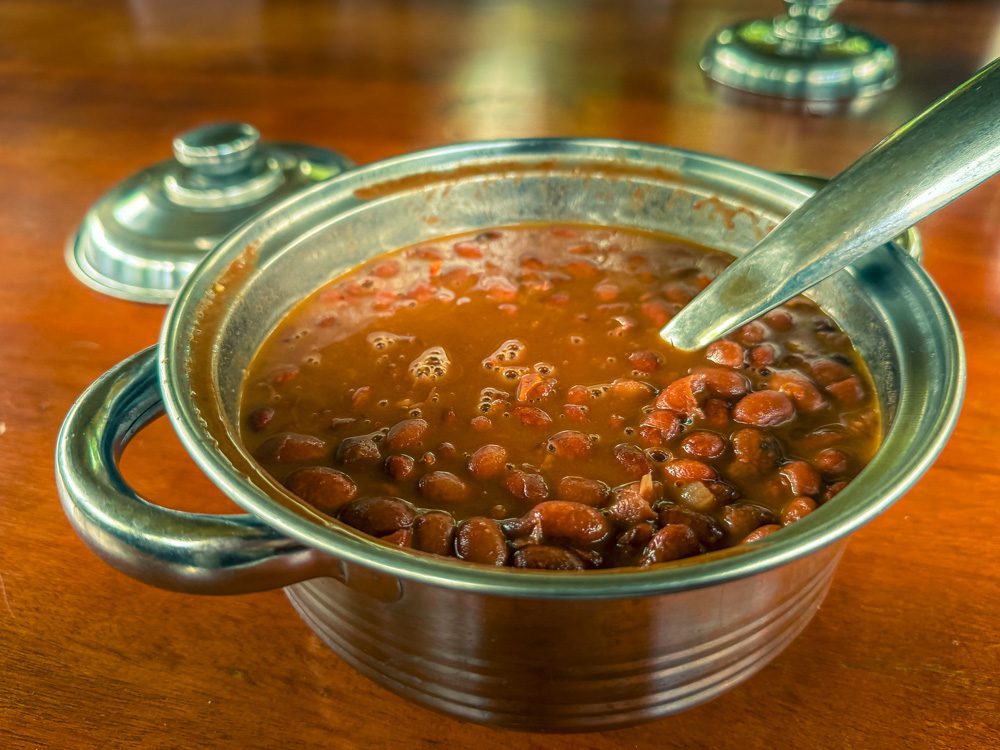
Most hotels and lodges provide Western vegetarian options on their menus as well as Ugandan food.
Chilli Sauce and Oil
On most table you will find a bottle of chilli oil or sauce which is liberally added to everything from eggs to stews and virtually everything in between. If you are tempted, try small amounts first, as it can blow your socks off!
Traditional Drinks
Uganda is also known for its refreshing local beverages:

- Coffee – Grown in the highlands, Ugandan coffee is smooth, aromatic, and among the best in Africa. Try it freshly brewed in local cafés or visit one of the community hubs to watch it being roasted, ground, brewed and served in front of you.
- Tea (Chai) – Usually milky and sweet, Ugandan tea is a comforting daily staple. If you are ordering tea in a hotel or lodge do remember to ask for cold milk if, like me, you prefer it.
- Waragi – A locally distilled gin made from bananas or sugarcane, often flavoured with fruit. It is quite powerful neat, so maybe try with tonic or soda for a taste of Uganda’s spirited side.
- Nile- the local beer, available in different strengths
- Stoney Tangawizi – a delicious ginger beer
- Bushera, a traditional fermented millet drink
- Fresh Juices – Pineapple, passion fruit, mango, and watermelon juices are available everywhere and make a refreshing treat in the heat.
Desserts
Desserts are simple but delightful: ripe bananas, roasted groundnuts, or local honey drizzled over jackfruit make a naturally sweet ending.
Exploring Uganda’s Food Culture
What makes Ugandan meals so special isn’t just the taste — it’s the way meals bring people together. From roadside rolex stalls to elaborate luwombo feasts, every dish tells a story of community, tradition, and pride.
Each region and different tribes — from the fertile lands of eastern Uganda to the bustling streets of Kampala — contributes its own flavours, techniques, and ingredients. It’s African cuisine at its most authentic and diverse.
So, as you explore Uganda’s natural wonders, make sure you also taste your way through its culinary heart. Whether you’re enjoying matooke at a family gathering or trying muchomo at a roadside grill, you’ll be discovering a piece of the country’s soul — one delicious bite at a time.
However…….
However, if local delicacies are not your thing, most restaurants and hotels serve a range of continental cuisines from burgers, to pizzas, Mexican, Indian – try The Great Indian Dhaba, the best place for Indian food in Kampala -, meat stews,
Frequently Asked Questions
What is Uganda’s national dish?
The national dish of Uganda is matooke, a steamed and mashed green plantain dish served with savoury sauces such as groundnut sauce or hearty meat stews.
Is Ugandan food spicy?
Most Ugandan food is mildly seasoned rather than spicy, though you can find hot chilli sauces and Indian-influenced dishes in urban areas. There is always a bottle of chilli sauce available if you like your food spicy.
What vegetarian options are available in Uganda?
Uganda has plenty of vegetarian food including groundnut or peanut sauce, vegetable stews, bean dishes, chapati, posho, and fresh fruits and vegetables. Most lodges and hotels offer a vegetarian option. If you are travelling with a guide, let them know in advance.
Where can I try traditional Ugandan dishes?
Traditional restaurants, rural villages, street stalls, and popular local eateries in Kampala and Entebbe all serve authentic Ugandan cuisine. Many of the lodges also serve a traditional dish on the menu. Buffalo Safari Lodge in Queen Elizabeth National Park, have Ugandan food on the menu.
What is the best street food in Uganda?
The most famous street food is the rolex, a rolled chapati with omelette — a favourite breakfast and snack across Uganda.
Final Thoughts
Uganda’s food scene is as warm and welcoming as its people. From the bustling streets of Kampala to rural villages in the northern and eastern regions, traditional Ugandan dishes play a central role in daily life, celebrations, and family gatherings.
Whether you’re tucking into matooke, Uganda’s national dish, sampling a freshly made rolex from a “rolex guy” on the corner, or enjoying a hearty stew alongside posho or millet bread, you’ll find that Uganda’s best dishes are rooted in simplicity, natural ingredients, and deep cultural significance.
What makes Uganda’s food so memorable is its variety. Different tribes and ethnic groups across the country have their own specialty dishes, flavours, and cooking traditions. Y
ou’ll notice how root vegetables, fresh fruits, green plantains, fresh maize, creamy sauces, peanut-based dishes, and vegetable stews all feature in different ways depending on the region. Uganda’s cuisine is nourishing, diverse, and surprisingly vegetarian-friendly, with many dishes naturally free of meat and rich in vegetables, legumes, and savoury sauces.
As you explore local eateries, traditional restaurants, and everyday meals in Ugandan homes, you’ll discover that food here is more than sustenance — it’s a story of history, geography, and the rhythms of daily life.
Sampling local delicacies, street snacks, and traditional Ugandan stews is one of the best ways to understand the country’s culture. Every dish tells you something about its people: their resourcefulness, hospitality, and connection to the land.
So whether you’re visiting Uganda for its wildlife, its natural beauty, or its rich cultural experiences, make sure you set aside time — whatever the time of day — to savour its cuisine. Uganda’s food is hearty, wholesome, and unforgettable, and tasting your way through the country is truly one of the must-try experiences for any traveller.
Have you travelled to Uganda or planning a trip soon? Share your thoughts or questions in the comments below — I’d love to hear from you!
Use these Uganda Travel Tips to plan your adventure!
- Plan your trip with these Uganda Travel Guides.
- Take a guided tour with one of G Adventures Uganda trips
- Get the best deals on flights with Skyscanner.
- Find the perfect place to stay in Uganda on Booking.com.
- Buy your e-sim before you go with Airalo.
- Explore more about Uganda with local experiences.
- Don’t forget to arrange your travel insurance.
Don’t forget to pin this article so you can come back to it later