When travellers talk about Madhya Pradesh, the usual suspects spring to mind: the wildlife of Kanha and Bandhavgarh, the temples of Khajuraho, or the splendour of Gwalior and Orchha. Yet tucked away on the banks of the Tapti River lies Burhanpur — a city that was once one of the most important Mughal strongholds in India, and today remains a fascinating, if under-visited, destination.
Rich in history, with impressive architecture, intricate water systems, and an authentic old-world charm, Burhanpur is a hidden gem that rewards those who make the effort to get there.
*This site uses affiliate links and I may earn a small commission when you use my links and make a purchase without incurring an additional fee yourself.
Thank you for supporting this website. See my disclaimer page for more details.
A special thank you to the team at the Madhya Pradesh Tourism Board for hosting me during my trip in Madhya Pradesh. All opinions expressed above are entirely my own.
But — and this is important — it’s not for everyone. Burhanpur is a city for history lovers, architecture enthusiasts, and curious travellers who enjoy going a little off the beaten path and who don’t mind roughing it a bit.
If that sounds like you, here’s my guide to the best things to do in Burhanpur.
A Glimpse into the History of Burhanpur
Burhanpur was founded in 1388 by the Faruqi dynasty and later flourished under the Mughals, becoming the capital of the Khandesh sultanate. Strategically positioned on the Tapti River, it served as the gateway to the Deccan, the vast, ancient plateau of southern India, bounded by the Western and Eastern Ghats.
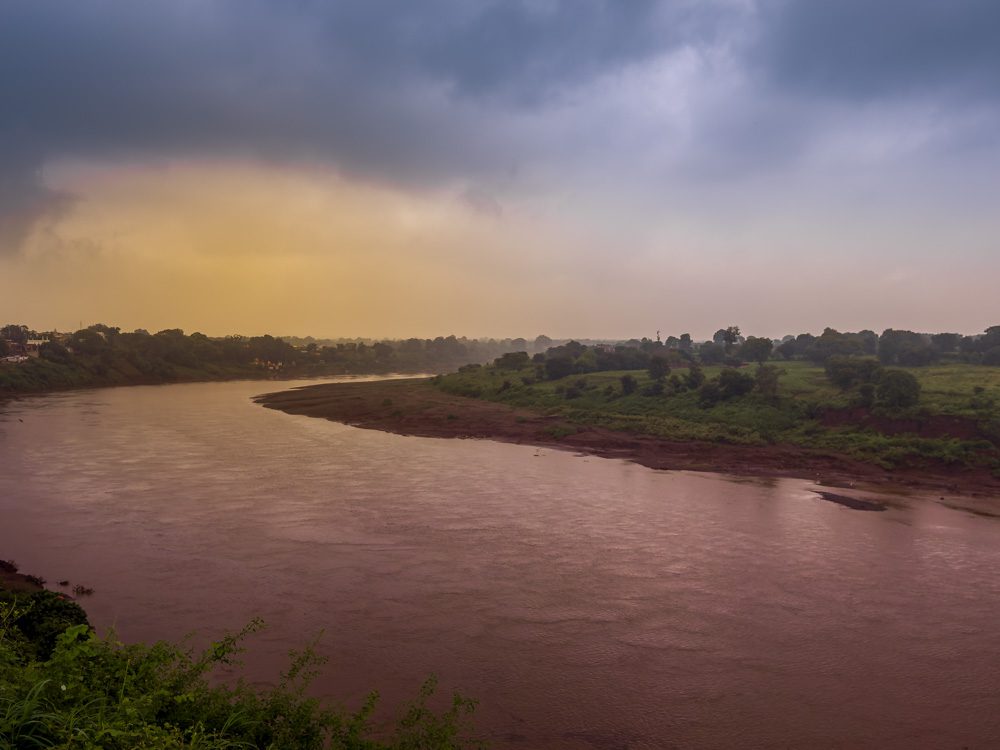
The city was beloved by Shah Jahan, and it is here, in fact, that his wife, Mumtaz Mahal — the woman for whom the Taj Mahal was built — took her last breath.
Originally, the Taj Mahal was going to be built at Burhanpur. However it was decided that the Agra was better positioned to access the white marble from Rajasthan and that the Tapti River was not wide enough to give an impressive reflection.
Aurangzeb also ruled from Burhanpur, reinforcing its importance in Mughal India. Despite this illustrious past, Burhanpur has remained surprisingly low-key, making it a rewarding place for those who appreciate undiscovered corners of history.
Top Things to Do in Burhanpur
Visit the Jama Masjid Mosque
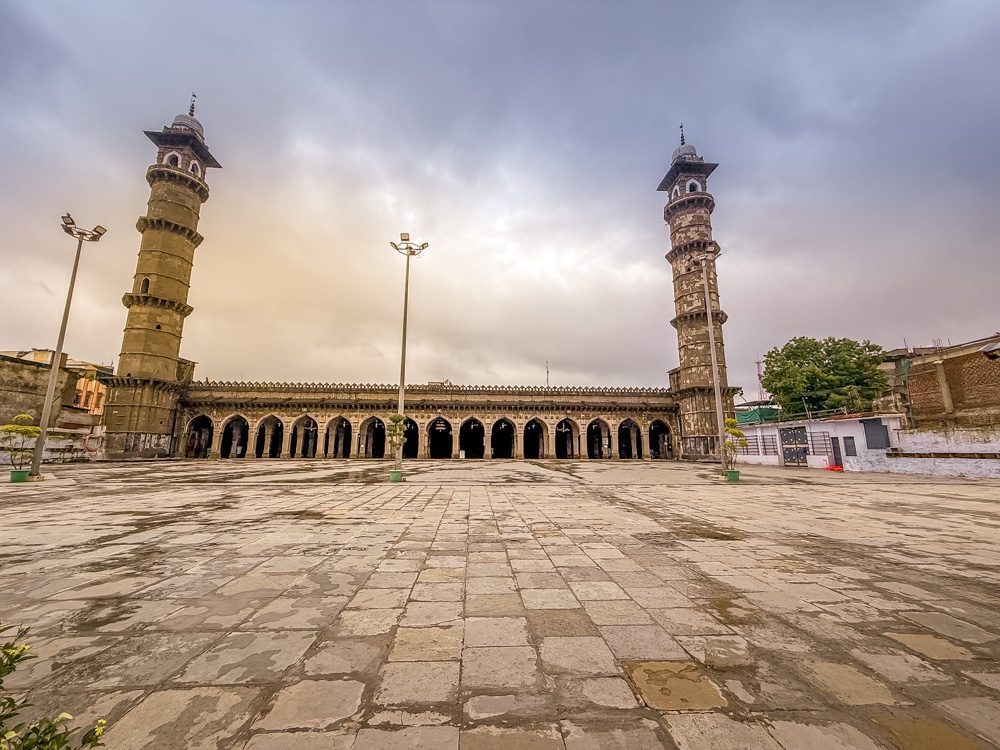
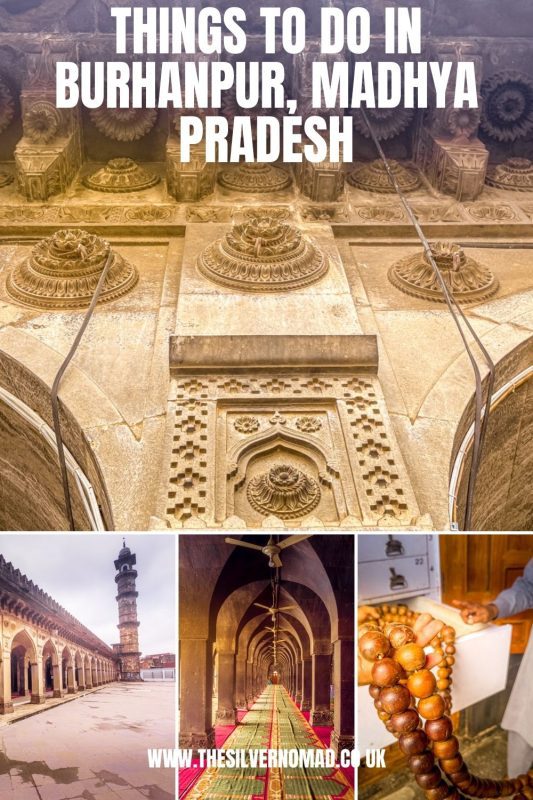
Built in 1589 by Abdul Rahim Khan-i-Khana, the Jama Masjid of Burhanpur is one of the finest examples of Mughal architecture in the city.
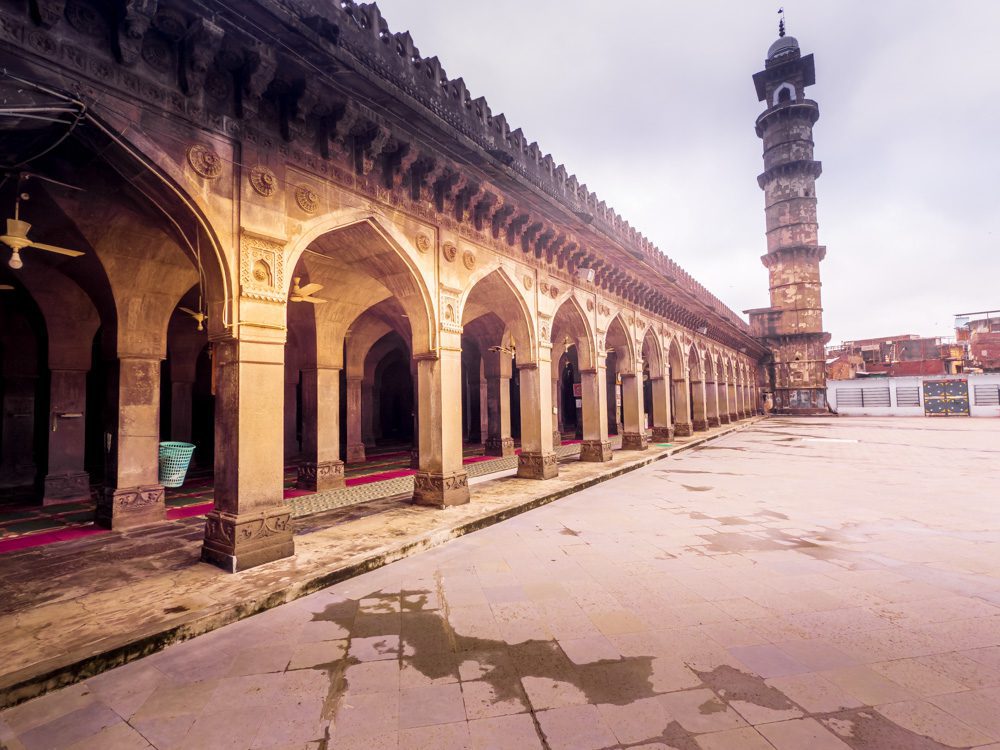
Although it is in the centre of Burhanpur, the mosque is tucked away and not obvious. Its wide open courtyard and graceful arches create a sense of calm and grandeur.
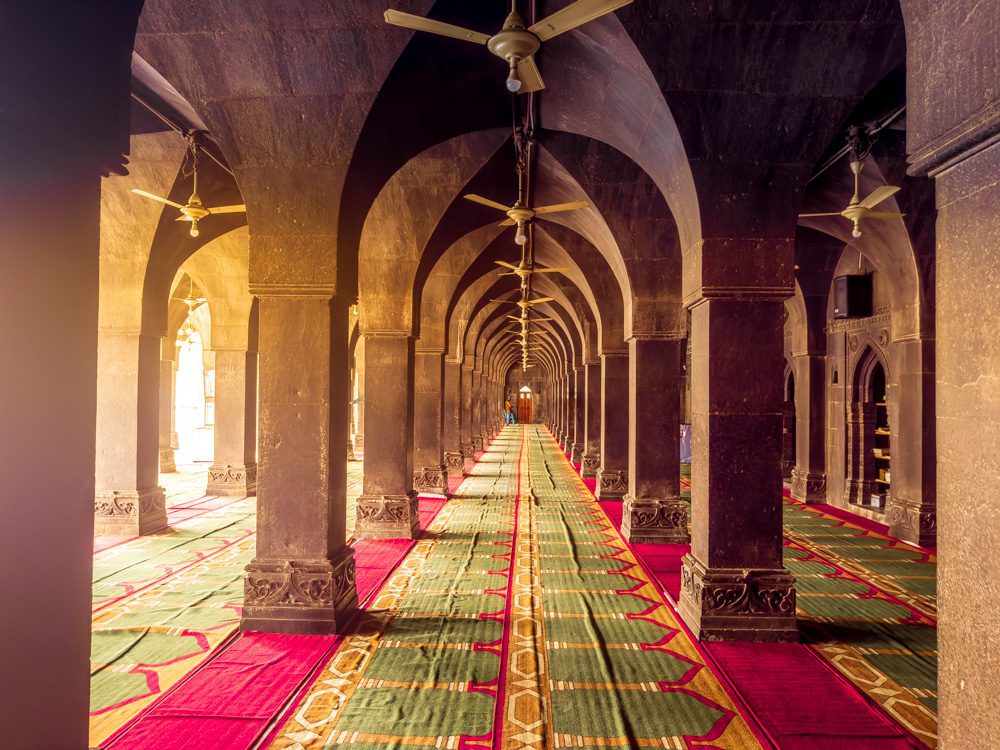
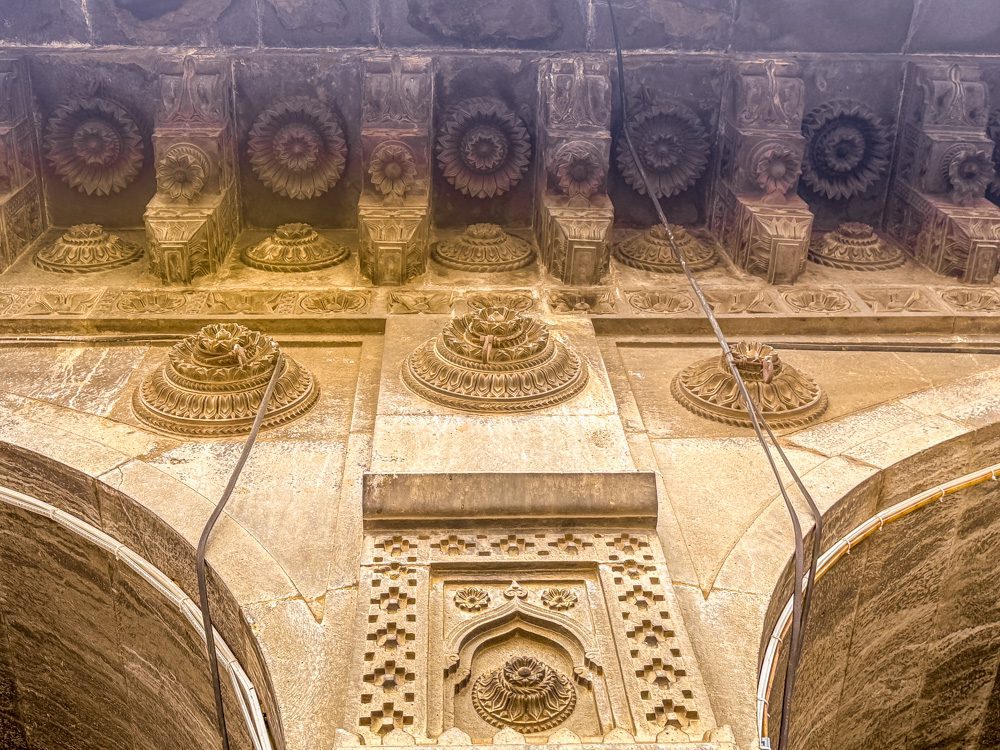
The walls and arches are intricately carved with delicate designs and roses. There are also inscriptions from the Quran in Arabic and Sanskrit .
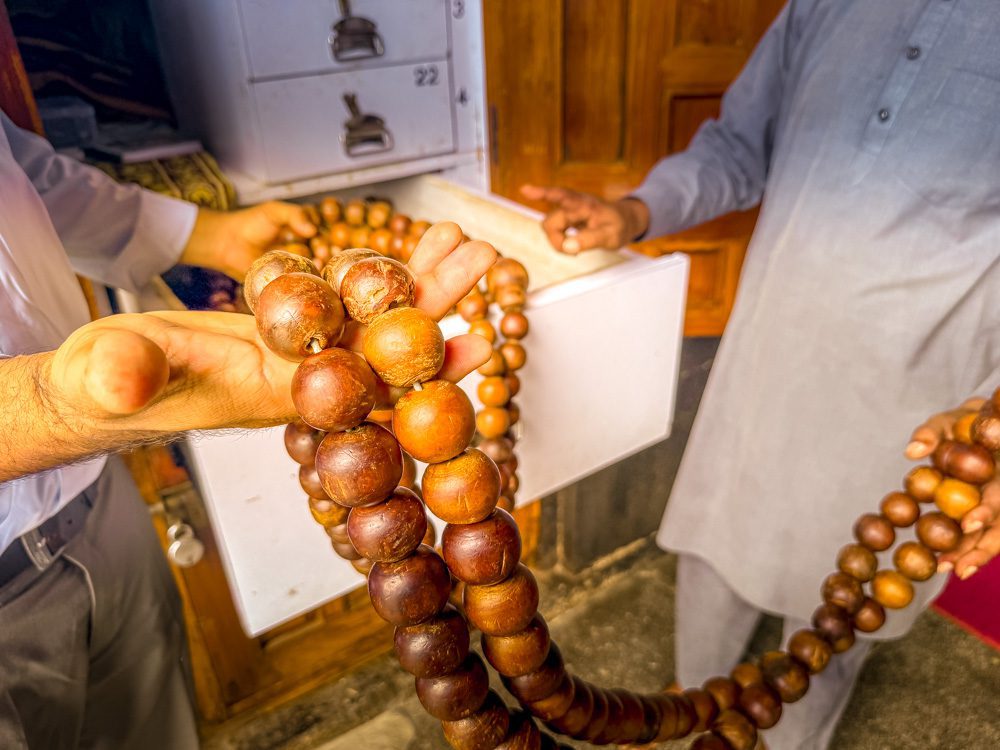
If you can, try to see the “Big Tasbeeh”. Believed to be from the old Mughal era, the Big Tasbeeh is a large set of prayer beads (Misbahah/Tasbih), kept as an artefact in a drawer to the side, it is amazing to see.
Although it lacks the crowds of more famous mosques, the tranquillity of the Jama Masjid is part of its charm.
Address: Sunarpatti Rd, Chandrakala, Monin Pura, Burhanpur,
Explore the Shahi Qila (Royal Palace)
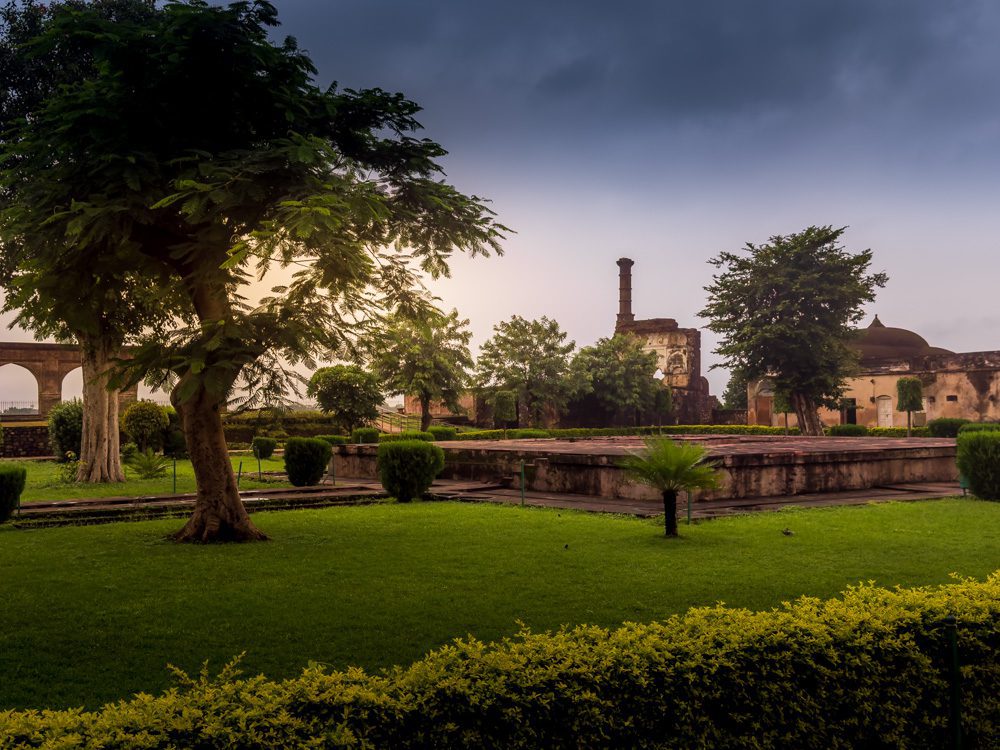
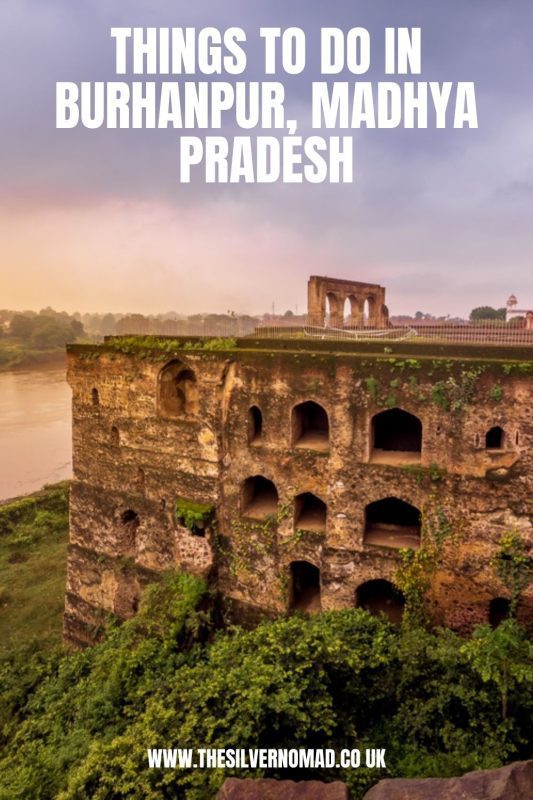
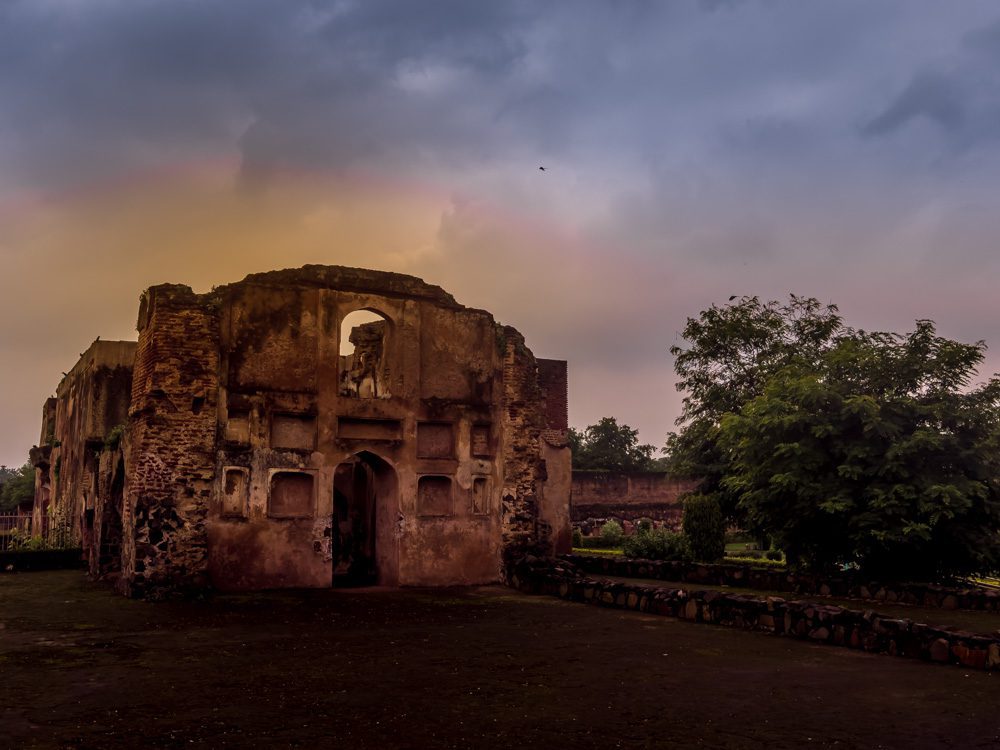
Perched 80 feet above the banks of the Tapti River, the Shahi Qila was once the royal residence of Shah Jahan. Though much of it now lies in ruins, the surviving structures offer a glimpse into the luxury of Mughal court life.
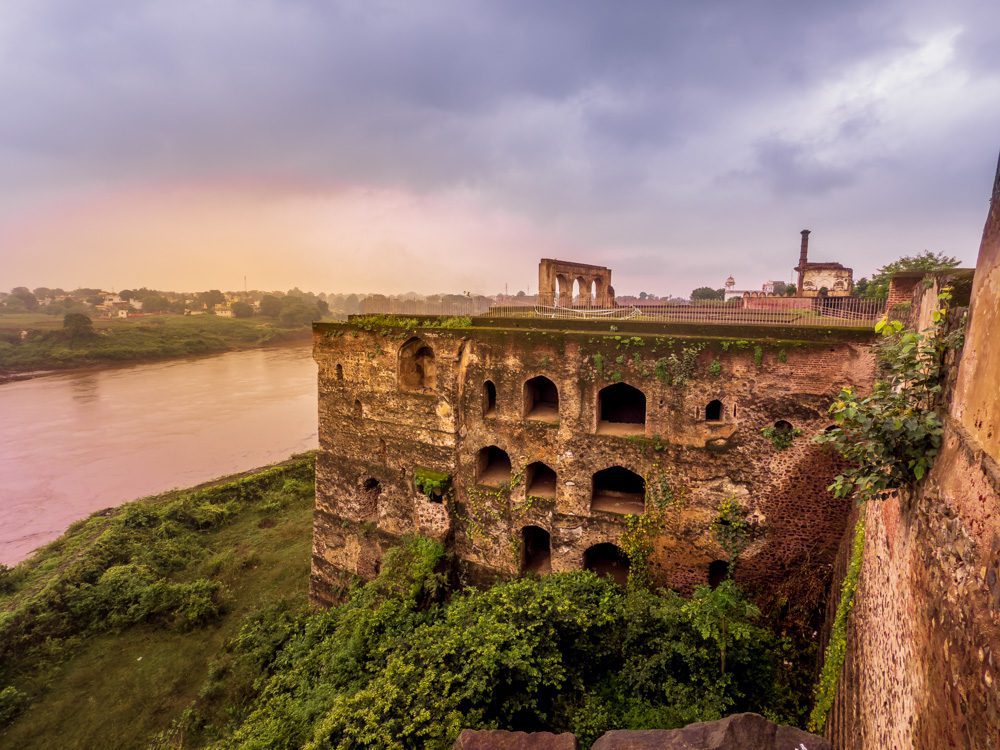
The Palace was built over seven levels, though the lower levels are not accessible now due to age. From the balconies at the top, you get a 180 degree view down the river.
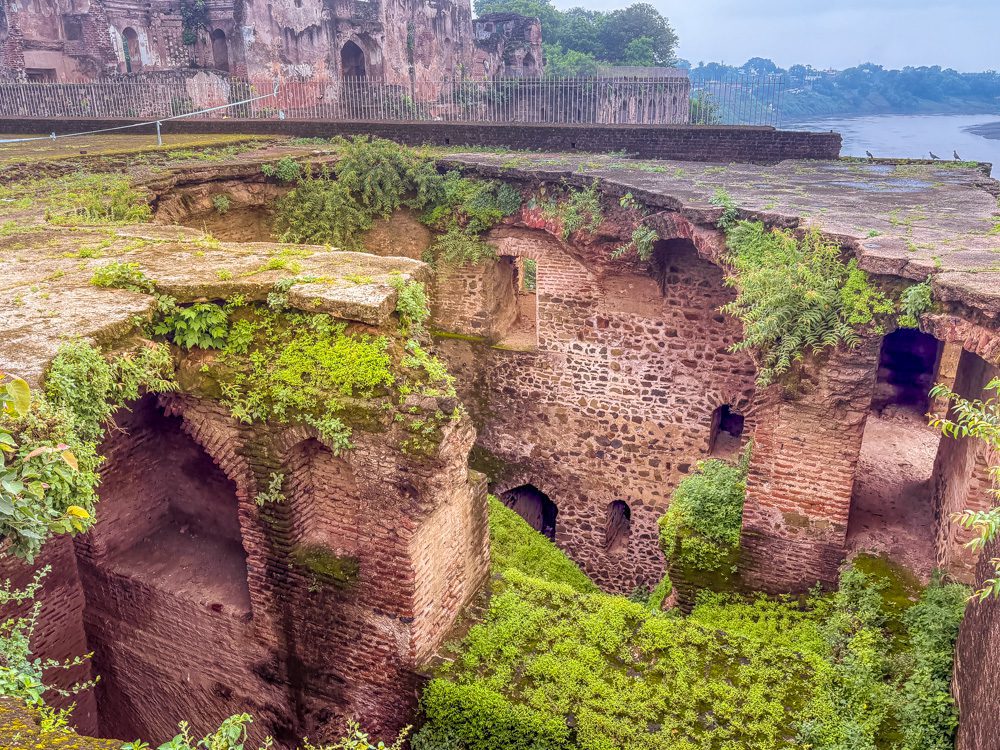
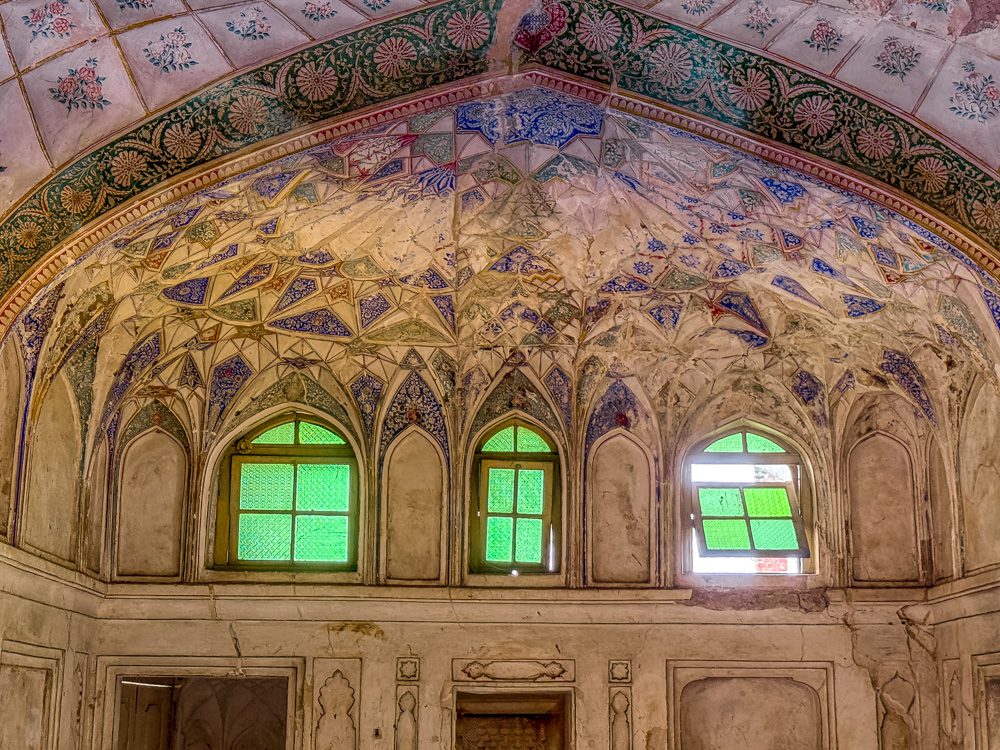
The highlight is undoubtedly the Hammam, or royal bathhouse. Decorated with intricate frescoes and equipped with a clever heating and water system, it feels remarkably modern for its time. Standing inside, it’s easy to imagine royal conversations echoing through the steamy air.
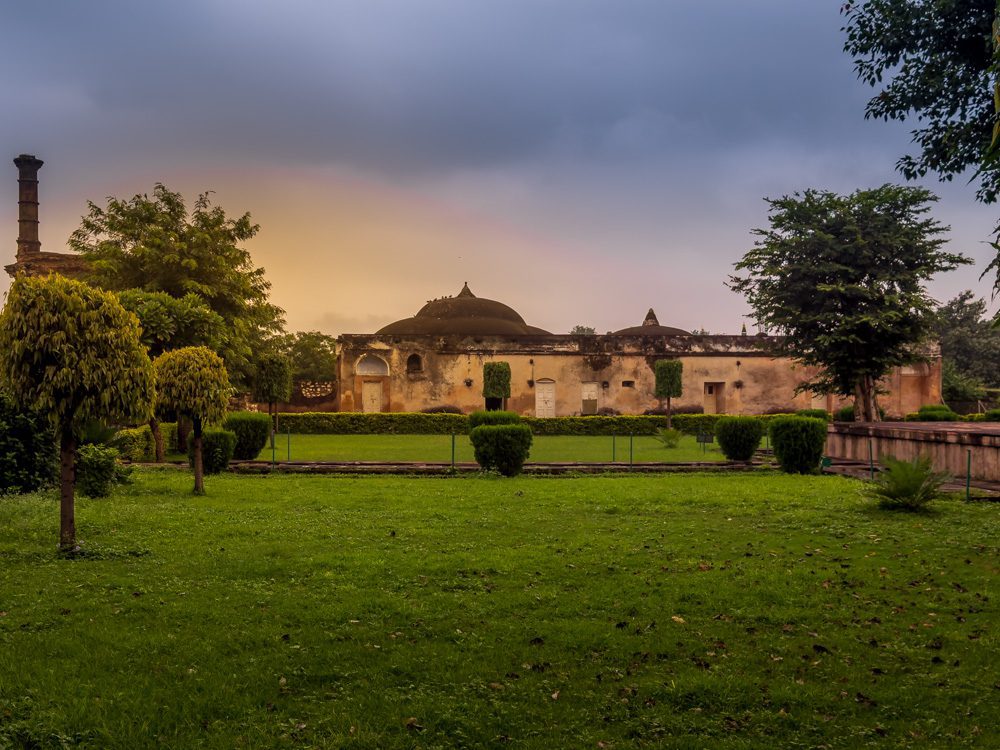
Address: Rajpura Road, Monin Pura, Burhanpur
The Hammam (Royal Bathhouse)
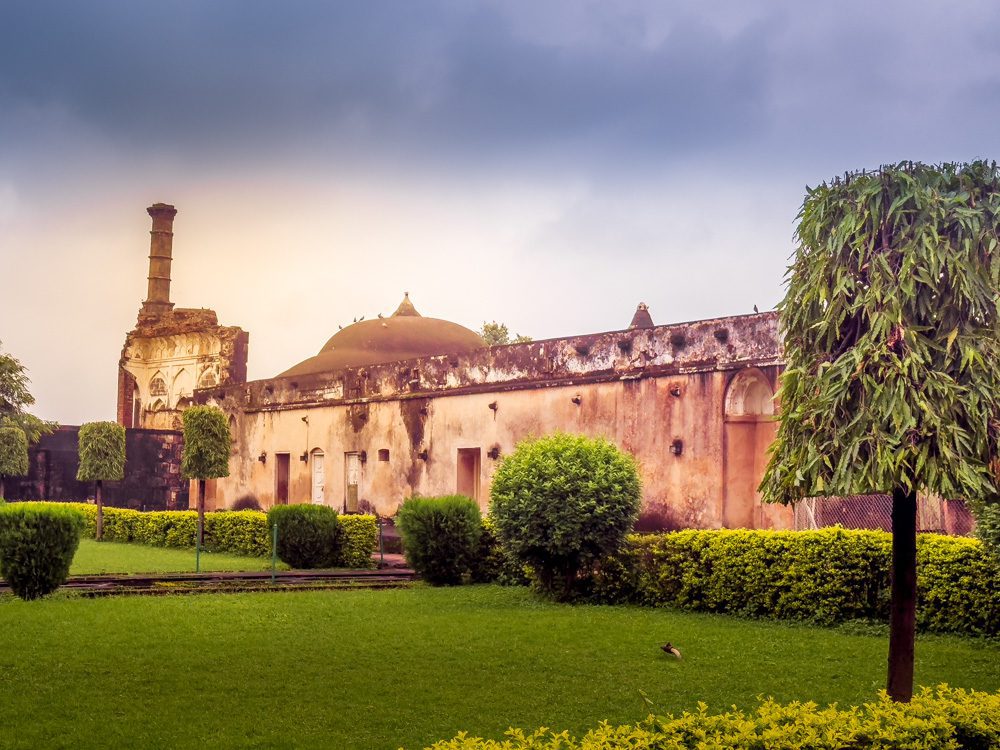
The Hammam deserves a special mention. Legend has it that Shah Jahan commissioned this opulent bathhouse for Mumtaz Mahal. It includes channels for hot and cold water and a design inspired by Turkish baths. Some of the colourful frescoes survive to this day including two that resemble the Taj Mahal.
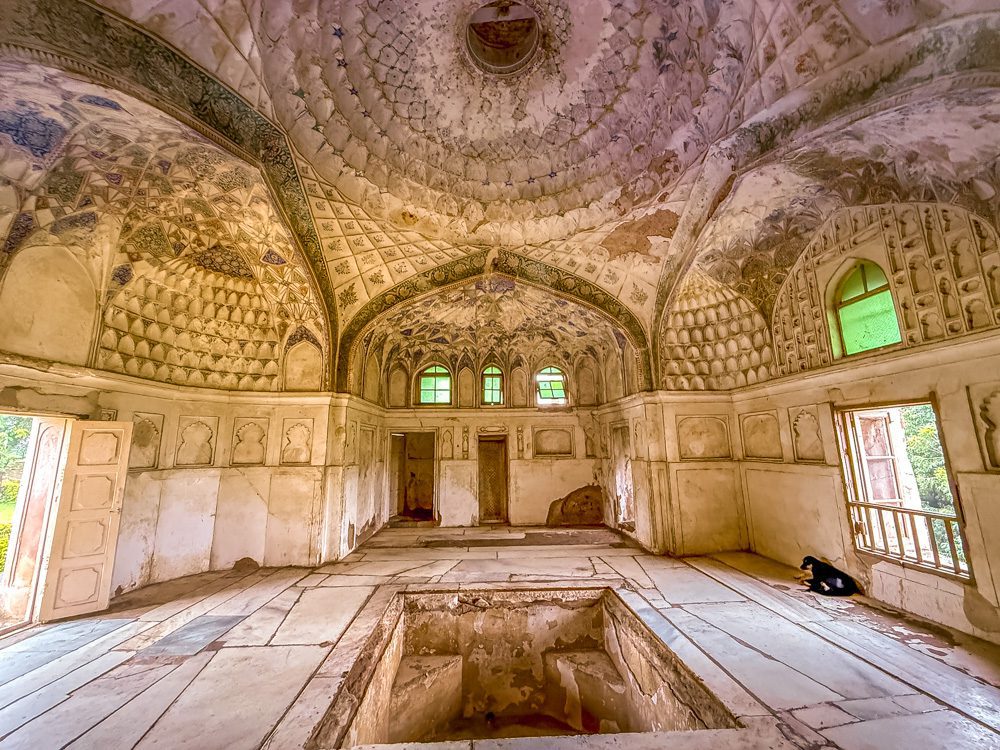
This was also the place where Mumtaz spent her final moments, dying during the birth of her 14th child. She was temporarily interred in Burhanpur before her body was taken to Agra, where Shah Jahan built the Taj Mahal in her memory. For lovers of history, standing here is a poignant experience.
Dargah-E-Hakimi
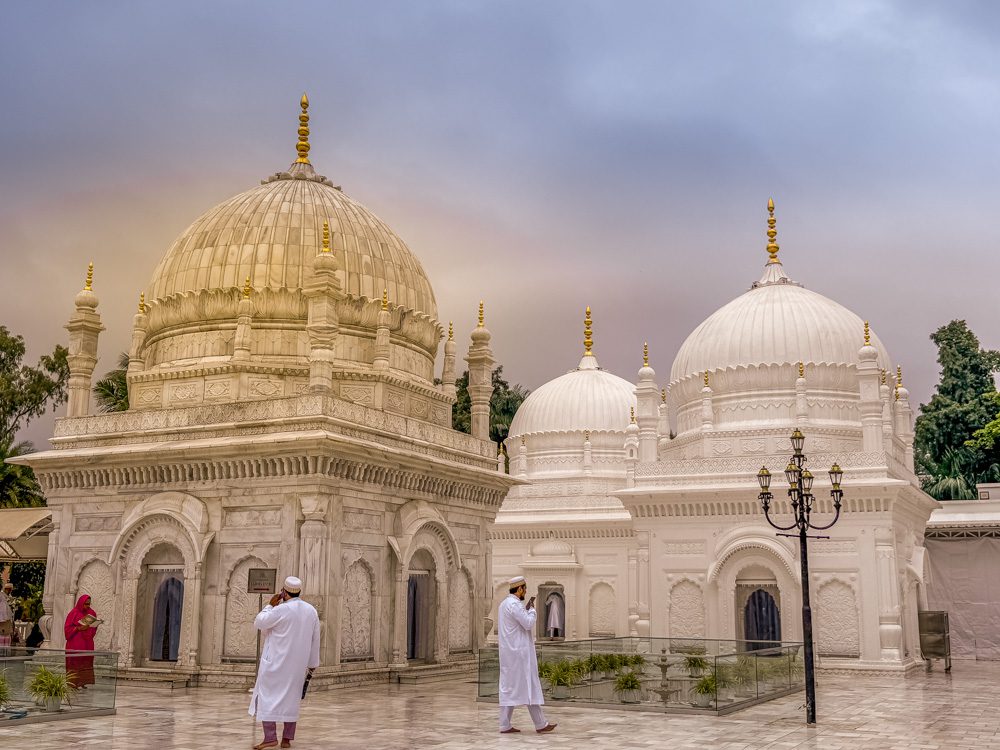
Burhanpur is an important pilgrimage site for the Dawoodi Bohra community, thanks to the Dargah-E-Hakimi. The stunning white marble mausoleum complex, set amidst beautifully maintained gardens, is dedicated to Syedi Abdul Qadir Hakimuddin.
The three intricately carved mausoleums or dargah, have male and female entrances. No photography may be taken inside them, though outside is acceptable.
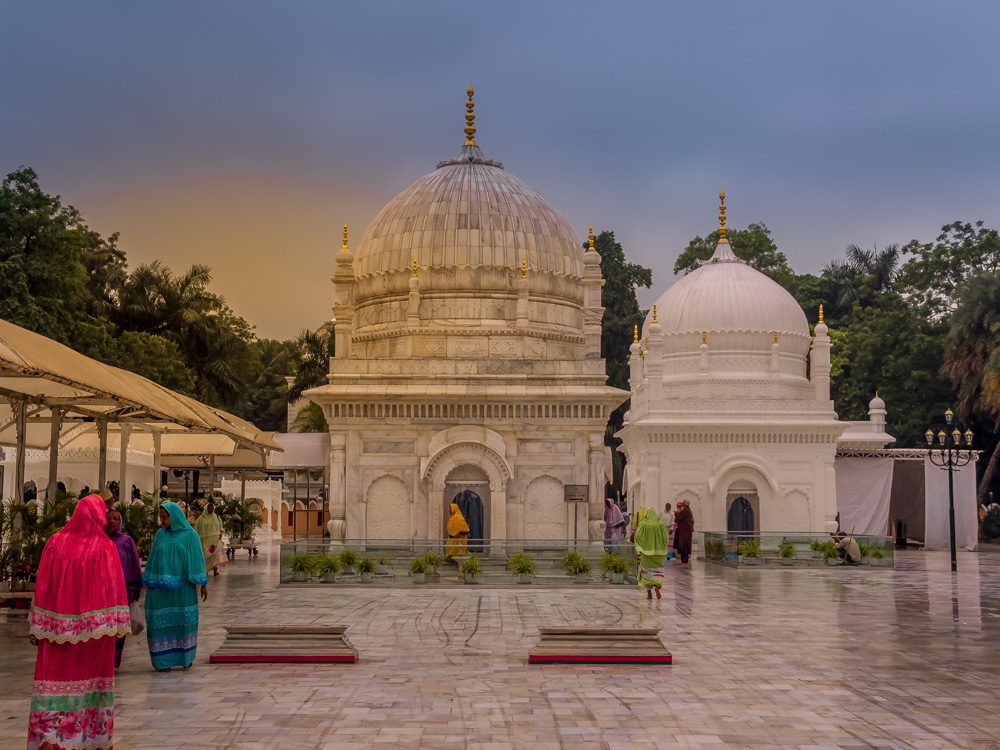
The complex exudes serenity, and even if you are not visiting for religious reasons, the atmosphere is peaceful and welcoming. It’s a good place to step away from the bustle of the old city.
Out of respect, women are required to cover their heads as well as their shoulders, with trouser or skirts at least calf-length. Men also need to cover their heads. Inside the mausoleum sanctum, bare feet are expected and you can leave your shoes at the entrance. Do be careful if there has been rain, the marble can be slippy.
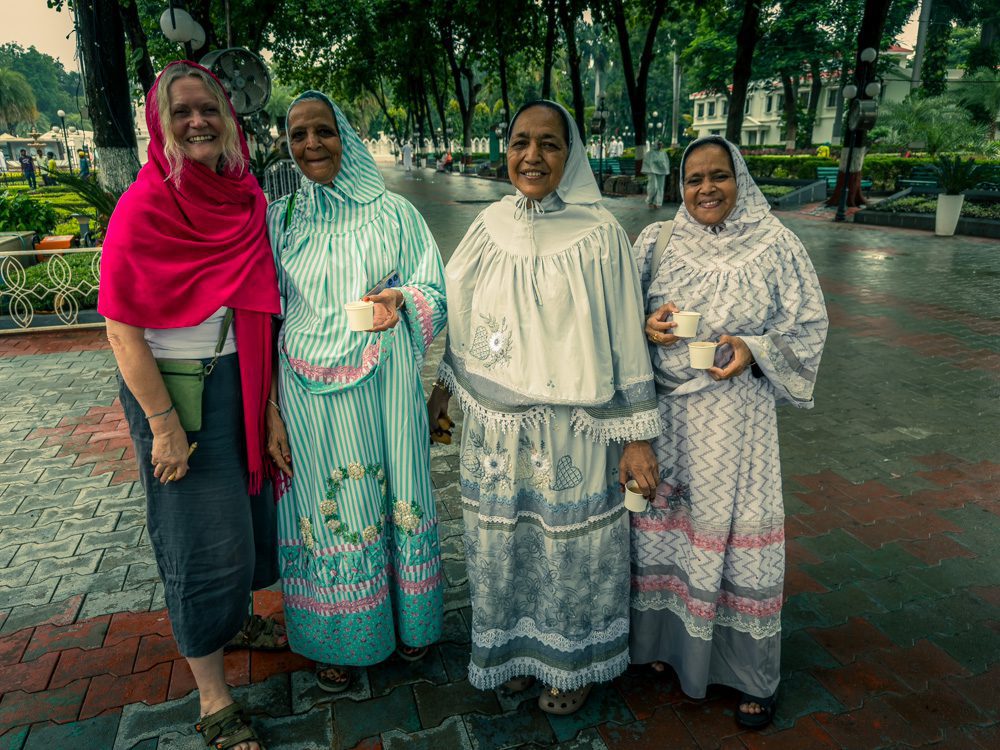
I found it interesting that the women from the Dawoodi Bohra community wear a colourful two-piece Rida with a long skirt and a matching poncho-like top with a hood. These can have embroidery or lace on them.
Address: Shah Colony, Lodhipura, Burhanpur
Asirgarh Fort
About 20 kilometres from Burhanpur stands the mighty Asirgarh Fort, often called the “Key to the Deccan.” Whoever controlled this fort controlled the routes into southern India, and it was held by a succession of rulers including the Mughals and the British.
The fort sits atop a hill, offering sweeping views of the surrounding plains. Within its walls, you’ll find a mosque, a temple, and even a church, reflecting its layered history. Be prepared for a bit of a hike, but the panorama is worth it.
Address: Asha Devi Road, Burhanpur
Burhanpur’s Aqueducts
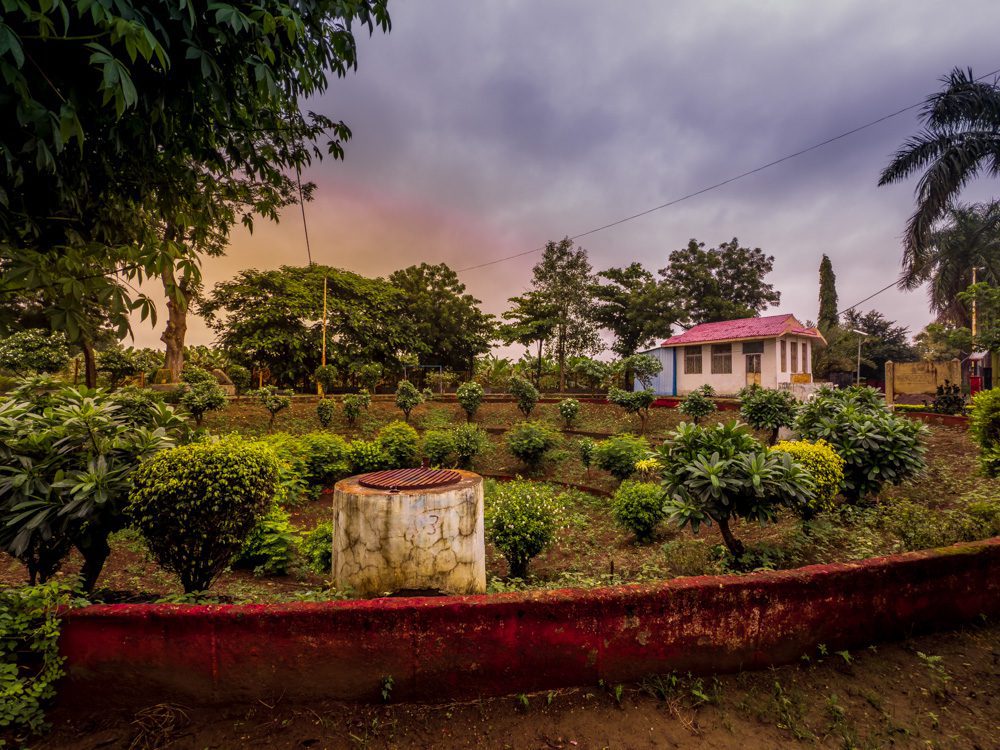
An underground water system may be a bizarre thing to visit, but Burhanpur’s underground water system is one of its most fascinating engineering feats.
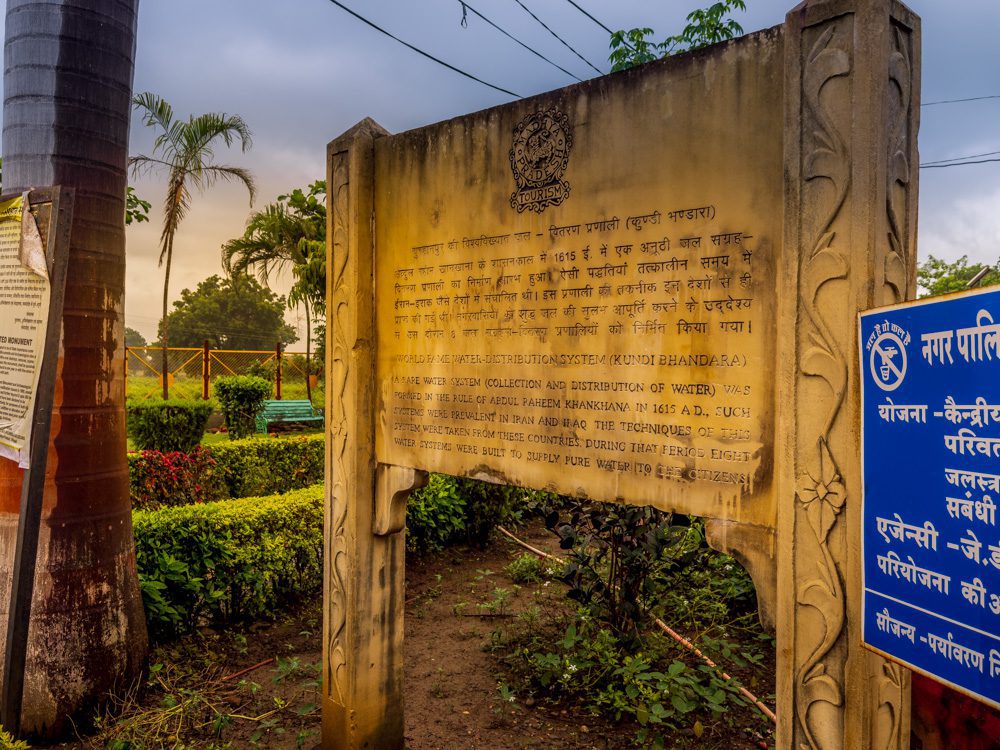
Known as Kundi Bhandara, this 17th-century network of stepwells and aqueducts still functions today, supplying water to the city. As you drive along the road to the first you can see numbered well or kundis. There are a total of 103 of them.
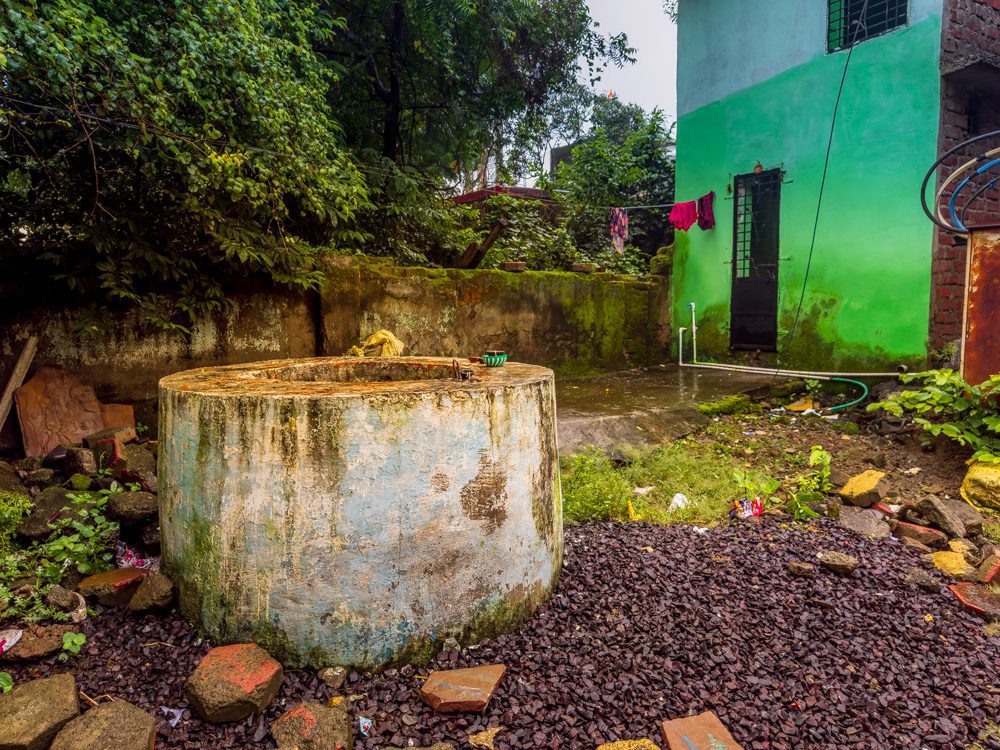
Exploring these subterranean channels is both intriguing and slightly eerie, a reminder of the ingenuity of Mughal engineers.
The Tomb of Shah Nawaz Khan (The Black Taj Mahal)
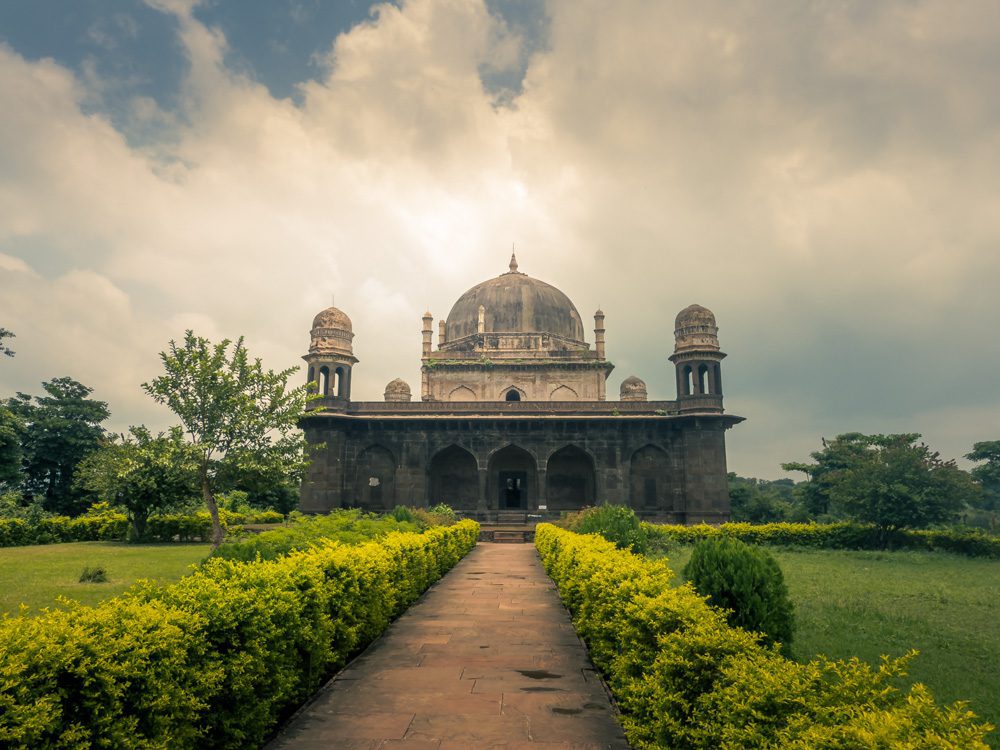
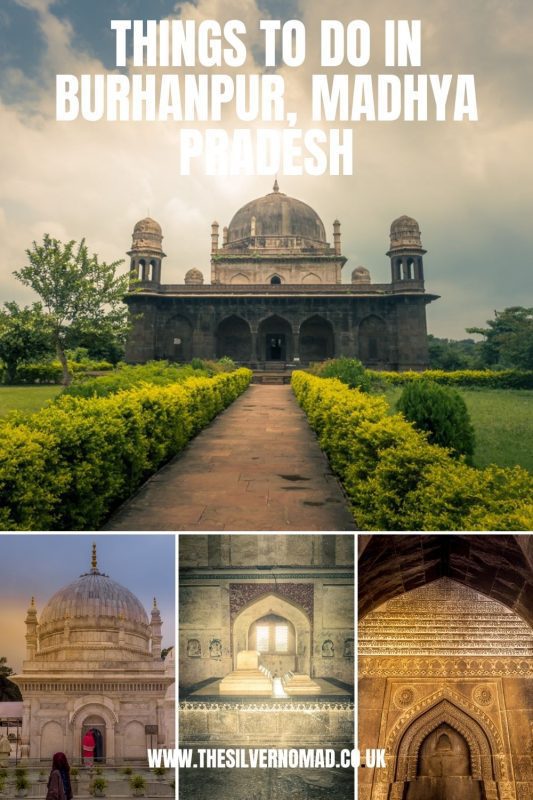
While Agra has the world-famous white Taj Mahal, Burhanpur has its own lesser-known counterpart: the Black Taj Mahal. Built in black stone as the tomb of Shah Nawaz Khan, a Mughal nobleman, it resembles the Taj on a much smaller scale.
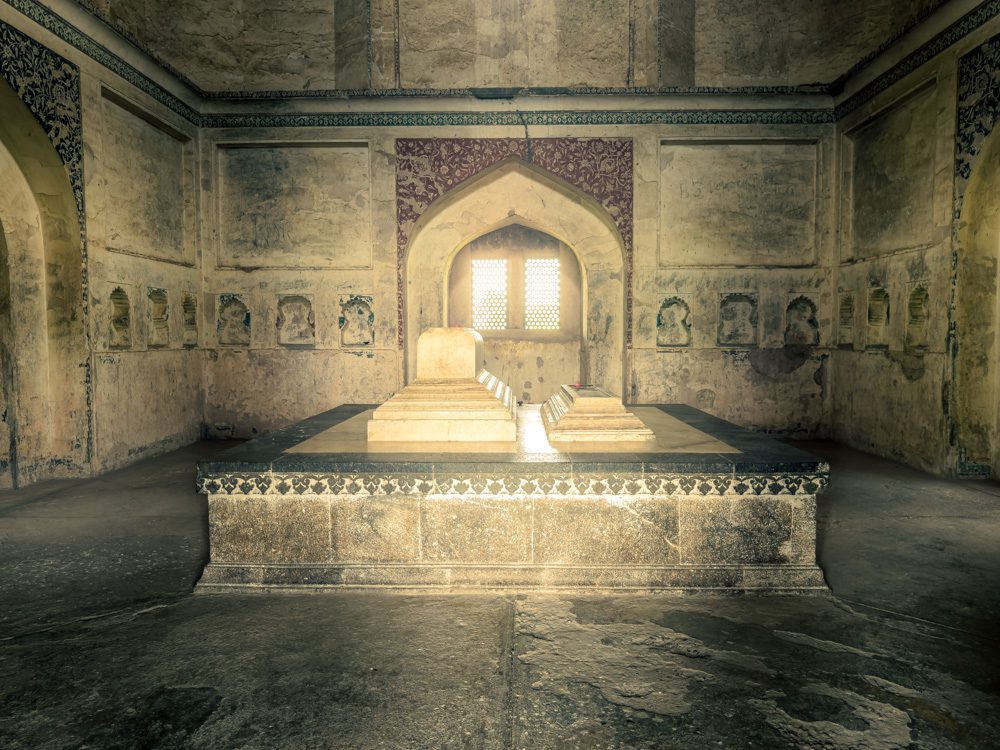
It is a bit tricky to get to, with a steep, unmade road, but worth the journey. Though time has weathered its walls, it remains an evocative sight and a photographer’s delight.
Address: Bahram Shah Tomb, Teressa, Burhanpur,
Bibi ki Masjid
This smaller mosque is another gem of Burhanpur’s Mughal architecture. Its elegant arches and peaceful courtyard are perfect for a quiet visit.
Sitabuldi Hill and Natural Surroundings
For a breath of fresh air, head out to Sitabuldi Hill, which offers fine views of the city and surrounding countryside. It’s a lovely spot for photography or simply to enjoy Burhanpur from a different perspective.
Local Markets and Textiles
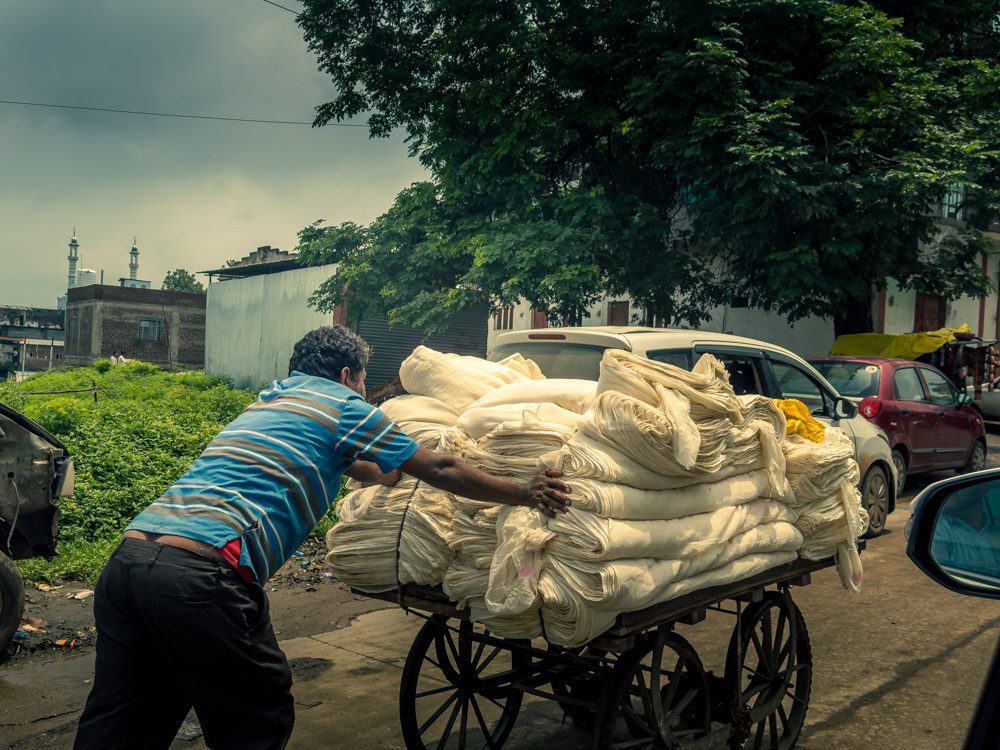
Burhanpur has long been famous for its cotton and textiles. Its weavers are known for zari (gold-thread embroidery) and fine handloom fabrics. Exploring the markets is a great way to pick up souvenirs and see the city’s living traditions.
Street Food
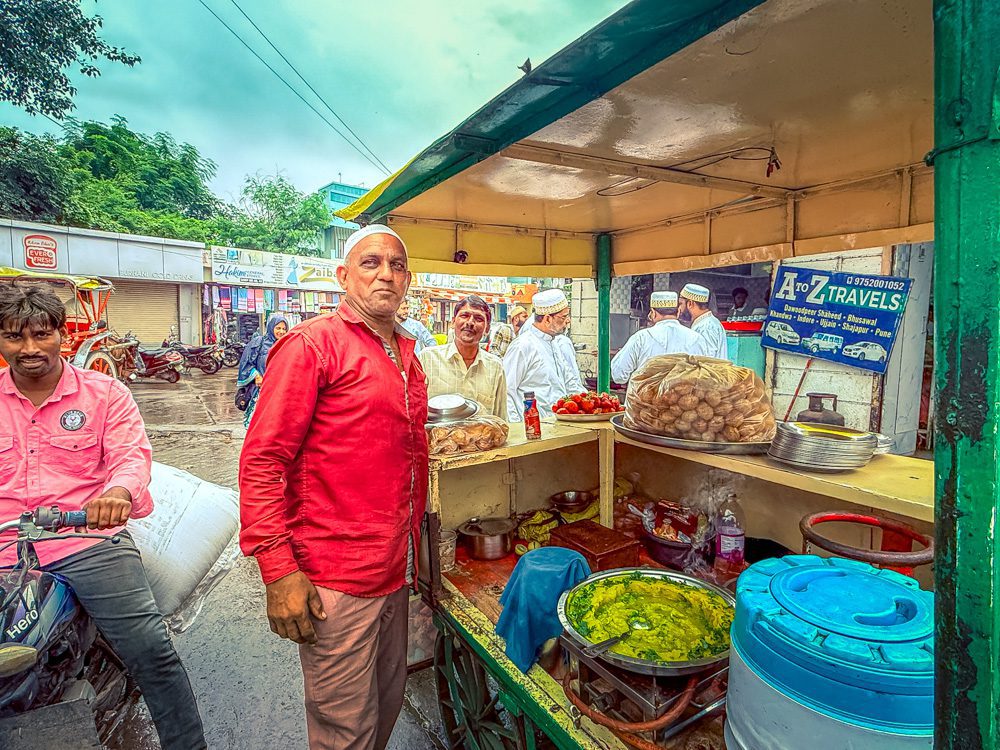
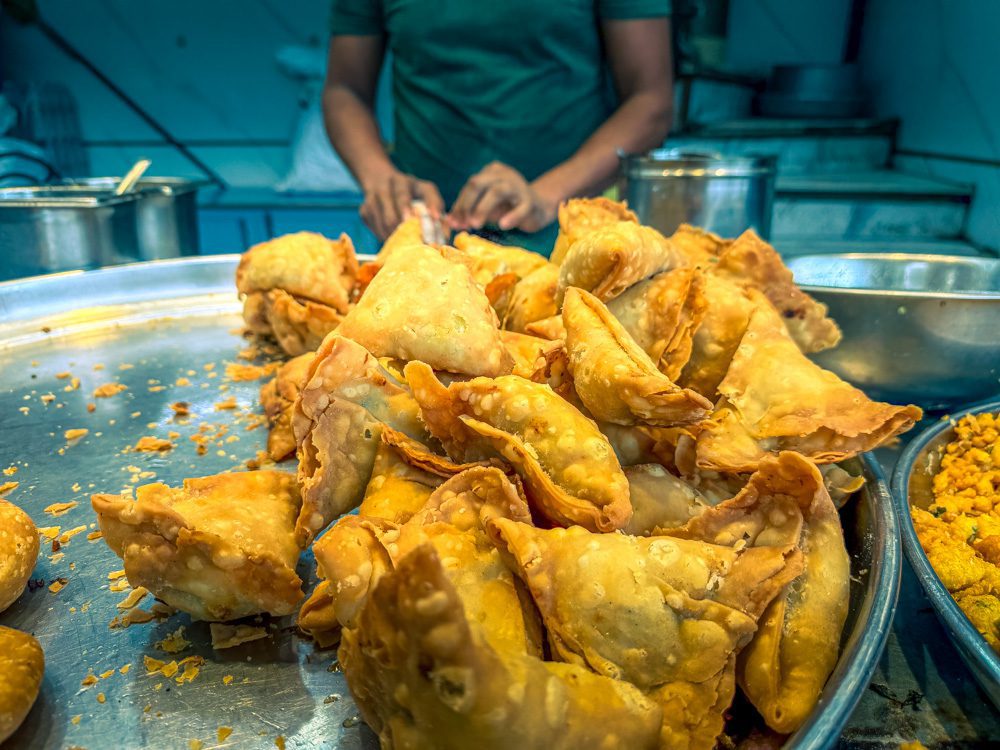
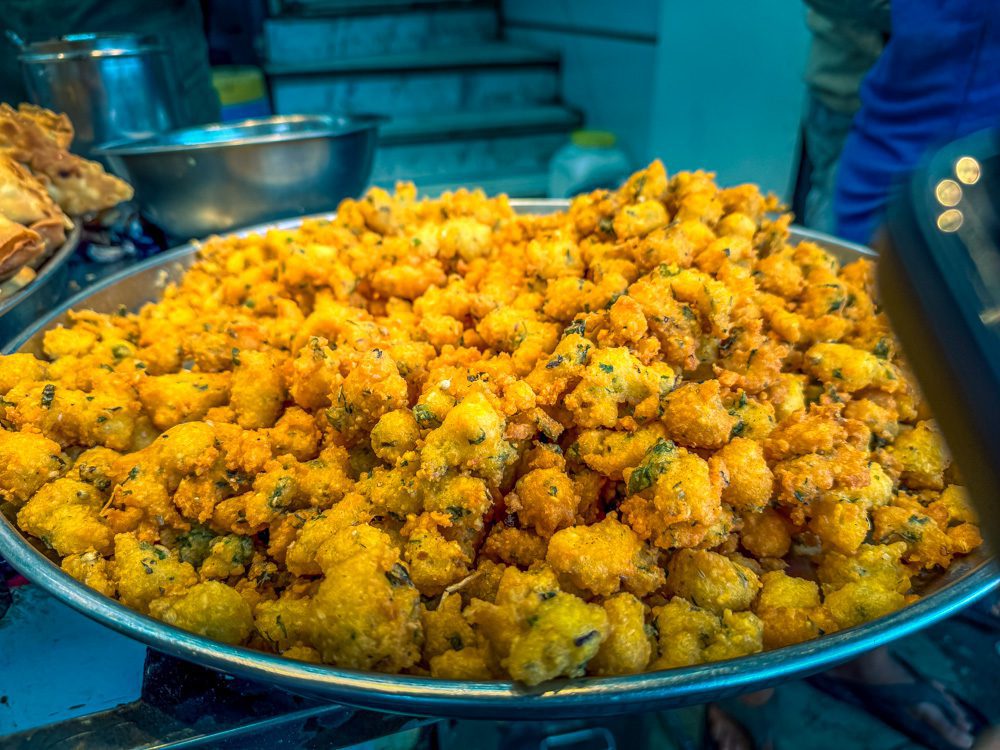
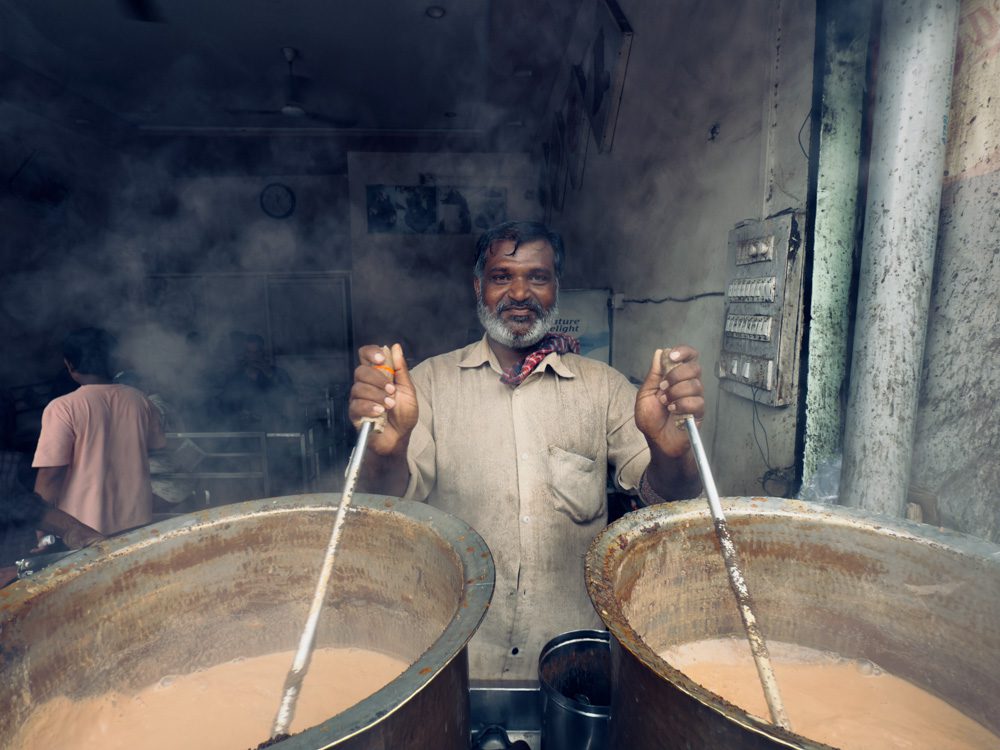
Wander the streets and try some of the delicious street food on offer. Look out for the dark Burhanpur Jalebi, samosas, dosa and pakora, all washed down with hot, sweet chai.
Literary & Film Links to Burhanpur
Lion by Saroo Brierley
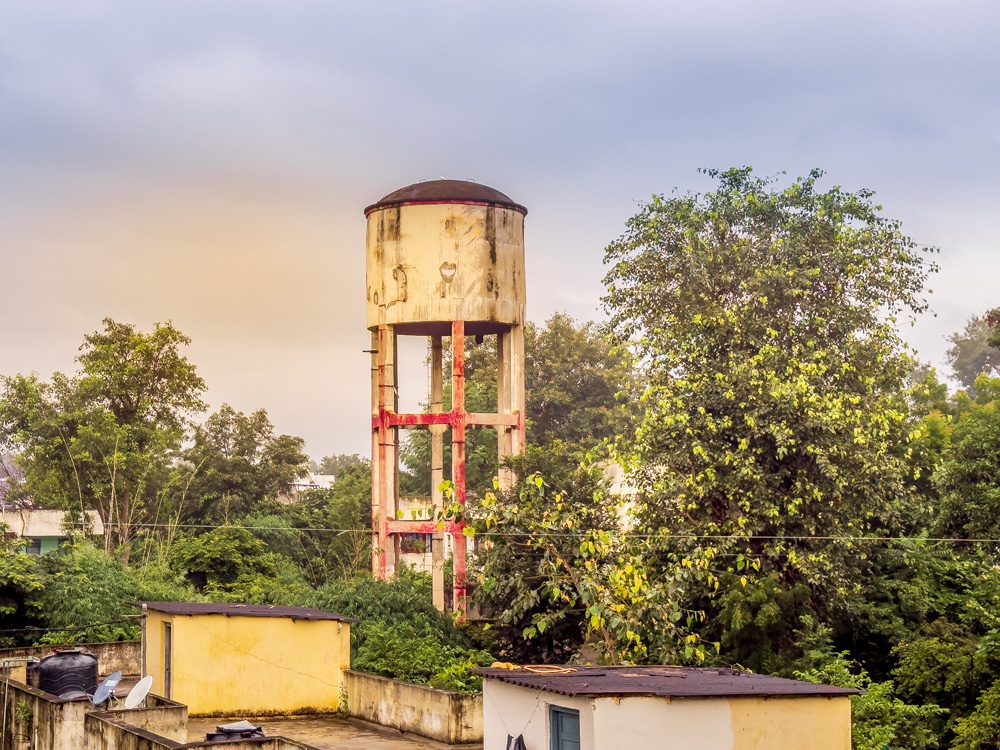
Have ever watched the movie “Lion” starring Dev Patel? It is the true story of 5-year old Saroo who gets separated from his brother, boards a train ends up in an orphanage in Kolkata. He is adopted by an Australian couple and moves to Australia. As an adult, with just fragments of memories of a water tower at the train station, he makes the epic journey back home.
Yes, you guessed it, the railway station is in Burhanpur and the water tower is still there.
Round the World in Eighty Days by Jules Verne
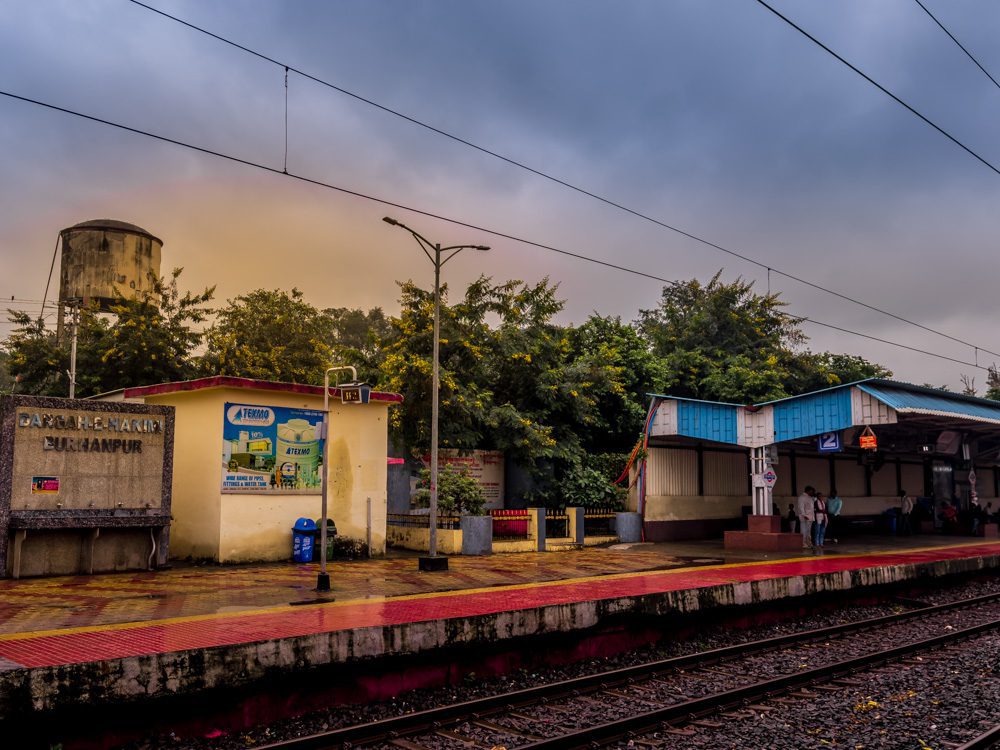
In Jules Verne’s novel Around the World in Eighty Days, Burhanpur (written as “Burhampoor“) is mentioned as a point on their journey on the Great Indian Peninsula Railway. Phileas Fogg and his companions are travelling between Bombay and Calcutta, and travel through Burhanpur without getting off or having any adventures.
Food in Burhanpur
If you are looking for Mughlai cuisine, Burhanpur’s street food stalls and small eateries provide the most authentic experiences, though don’t expect five-star dining. Don’t miss local delicacies:
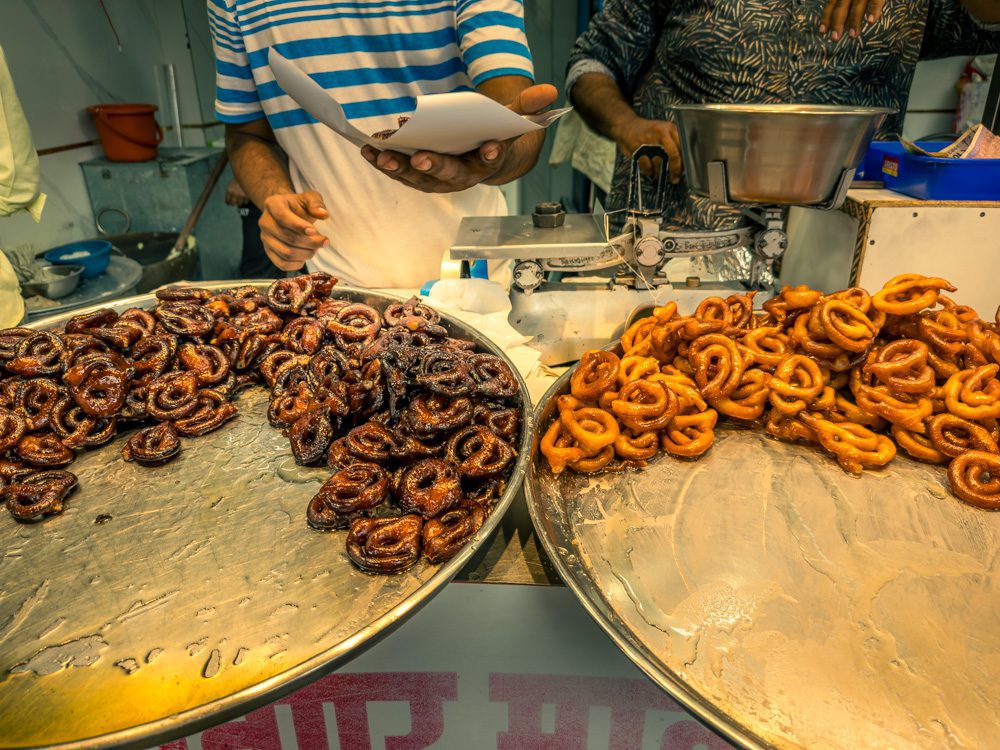
- Burhanpur Jalebi – thicker, crunchier, and distinct from its North Indian cousins.
- Rogan Josh – rich, spicy lamb curry.
- Seekh Kebabs – grilled to perfection.
- Local sweets like mawa-based delicacies.
Festivals and Culture
The Urs festival at Dargah-E-Hakimi is the city’s most significant religious event, drawing pilgrims from across India. Beyond this, Burhanpur has a rich cultural mix thanks to its Mughal and Bohra influences, reflected in its food, textiles, and traditions.
Things to Keep in Mind Before Visiting Burhanpur
While Burhanpur is rewarding, it’s not the right destination for everyone. A few things to consider:
- Getting there takes effort – there’s no major airport, so you’ll likely travel via Indore, Aurangabad, or Khandwa. Rail connections are good, but as the railway is outside the city reaching your hotel still involves some planning.
- Tourist facilities are limited – accommodation is comfortable but not luxurious, and restaurants are mostly local, with few international options. Many of the hotels are run by the Tourism Board.
- Best suited for history lovers – if you’re seeking adventure sports, nightlife, or modern attractions, Burhanpur may feel limited and not the place for you.
- The weather can be challenging – summers are extremely hot; visiting between October and March is far more pleasant. My visit in late August was actually very wet.
- Less polished tourism – signage, guided tours, and visitor facilities may be basic and most signage is does not have an English translation. For some travellers, that’s part of the charm; for others, it may be frustrating.
Practical Travel Tips
- How to Reach: The nearest airports are at Indore (about 180 km) and Aurangabad (190 km). Burhanpur has its own railway station with good connections.
- Best Time to Visit: October to March, when the weather is cooler.
- How Long to Stay: One or two days is sufficient to cover the main attractions.
Where to Stay
Burhanpur doesn’t boast five-star hotels, but you’ll find comfortable mid-range stays and guesthouses. Some heritage-style accommodations are available near the main attractions. For those who prefer higher-end options, staying in Indore and making a side trip may be better.
Final Thoughts
Burhanpur is a city that wears its history proudly but quietly. From the Hammam where Mumtaz Mahal spent her final days to the towering Asirgarh Fort and the ingenious water systems, it offers glimpses into a fascinating past.
It may not have luxury hotels or a wide range of modern entertainment, but that’s precisely its charm. Burhanpur is for travellers who enjoy peeling back layers of history, wandering through half-forgotten palaces, and experiencing India away from the big tourist trail.
If you’re looking for authenticity, architecture, and atmosphere, Burhanpur will reward you richly. If you’re looking for nightlife and plush resorts, perhaps save it for another time.
Either way, Burhanpur is one of Madhya Pradesh’s best-kept secrets — and one worth discovering.
Have you travelled to Burhanpur or planning a trip soon? Share your thoughts or questions in the comments below — I’d love to hear from you!
Use these India Travel Tips to plan your adventure!
- Plan your trip with these India Travel Guides.
- Take a guided tour with one of G Adventures India trips
- Get the best deals on flights with Skyscanner.
- Find the perfect place to stay in India on Booking.com.
- Buy your e-sim before you go with Airalo.
- Explore more about India with local experiences.
- Don’t forget to arrange your travel insurance.
Don’t forget to pin this article so you can come back to it later