
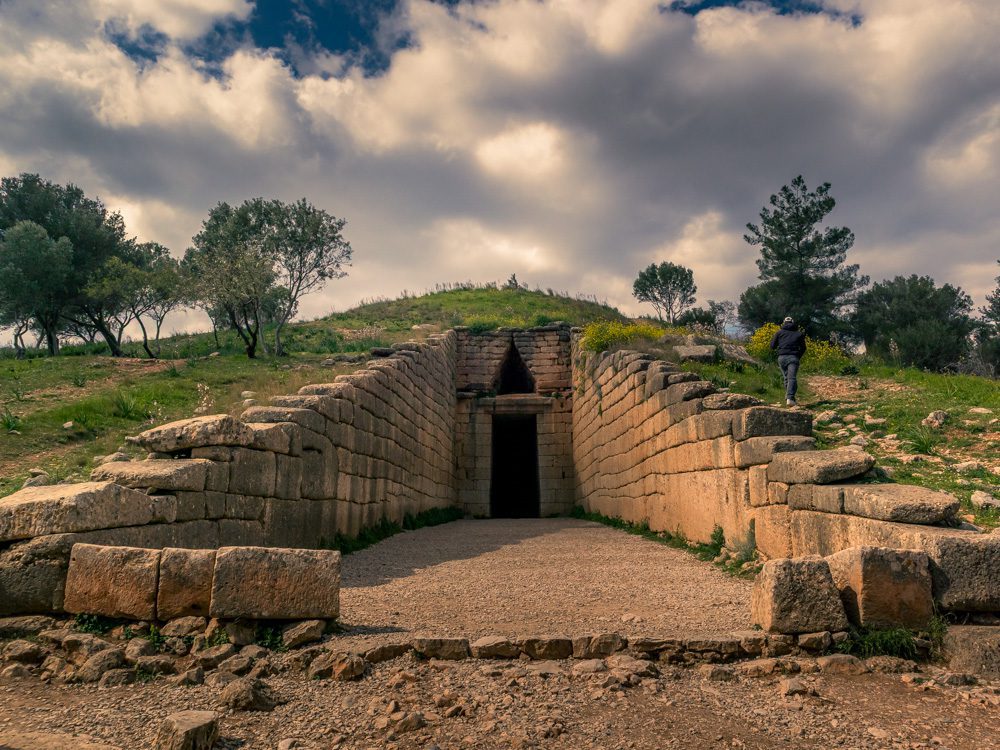
Greece is already a popular tourist destination, a land where history, mythology, and culture intertwine, and nowhere is this more evident than in its UNESCO World Heritage Sites. From ancient temples dedicated to the gods to monasteries perched high on cliffs, these remarkable landmarks tell the story of Greece’s rich history and enduring traditions.
Visiting these sites is like stepping back into ancient times – whether you’re wandering through the ruins of Athens, exploring medieval fortresses, or marvelling at Byzantine art.
*This site uses affiliate links and I may earn a small commission when you use my links and make a purchase without incurring an additional fee yourself.
Thank you for supporting this website. See my disclaimer page for more details.
In this guide, we’ll uncover the most fascinating UNESCO sites in Greece, why they matter, and how you can experience them on your travels.
13 of the UNESCO Sites in Greece
Temple of Apollo Epicurius at Bassae (1986)
By Larch from The Silver Nomad
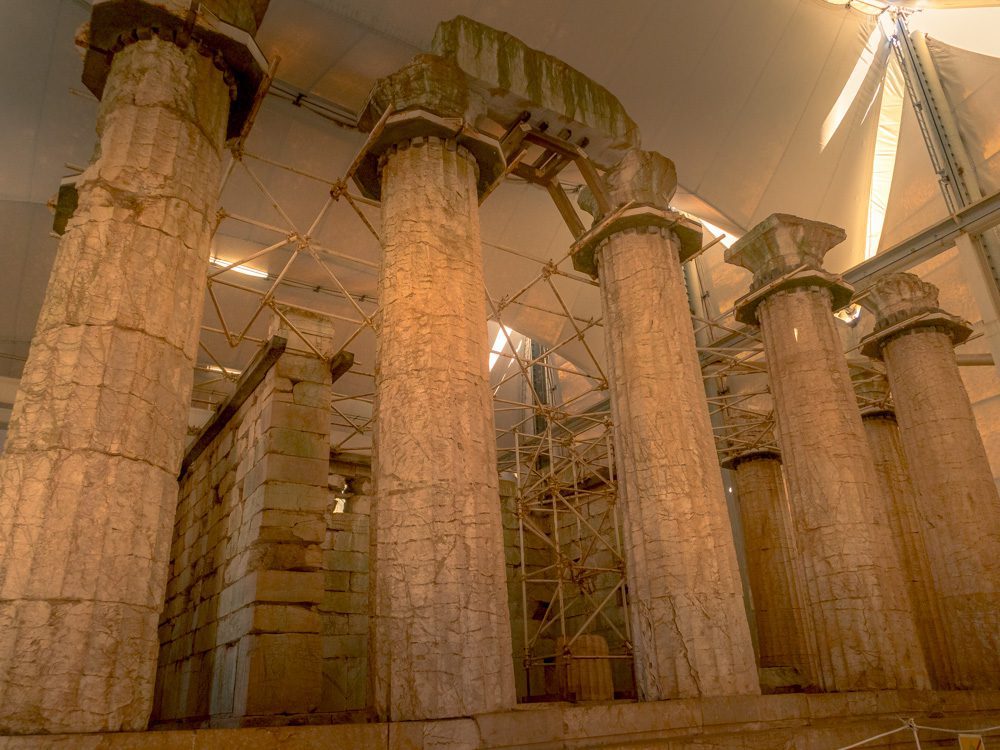
Hidden away in the rugged mountains of Arcadia in the Peloponnese, the Temple of Apollo Epicurius at Bassae is one of Greece’s most remarkable yet lesser-known ancient monuments. Designed in the 5th century BC by Iktinos, the same architect who created the Parthenon, the temple is celebrated for its unique combination of architectural styles and its remote, almost mystical setting.
Dedicated to Apollo Epicurius – “Apollo the Helper” – the temple was built by the people of Phigaleia in gratitude for the god’s protection during a devastating plague. Unlike many temples situated in prominent city centres, this one stands at 1,130 metres above sea level on Mount Kotilion, giving it an isolated grandeur that adds to its aura.
What makes the Temple of Apollo Epicurius truly exceptional is its daring design. It is the only known temple in ancient Greece to combine all three classical orders: Doric columns on the exterior, Ionic columns inside, and a single Corinthian column – the earliest example of its kind – standing majestically at the centre. This inventive blending makes the temple a masterpiece of architectural experimentation.
A UNESCO World Heritage Site since 1986, the temple remains in remarkably good condition, aided by a protective tenting that shields it from the elements.
Visiting Bassae is both a journey through breathtaking mountain landscapes and a chance to step back into a moment of innovation in classical architecture. For travellers seeking a more off-the-beaten-path ancient site, the Temple of Apollo Epicurius offers a truly unforgettable experience.
Archaeological Site of Delphi (1987)
By Shweta from Zest In A Tote
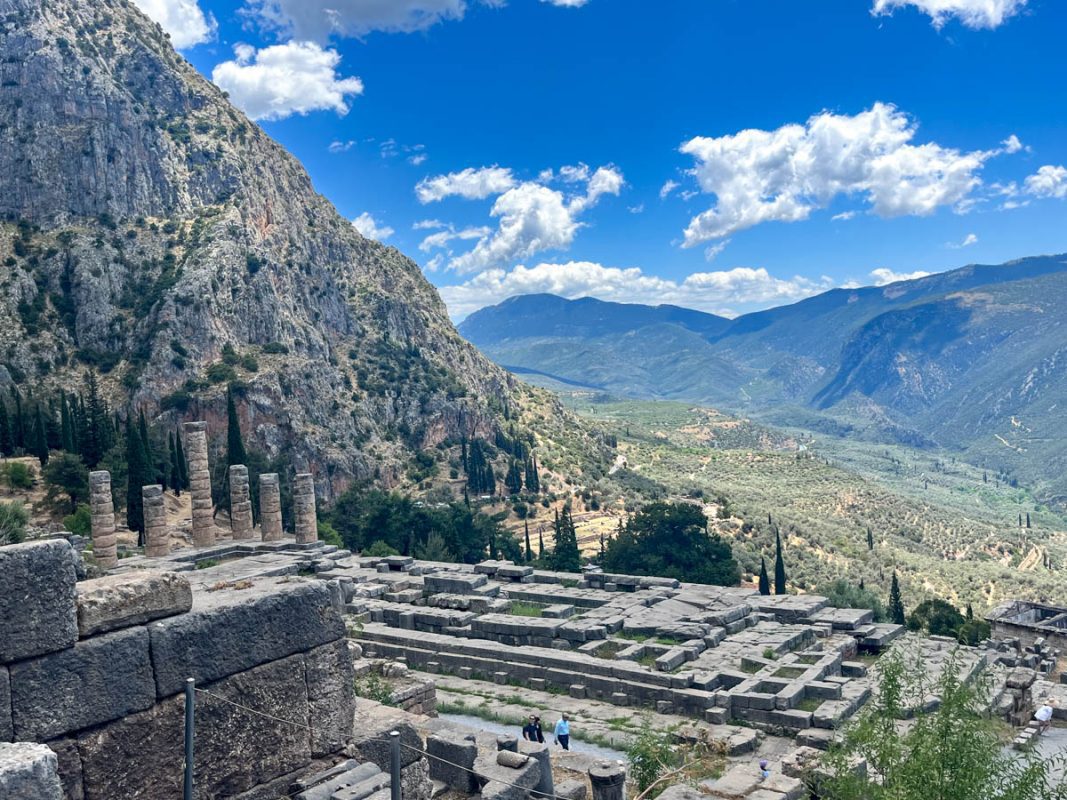
After the Acropolis of Athens, Delphi is the most popular ancient site on Greece mainland. It is one of the famous ancient Greek landmarks, and rightly so!
Delphi was an ancient religious sanctuary dedicated to the Greek God Apollo. The ancient Greeks considered Delphi to be the centre of the world. This place in the 6th century BC was the religious centre and symbol of unity of the ancient Greek world. The sanctuary was home to the Oracle of Delphi and the priestess Pythia, who was famed throughout the ancient world for divining the future.
Today, you can visit the ancient site of Delphi by yourself or with a guided tour. It is set on a plateau amidst a beautiful setting of mountains surrounding the site. There is also a museum adjacent to the site. Your ticket includes entry to both the ancient site as well as the museum. You can easily buy it on the site entrance or book it online as well. Spend an hour or more at the site but do make time for the museum. All the artefacts excavated from the site are stored there and it is worth a visit.
You can visit Delphi as a day trip from Athens. The tour buses arrive after 10 AM and that’s when the crowds climb and peak until noon. Or if time permits, it is recommended to combine Delphi and then drive further north to Meteora monasteries on a 2 day trip. The route between Delphi to Meteora takes through winding roads and some stunning scenery with yellow wildflowers blooming everywhere.
Acropolis, Athens (1987)
By Lavina D’Souza from Continent Hop
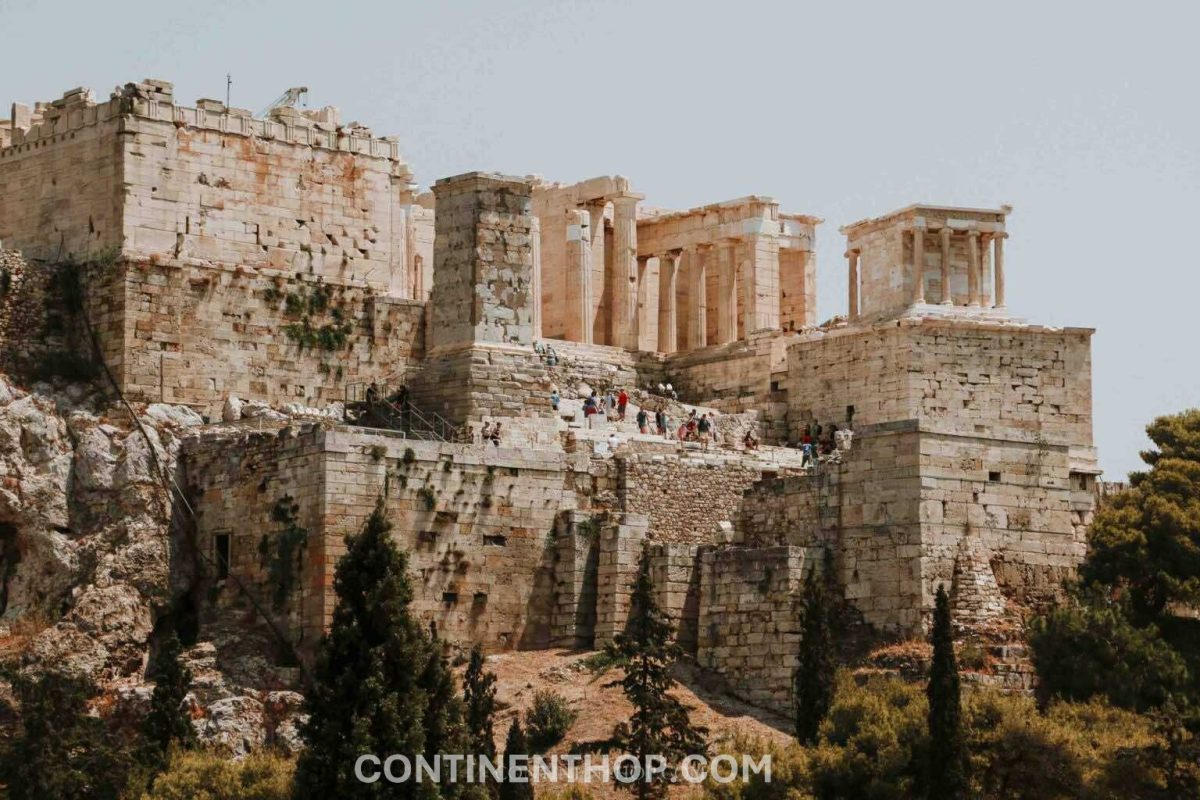
The Acropolis in Greece is a unique blend of art, architecture, and history, creating a masterpiece. Rising majestically above the city of Athens, the Acropolis is an ancient citadel and a UNESCO World Heritage Site. This cultural gem is an important part of every Europe itinerary, drawing in millions of visitors each year.
The Acropolis is open from 8 am to 8 pm in summer and closes at 5 pm in winter. You can take a metro to the Acropolis station or Monastiraki station and then start exploring the sites through the different entrances. The earlier you can reach here is the better to avoid crowds. Even though the hill spans over 7 acres, popular buildings like the Parthenon still feel packed during peak hours.
The hill is home to more than 20 major monuments and several smaller buildings. Allow 2 hours to half a day for The Acropolis, and then add another couple of hours for the nearby Acropolis Museum. The museum houses a vast collection of artefacts found on the Acropolis, including the Parthenon Marbles. The Propylaia was used for ceremonial purposes. The old temple of Athena was burned down during the Persian invasion in 480 BC, and the Erechtheion is where the statue of Athena Polias was located.
If you are visiting the site for the first time, it is advisable to book a ticket with an audio guide or opt for a guided tour to understand the true significance of this ancient marvel. Consider buying a combination ticket if you plan to spend a couple of days in Athens and have time to visit other historic sites in and around the city. Follow the marked trails only, as restoration of some parts is still ongoing and is off-limits for visitors.
Medieval City of Rhodes (1988)
By Nofar Ronen from trvbox.com
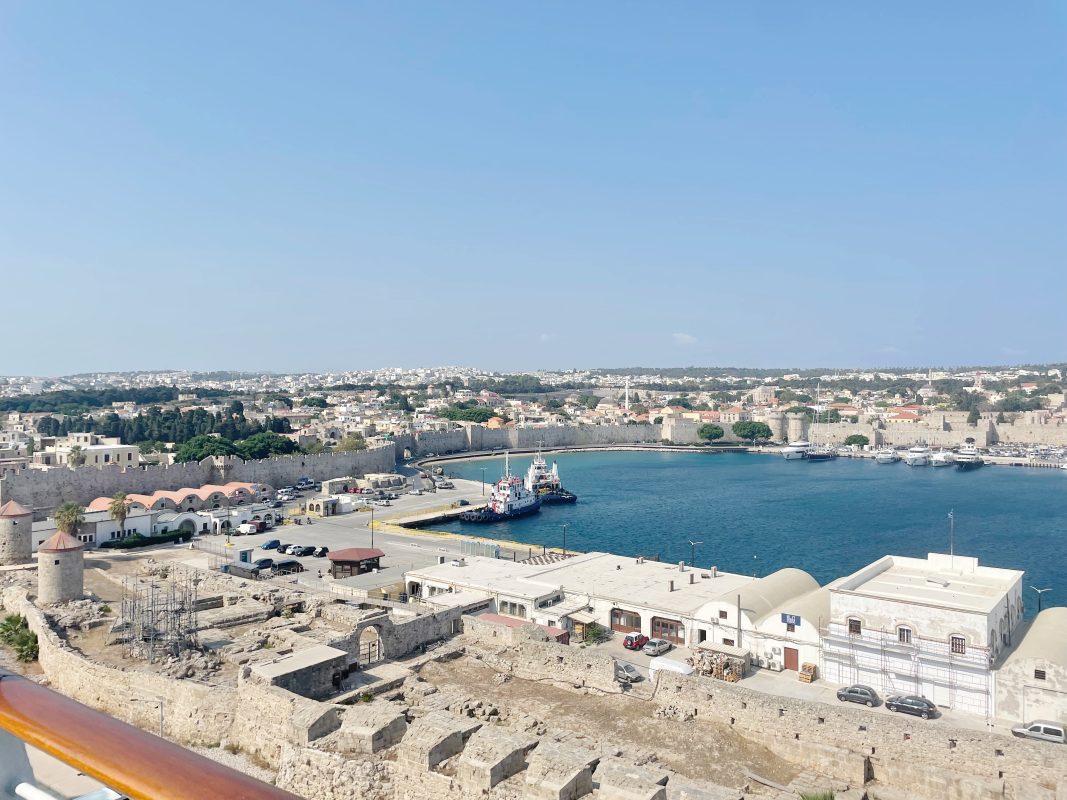
The Medieval City of Rhodes has been a UNESCO World Heritage Site since 1988 and is considered one of the best-preserved medieval cities in Europe. Located at the northern tip of Rhodes, it was built in the 14th and 15th centuries by the Knights of St John, who ruled the island for over two centuries.
Impressive stone walls, gates, towers and a moat completely enclose the city. For those arriving by cruise, the ship docks right next to the old city, allowing easy access on foot without the need for transport. This is particularly convenient for families.
Inside the walls is a labyrinth of cobbled streets, Gothic architecture, Ottoman-era buildings and charming squares. Key landmarks include the Palace of the Grand Master, the Street of the Knights and the Archaeological Museum of Rhodes, which is housed in the historic former hospital of the Knights.
A visit to the old town is ideal for a relaxed stroll, soaking up the atmosphere and enjoying a meal at one of the many local tavernas. It is less about structured activities for children. From personal experience, one visit to Rhodes included staying in a boutique hotel inside the medieval city, a wonderful way to enjoy the atmosphere in the quieter evening hours after the crowds leave. On another visit, as part of a Greek Islands cruise with two young children, the choice was to spend the day walking through the old town, enjoying lunch and then visiting the Rhodes Aquarium. The aquarium is small and simple, but young children are likely to enjoy it.
The best time to visit is in spring, from April to June, or in autumn, from September to October, when the weather is pleasant and the town is less crowded.
Meteora (1988)
By Melissa Kruse from Mountains And Mahals
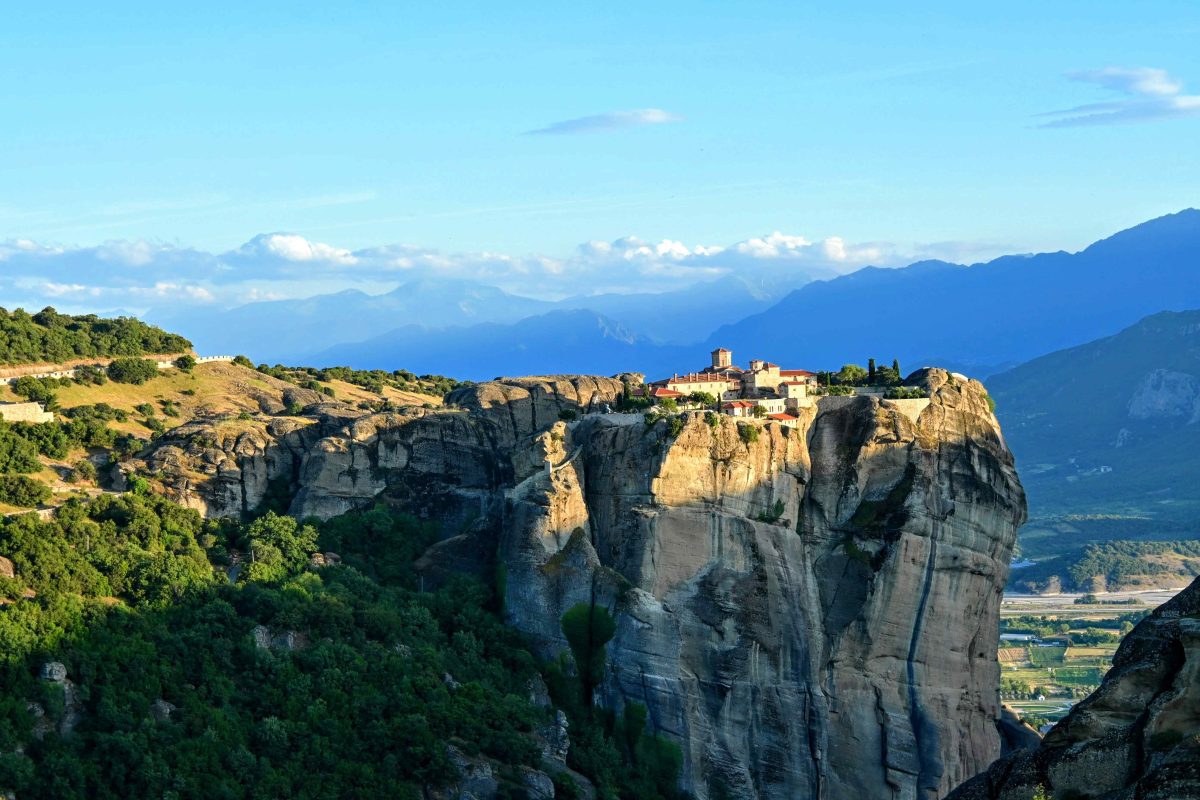
The Meteora Monasteries are one of Greece’s most awe-inspiring UNESCO World Heritage Sites. Sitting atop towering sandstone pillars, these historic Eastern Orthodox monasteries were originally built by monks seeking solitude and spiritual elevation, both figuratively and literally. There were once 24 monasteries, but today only six remain active and are open to visitors: Great Meteoron, Varlaam, Rousanou, St. Stephen’s, Holy Trinity, and St. Nicholas Anapausas.
Each monastery shows a glimpse into centuries of monastic life. You’ll see ornate chapels, frescoes, historic artifacts, and panoramic terraces overlooking the surreal landscape. The sweeping views of the valley with the monasteries dramatically rising from the rocks looks like something out of a fantasy movie.
The best time to visit Meteora is during spring (April to June) or early fall (September to October), when the weather is mild and the surrounding scenery lush or golden-hued. Summers can be hot and crowded, especially in July and August, while winters, though quieter, may bring limited access due to weather conditions. Be sure to check the monasteries’ official website before your visit for opening days and times because some monasteries are closed on some days of the week.
It’s important to dress modestly when visiting the monasteries. Women are required to wear skirts and cover shoulders, and men should wear long pants. Comfortable shoes are essential; there are steep stone staircases to get in and out of most of the monasteries, so be prepared for a climb.
Don’t miss the opportunity to see the sunset over Meteora. There’s a viewpoint near the Psaropetra lookout, between the Great Meteoron and Varlaam Monastery that offers an unforgettable panorama of the rock formations shining in golden light, with the monasteries seemingly floating in the sky. Arrive early to secure a spot, especially during high season.
Sanctuary of Asklepios at Epidaurus (1988)
By Larch from The Silver Nomad
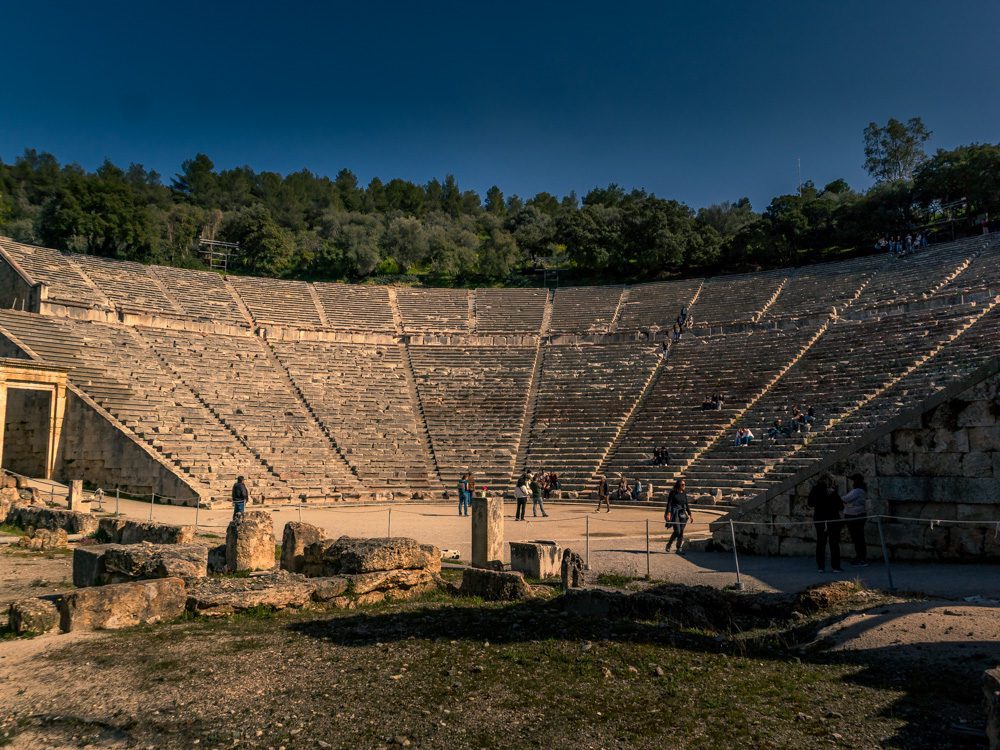
Nestled in the hills of the northeastern Peloponnese, the Sanctuary of Asklepios at Epidaurus was the most celebrated healing centre of the ancient Greek world. Dedicated to Asklepios, the god of medicine, it flourished from the 4th century BC onwards, drawing pilgrims from across Greece and beyond who sought cures for their ailments.
The sanctuary was more than a religious site; it was a place of holistic healing that combined faith, nature, and early forms of medical practice. Visitors would undergo ritual purification, offer sacrifices, and spend the night in the abaton (a dormitory for patients).
It was believed that Asklepios would appear in dreams to prescribe treatments, which ranged from herbal remedies to minor surgical procedures. This blend of spirituality and practical medicine made Epidaurus a pioneer in ancient healthcare.
The site also showcased impressive architecture, much of which survives today. The Tholos, a mysterious circular building, and the Temple of Asklepios were at the heart of the sanctuary.
Most famously, Epidaurus boasts a magnificent theatre that could seat up to 14,000 spectators. Renowned for its perfect acoustics, it remains one of the best-preserved theatres of antiquity and still hosts performances during the annual Epidaurus Festival.
Designated a UNESCO World Heritage Site, the Sanctuary of Asklepios at Epidaurus stands as a testament to the ancient Greeks’ advanced understanding of the link between mind, body, and spirit. Visiting today offers not just a glimpse into ancient medicine, but also an inspiring experience of culture and history in a beautiful natural setting.
Paleochristian and Byzantine Monuments of Thessalonika (1988)
By Juan from Planet of Adventures
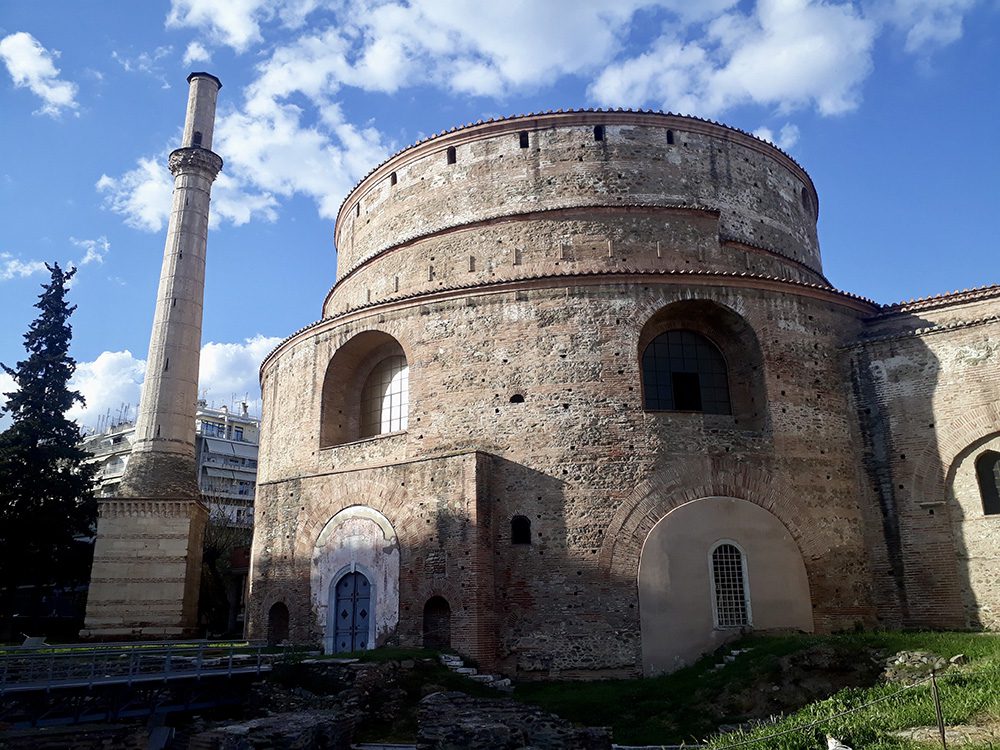
Whilst most people think of Athens and the islands when going to Greece, the second biggest city in the country is a gem that made it to my list of underrated European destinations as it combines an eclectic mix of historical sights, where Roman, Byzantine and Ottoman empires thrived at some point.
A fun fact about Thessaloniki is that it’s also known in Greek as “I Symprotévousa”, which literally translates as “the co-capital”.
UNESCO added the Paleochristian and Byzantine Monuments of Thessalonika as World Heritage Sites in 1988 because of their outstanding design and artistic value.
I found the city is a delight to wander around and almost without looking for them you will find the fifteen diverse Monuments inscribed by UNESCO as they include the city walls, mosaics, religious and military buildings. Most of the Monuments are incredibly well preserved so you can admire them as they were enjoyed at the time of their construction in between the 4th and 15th centuries.
Some of the sites that I found most interesting to visit where the City Walls, the Rotunda (pictured), the Church of Panteleimon, the Church of Saint Catherine and the Byzantine Baths.But all the other sites are definitely worth a visit as well.
Historically, Thessaloniki has been a cultural centre since its foundation and it remains to this day as there are a number of festivals and events which gives the city a vibrant cultural scene.
I’d recommend to stay at least two days exploring the city so you also have time to wander along the seafront where you can enjoy beautiful sunsets and street art.
Thessaloniki is also famous for its gastronomy so you cannot miss the Bougatsa, Souvlaki and Meze. Those with a sweet tooth must try the Trigona pastries which are considered one of the best pastries in the world!
Archaeological Site of Olympia (1989)
By Larch from The Silver Nomad
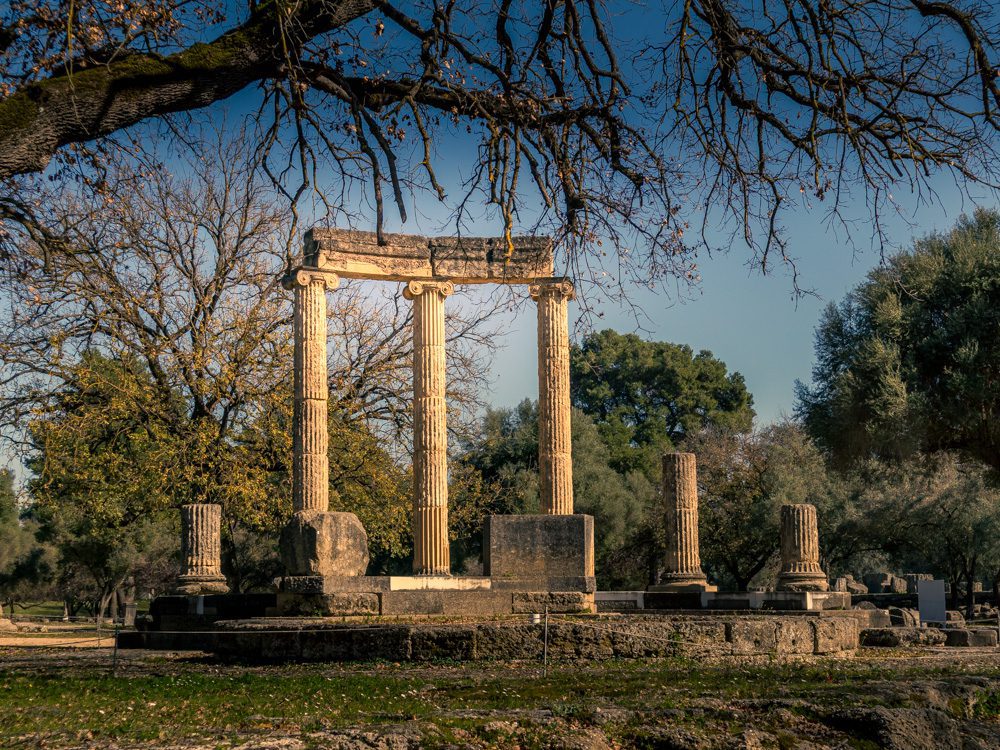
The Archaeological Site of Olympia, set in the fertile valley of the Alpheios River in the Peloponnese, is one of the most iconic ancient sites in Greece. Best known as the birthplace of the Olympic Games, held in honour of Zeus, it was a major religious and athletic centre for over a thousand years, from the 8th century BC until the 4th century AD.
At the heart of Olympia stood the great Temple of Zeus, once home to the colossal statue of Zeus, one of the Seven Wonders of the Ancient World. Nearby, the elegant Temple of Hera is among the oldest monumental temples in Greece, dating back to the 7th century BC. Together with the altars, treasuries, and training grounds, these structures created a sacred precinct that blended devotion to the gods with celebration of human achievement.
The ancient Olympic Games were not merely sporting contests but also religious festivals, uniting city-states in peaceful competition. Athletes competed in events such as running, wrestling, chariot racing, and the pentathlon, striving for glory in Zeus’s honour. The remains of the stadium, which could seat up to 45,000 spectators, still convey the scale and excitement of these historic games.
Today, Olympia is a UNESCO World Heritage Site and a place of extraordinary atmosphere. Wandering among the ruins, shaded by olive and pine trees, visitors can imagine the energy of the crowds and the devotion of the athletes. The on-site museum, with treasures such as the sculpted pediments of the Temple of Zeus, completes this unforgettable journey into the ancient world.
Archaeological Site of Mystras (1989)
By Larch from The Silver Nomad
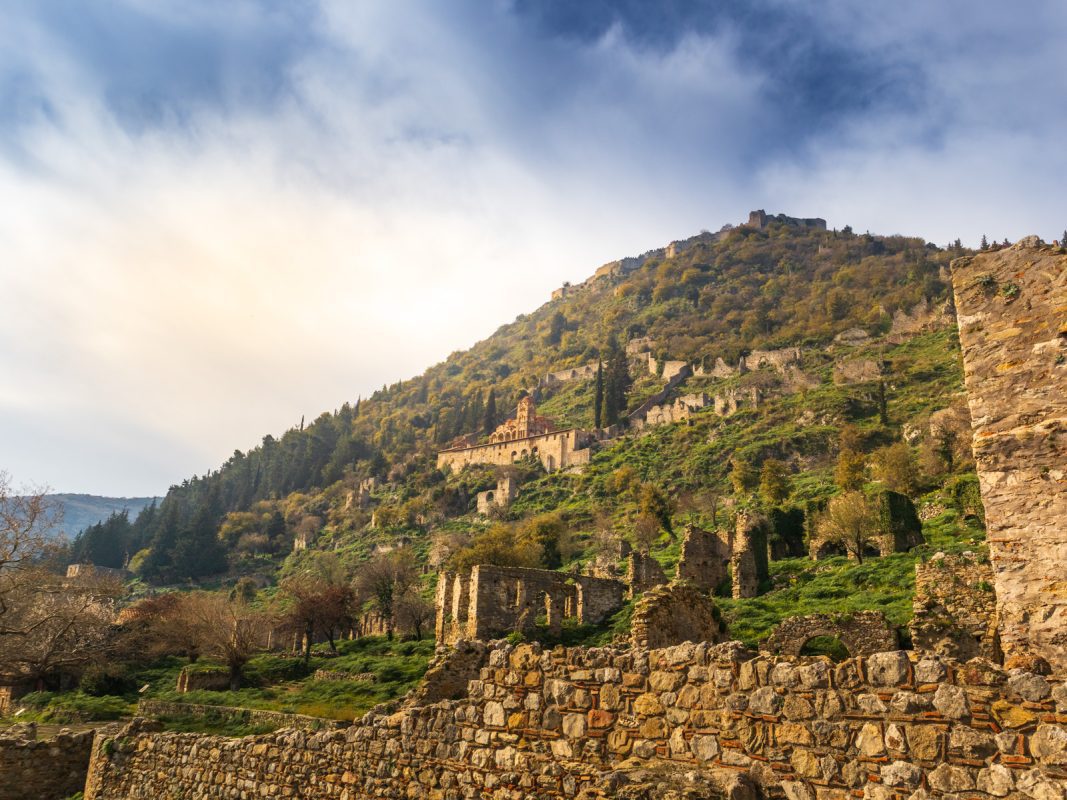
Perched on the slopes of Mount Taygetos in the Peloponnese, the Archaeological Site of Mystras is a captivating Byzantine city frozen in time. Founded in 1249 by the Franks, it soon fell under Byzantine control and became the capital of the Despotate of the Morea.
From the 14th to the 15th centuries, Mystras flourished as a political, cultural, and religious hub, second only to Constantinople in importance.
The site, often called the “wonder of the Morea,” is a sprawling complex of medieval ruins set against a stunning backdrop of natural beauty, with a lower town and an upper town. Visitors can wander through fortified walls, palaces, mansions, monasteries, and churches, many of which retain exquisite frescoes that reveal the artistry and spirituality of the late Byzantine world. The Church of Agios Demetrios, where the last Byzantine emperor Constantine XI Palaiologos was crowned, holds particular historical significance.
Mystras is also notable for its role in preserving Byzantine culture during a period of decline. It became a centre of learning and intellectual activity, attracting scholars and artists whose influence spread beyond Greece. Even after the city’s decline under Ottoman and later Venetian rule, its legacy as a beacon of Byzantine civilisation endured.
Designated a UNESCO World Heritage Site, Mystras offers a unique opportunity to step into the medieval past. Climbing its cobbled paths, with panoramic views over the Laconian plain and Sparta, is as rewarding as exploring its churches and palaces. A visit to Mystras is both a historical journey and an encounter with one of Greece’s most atmospheric archaeological treasures.
Delos (1990)
By Jill from Jill on Journey
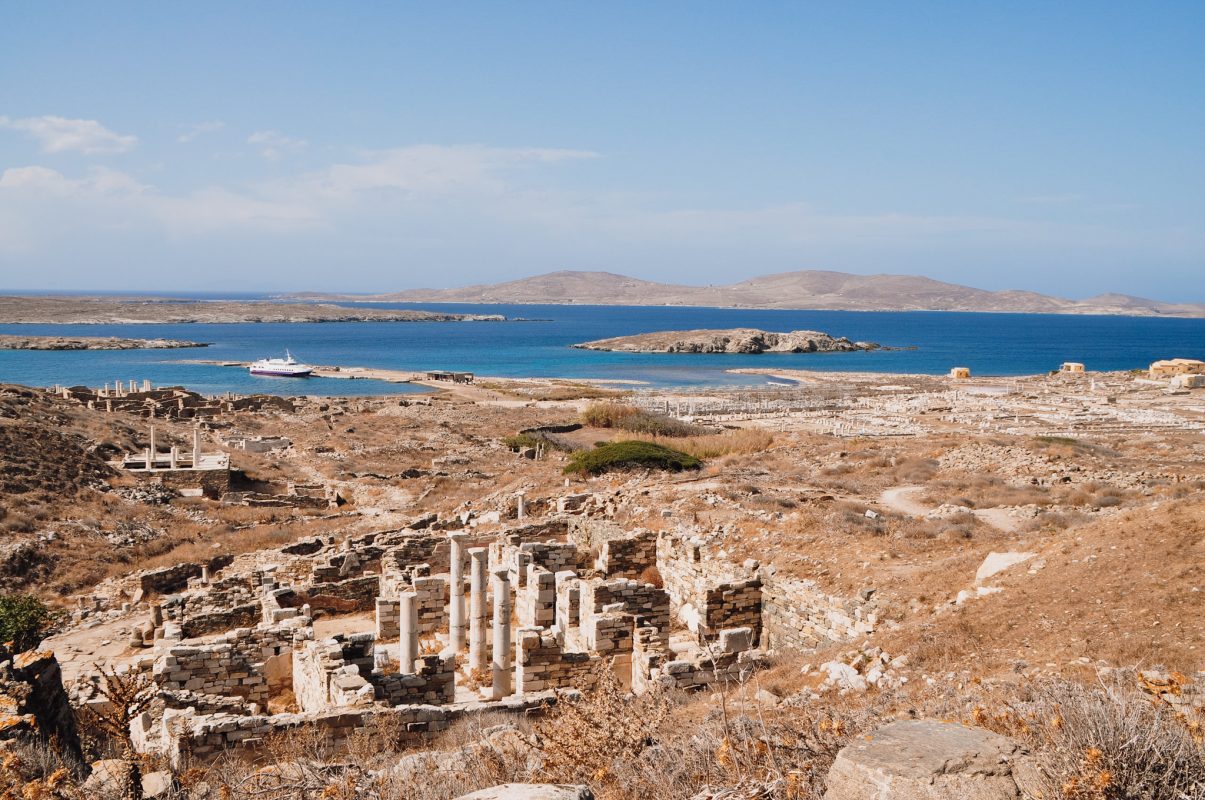
When you’re island hopping in the Cyclades, a visit to the legendary island of Delos is a must. What many travellers don’t know its that the name “Cycladic islands” (meaning “circular islands”) derives from the islands being located in a circle around a small island it their centre: Delos.
This shows how significant this tiny island is to the Greek. In Greek mythology, Delos plays a major role, being the birthplace of the god Apollo. That’s also why the island is considered sacred. The archaeological site became listed as a UNESCO World Heritage Site in 1990 due to its significance in Ancient Greek history.
Although uninhabited for centuries, this small island is visited by large groups of tourists every day.
And it is for sure impressive, when you walk through the well-preserved ruins of ancient houses, temples and a theatre. Among the most famous monuments on the island is the Terrace of the Lions, a row of marble lion sculptures dedicated to Apollo.
Boats to Delos depart from many Cycladic Islands such as Paros, Naxos or Syros. The most popular route is from Mykonos, as this is the closest island. But be aware, that the tours from Mykonos get extremely crowded.
Due to its popularity, the best time to visit is in the early morning hours or late afternoon hours during the low season, in April or in October. That’s the perfect time to enjoy this significant historic site in peace. During the summer months it can get very crowded.
Monasteries of Daphni, Hosios Loukas and Nea Moni of Chios (1990)
By Shara Johnson from SKJ Travel
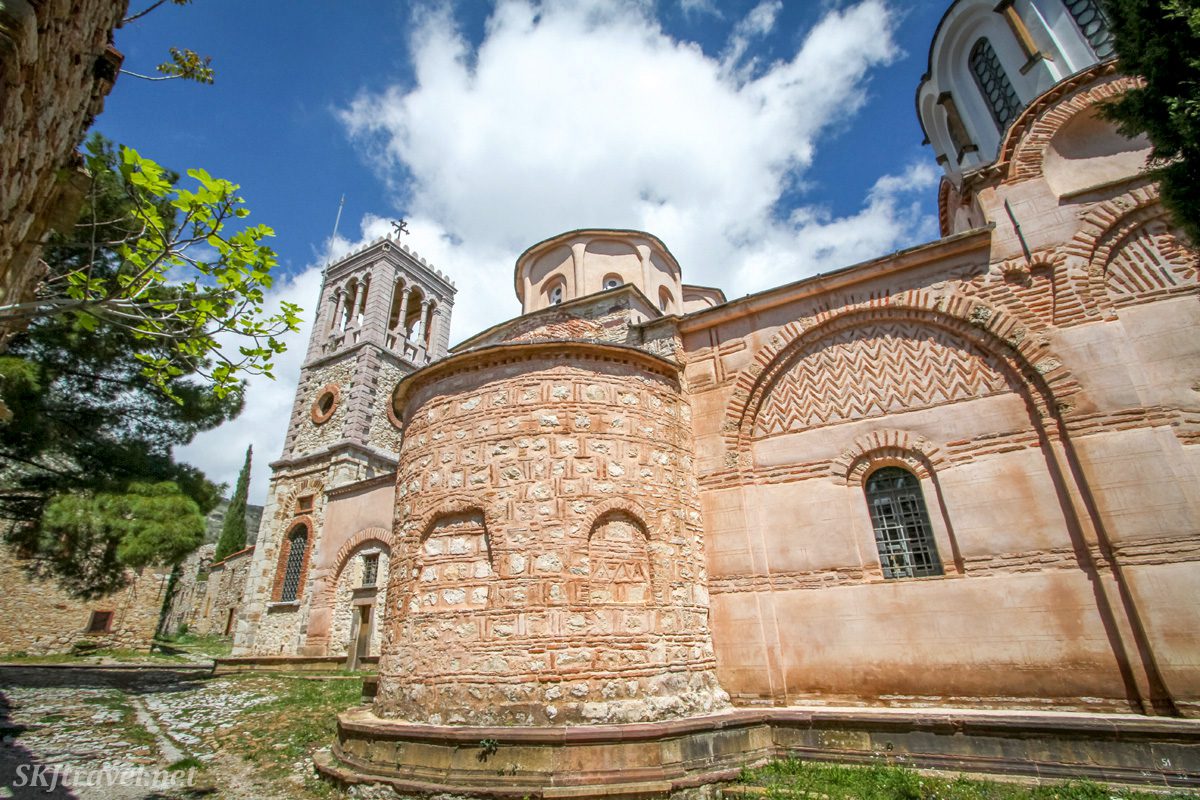
The Byzantine-era Nea Moni Monastery makes for a delightful excursion from Chios Town, only 15 kilometres away up into the forested inland hills. Like many of the villages on Chios Island, the monastery complex has a nice mix of both ruins and restoration for exploration and admiration.
Within it are three churches – the main one and two smaller – monk’s quarters and dining area, and water cisterns, all surrounded by a tall stone wall and defensive watch tower. The architecture of the main temple is an “island” octagonal type with a large central dome – the only examples of this architecture still in existence are on Chios and Cyprus.
The mosaics in the monastery comprise one of only three remaining collections left in Greece of the mid-Byzantine period. The golden background is an eye-catching feature of the mosaics as the light reflects on it, lending an uncanny feeling that the subjects depicted are moving. They are considered one of the most significant creations of Byzantine art.
Built in the mid-11th century with financial support from the emperor, Nea Moni became one of the wealthiest and most well-known monasteries in the Aegean. By 1822 the population of Chios Island was well over 100,000. That year the Ottoman Turks stormed the island and massacred tens of thousands of inhabitants. 3,500 people took refuge in the monastery to no avail – they and the monks were nearly all killed while huddled inside and the monastery was set on fire. A small temple holds the remains of the martyrs and fighters of the Chios Massacre.
If you self-drive to this remarkable, historic site, some travellers have reported incorrect driving directions on Google Maps and GPS systems, so best to confirm directions ahead of time and ensure you will not be taken down a dirt road. The monastery is closed during mid-afternoon.
You can also visit the Monastery of Daphni in Chaidari and the Monastery of Hosios Loukas in Boeotia.
Archaeological Sites of Mycenae and Tiryns (1999)
By Larch from The Silver Nomad

The Archaeological Sites of Mycenae and Tiryns in the Peloponnese are two of the most important centres of the Mycenaean civilisation, which flourished between the 15th and 12th centuries BC. These sites were at the heart of the culture that inspired Homer’s epics and laid the foundations of classical Greek art, architecture, and mythology.
Mycenae, the legendary home of King Agamemnon, commands a dramatic hilltop location. Its massive Cyclopean walls, so named because later Greeks believed only giants could have built them, enclose royal residences, storerooms, and the famous Lion’s Gate, one of the earliest examples of monumental sculpture in Europe.
Nearby, the Treasury of Atreus—a tholos or beehive-shaped tomb—is a masterpiece of Bronze Age engineering and an awe-inspiring reminder of the wealth and power of the Mycenaean rulers.
Tiryns, slightly closer to the coast, is equally remarkable for its fortress-like architecture. Its immense defensive walls, also built of Cyclopean masonry, stretch for hundreds of metres and enclose palatial structures with courtyards, galleries, and staircases. Together, Mycenae and Tiryns reveal the sophistication of Mycenaean society, with its complex political organisation, far-reaching trade networks, and rich artistic traditions.
Recognised as UNESCO World Heritage Sites, Mycenae and Tiryns transport visitors back to the heroic age of Greek legend. Exploring their monumental remains is to walk in the footsteps of warriors, kings, and storytellers whose legacy still shapes Western imagination. A journey to these ancient sites is a chance to witness the grandeur and mystery of one of Greece’s earliest civilisations.
Old Town of Corfu (2007)
By Tamara Williams from My Elated Odyssey

Are you looking forward to exploring some of the best UNESCO sites in Greece? Then the Old Town of Corfu is a must-add on the itinerary! This town is scenic, charming, and historic, making it a place that should not be missed.
Corfu’s Old Town’s founding dates back to the 8th century when the Corinthians ruled the island. In its subsequent history, several nations ruled the country until the Republic of Venice’s reign from 1386 to 1797.
Today, much of the stunning architectural style of the Old Town’s buildings is the Neoclassical style from the Venetian rule. The island’s character is also drawn from the other nations that ruled it until it was finally ceded to Greece in 1864.
One of the top things to do in town is to visit the fortifications. The Old Fortress is the most remarkable one and sits to the east of the Old Town, dating back to the 6th century. In its prime, the fortress was used to protect from Ottoman invasions.
Meanwhile, the New Fortress was built between the late 16th and 17th centuries in the north-western part of town. It features impressive views and hosts exhibitions and cultural events.
The best time to visit is generally from May through October. The island experiences its shoulder and peak seasons during these months.
Due to crowds and higher expenses from the peak months of July and August, a visit during the shoulder seasons of May, June, September, and October can be more enjoyable. These months often provide a better experience for some travellers from the lower costs, pleasant weather, and fewer crowds.
UNESCO Sites in Greece FAQs
How many UNESCO World Heritage Sites are there in Greece?
There are 20 UNESCO Sites in Greece. The latest was added in 2025.
Why is Aigai important?
Aigai was the former capital of the ancient Kingdom of Macedon.
Which site served as the spiritual centre of ancient Greece?
Delphi served as the spiritual centre of the ancient Greek world.
Where were the ancient Olympic Games held?
The birthplace of the Olympic Games was held in ancient Olympia.
What is significant about Mystras and Rhodes?
Mystras signifies the final years of the Byzantine Empire, while the island of Rhodes houses structures from the Ottoman period and the rule of the Order of St. John.
What’s special about the monasteries Daphni, Hosios Loukas, and Nea Moni of Chios?
These monasteries are highlighted for their significance in the “second golden age of Byzantine art.”
What is the importance of the Old Town of Corfu and Mount Athos?
The Old Town of Corfu is noted for its strategic position and preserved state. Mount Athos has been known as a spiritual centre since the mid-11th century.
What heritage sites showcase Greek architecture?
The Pythagoreion and Heraion of Samos and the Temple of Apollo Epicurius at Bassae showcase Greek architecture.
Which is the latest site to be incorporated into the UNESCO World Heritage Site list?
The Minoan Palatial Centres on Crete were incorporated in 2025.
Use these Greece Travel Tips to plan your adventure!
- Plan your trip with these Greek Travel Guides.
- Get the best deals on flights with Skyscanner.
- Find the perfect place to stay in Greece with these accommodation options..
- Explore more about Greece with local experiences.
- Don’t forget to arrange your travel insurance.
- Take your own portable wifi with you
- Buy your e-sim before you go with Airalo.
Don’t forget to pin this article so you can come back to it later
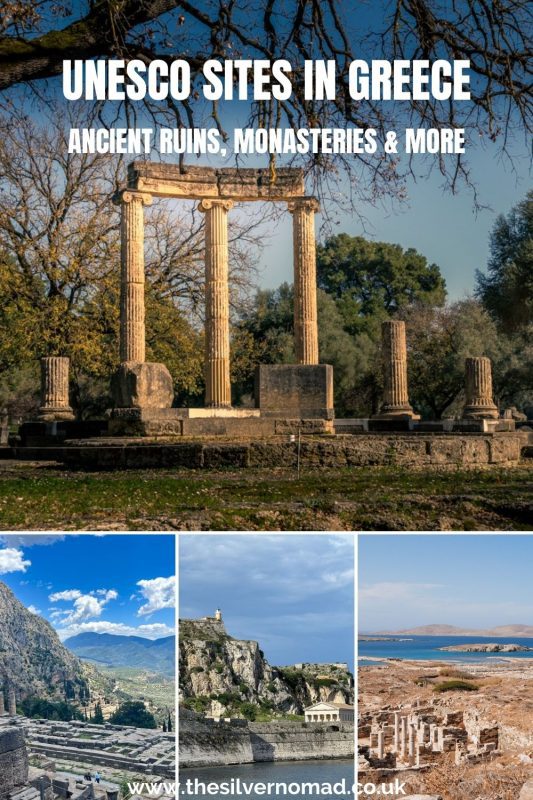
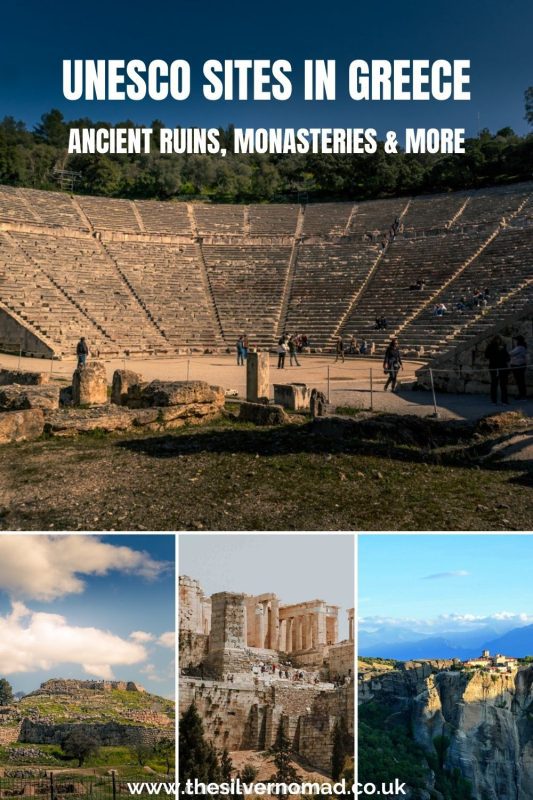
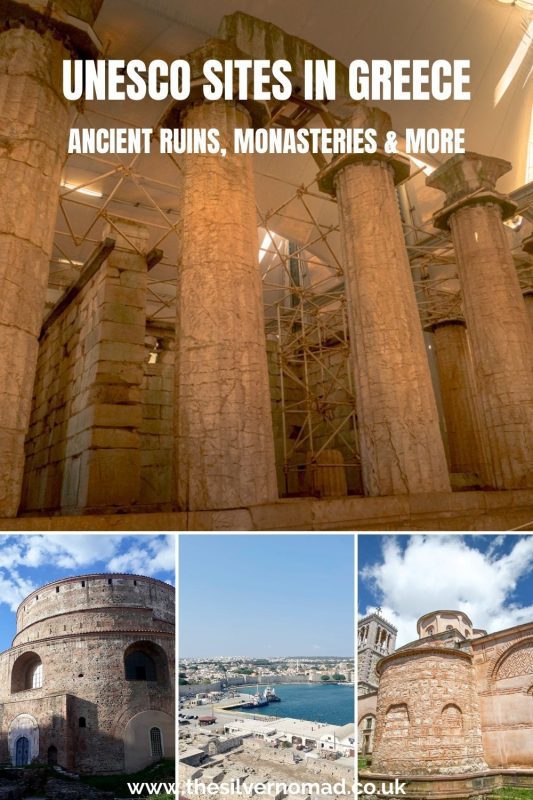
List of the 20 UNESCO List of Sites in Greece
| UNESCO SITES IN GREECE | WHERE | WHEN |
| Temple of Apollo Epicurius at Bassae | Peloponnese | 1986 |
| Archaeological Site of Delphi | North Western Greece | 1987 |
| Acropolis, Athens | Central Greece | 1987 |
| Medieval City of Rhodes | Rhodes | 1988 |
| Meteora | Central Greece | 1988 |
| Sanctuary of Asklepios at Epidaurus | Peloponnese | 1988 |
| Paleochristian and Byzantine Monuments of Thessaloniki | Thessaloniki | 1988 |
| Archaeological Site of Olympia | Peloponnese | 1989 |
| Archaeological Site of Mystras | Peloponnese | 1989 |
| Delos | Delos | 1990 |
| Monasteries of Daphni, Hosios Loukas and Nea Moni of Chios | Central Greece | 1990 |
| Pythagoreion and Heraion of Samos | Samos | 1992 |
| Archaeological Site of Aigai | Northern Greece | 1996 |
| Archaeological Sites of Mycenae and Tiryns | Peloponnese | 1999 |
| The Historic Centre (Chorá) with the Monastery of Saint John the Theologian and the Cave of the Apocalypse on the Island of Pátmos | Pátmos | 1999 |
| Mount Athos | North Eastern Greece | 1988 |
| Old Town of Corfu | Corfu, Ionian Islands | 2007 |
| Archaeological Site of Philippi | North Eastern Greece | 2016 |
| Zagori Cultural Landscape | North Western Greece | 2023 |
| Minoan Palatial Centres | Crete | 2025 |

I love to see ancient Greece like Temples and museum and every thing in Greece. I love to read your article it is very informative. everyone should read and have a perfect adventure in Greece.
Thank you. They are so amazing to visit.