Wherever I am in the world, I try to visit as many UNESCO Heritage sites as I can. With eight UNESCO sites in Sri Lanka to explore, I was in my element. The beautiful teardrop island of Sri Lanka captivated me with Buddhist temples, fascinating history, an ancient city on top of a rock 350 metres above sea level, a cave temple complex and a biosphere reserve.
The eight sites are spread across the country with 6 UNESCO cultural sites and 2 Natural UNESCO sites. Sri Lanka’s UNESCO World Heritage Sites are a treasure trove of culture, history, and natural beauty.
*This site uses affiliate links and I may earn a small commission when you use my links and make a purchase without incurring an additional fee yourself.
Thank you for supporting this website. See my disclaimer page for more details.
This guide will take you through each must-visit eight UNESCO Sites in Sri Lanka location and offer practical tips to make the most of your journey.
UNESCO Cultural Sites in Sri Lanka
There are 6 UNESCO Cultural Sites in Sri Lanka. The UNESCO Cultural sites highlight cultural heritage, buildings and monuments, artworks.
The first three sites, Polonnaruwa, Sigiriya and Anuradhapura, form the cultural triangle of Sri Lanka and are some of the major attractions in the country. They were the first sites to be added to the UNESCO World Heritage list in 1982.
The Ancient City of Polonnaruwa (1982)
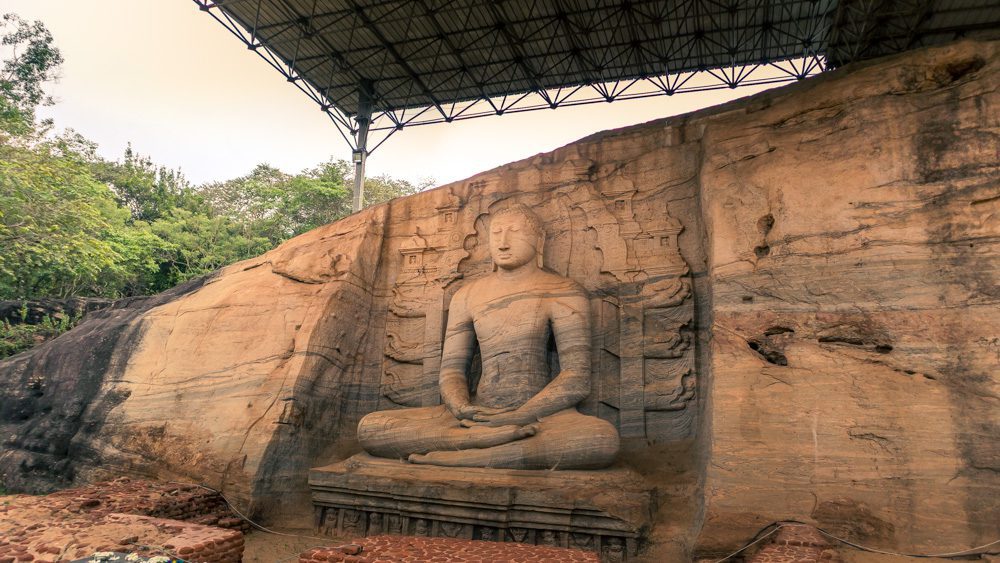
The ancient city of Polonnaruwa is rich in archaeological treasures, including stupas, ruins of ancient palaces, and reservoirs. Exploring the city gives a glimpse into Sri Lanka’s illustrious past.
The Polonnaruwa site is quite extensive, and to fully appreciate it, you may need to spend about a day walking around. Explore the different sections of the garden city and the palace of King Parakramabahu from the 12th century as well as the Brahmanic monuments.
Look out for the moonstones; these carved semi-circles at the entrance of Buddhist temples are unique to Sri Lanka.
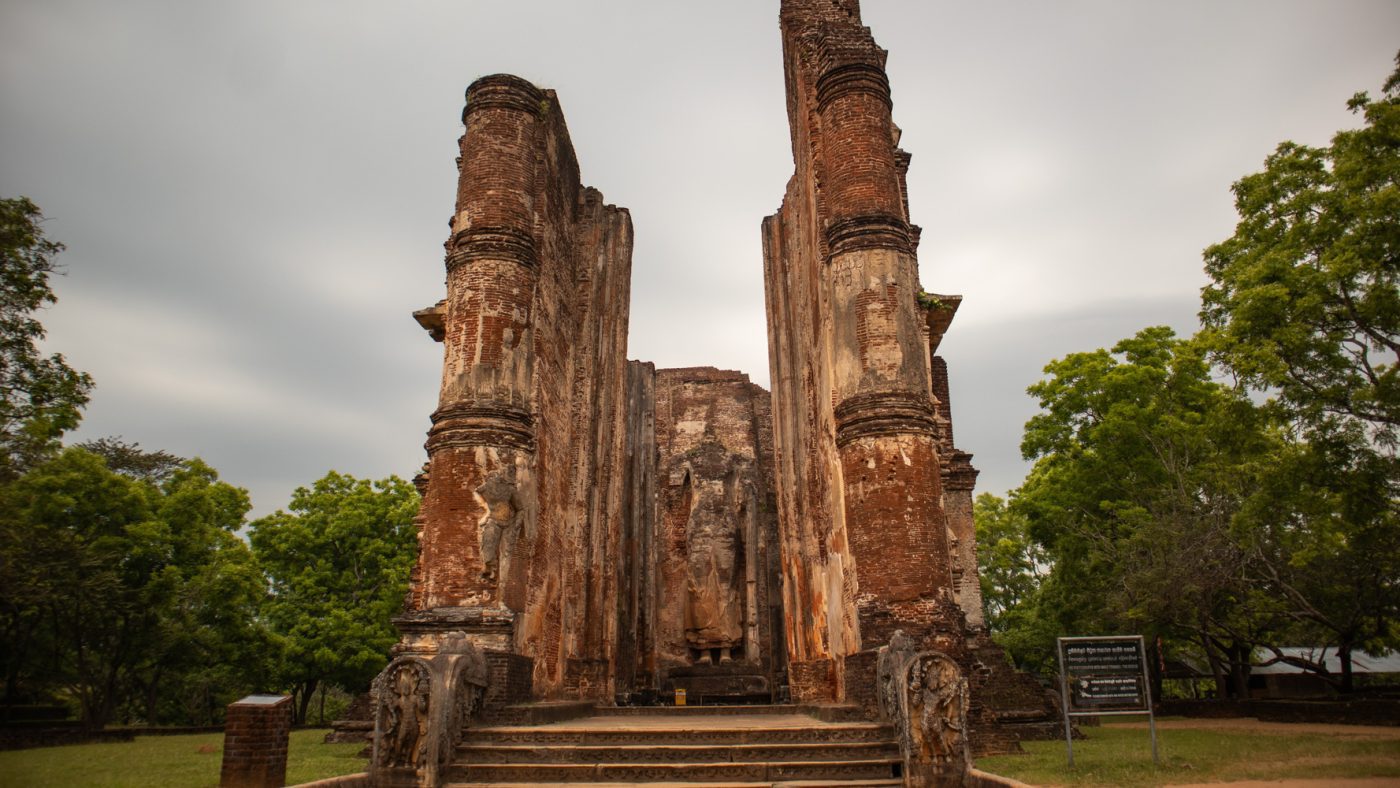
After the destruction of Anuradhapura in 993 (see below), Polonnaruwa became the second capital of Sri Lanka.
- Polonnaruwa Highlights: The Gal Vihara rock carvings of two giant Buddha statues, the vast Parakrama Samudra reservoir, and the Royal Palace ruins.
- Polonnaruwa and other areas of Sri Lanka were used as the backdrop for the Duran Duran video for“Save a Prayer”, released in 1982
- Top Tip: Rent a bicycle in Polonnaruwa for an enjoyable way to see the sights. Allocate at least a day to explore the city.
- Where to stay: Check out accommodation near Polonnaruwa
The Ancient City of Sigiriya (1982)

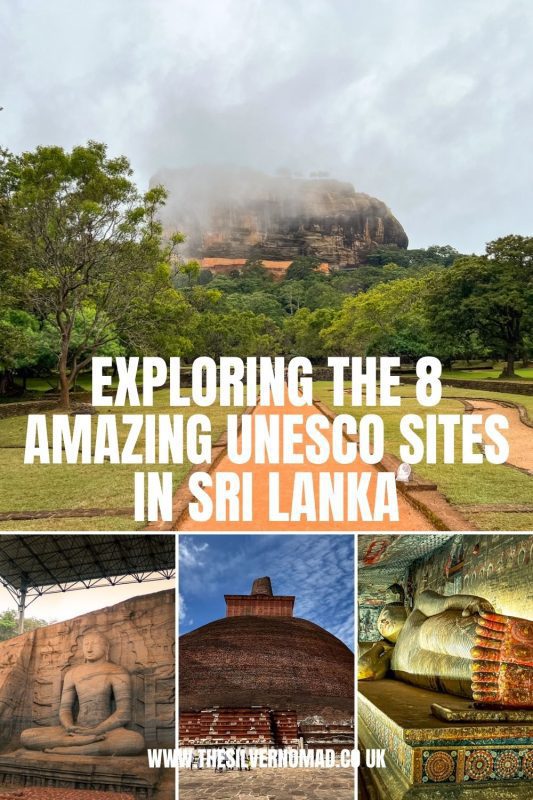
Perched dramatically on top of a 200-metre high rock, Sigiriya – also known as Lion Rock – is an ancient rock fortress and one of Sri Lanka’s most iconic landmarks.

Built in the 5th century AD by King Kasyapa, it was initially a royal palace and later a Buddhist monastery. The site’s design showcases ingenious engineering, from its water gardens to the intricate frescoes and the Mirror Wall that still bears ancient inscriptions.
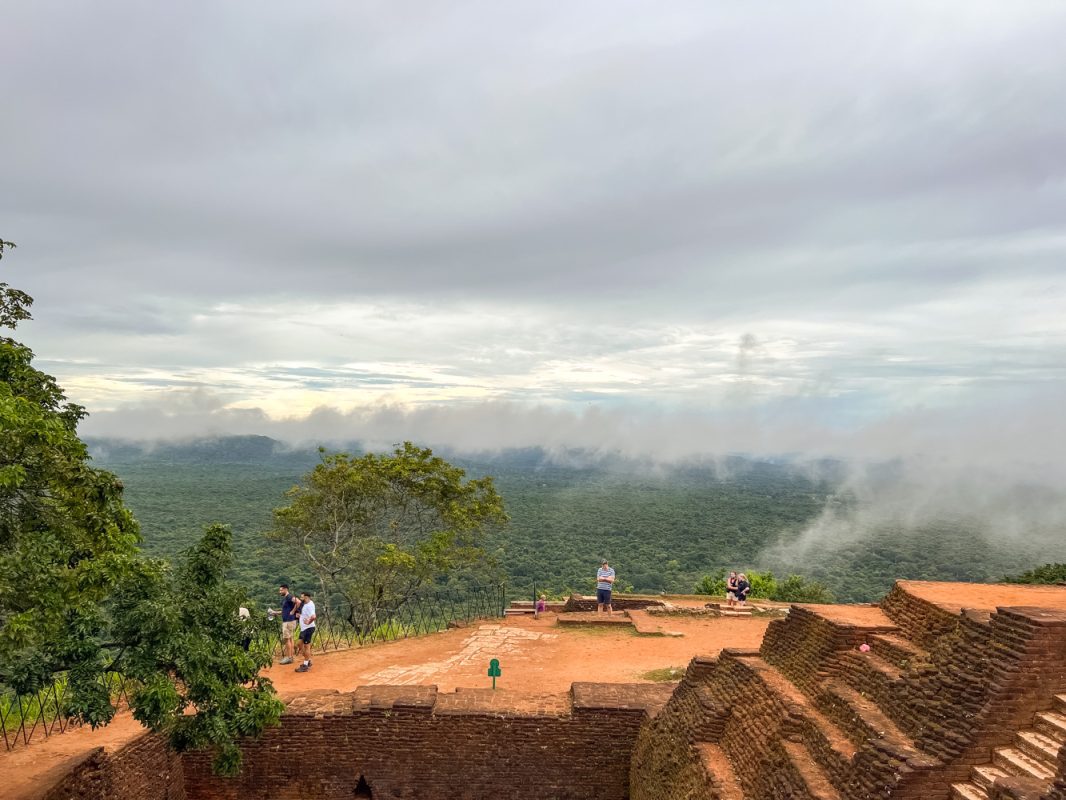
Sometimes called the eighth wonder of the world, the 360-degree views from the top of Sigiriya are worth the climb to the top. On the summit, you can walk around the ruins of the rock fortress and imagine what it was like to live on top of a mountain.
The grounds feature one of the world’s oldest landscaped gardens with ponds, bathing pools and long walkways.
- What to Know: Sigiriya is considered one of the best-preserved examples of urban planning from ancient times.
- Don’t Miss: The Lion Gate, two lion’s paws at the entrance of the steps up to the top of the Kingdom of the Lion; the frescoes depicting celestial maidens, and the breathtaking panoramic views from the summit.
- Don’t forget: The Museum, which gives you the background to the site.
- Top Tip: Arrive early to avoid the midday heat and crowds. Wear sturdy shoes for the climb and carry plenty of water.
- Where to stay: Check out accommodation near Sigiriya
Read our full guide to climbing Lion Rock in Sigiriya
The Sacred City of Anuradhapura (1982)
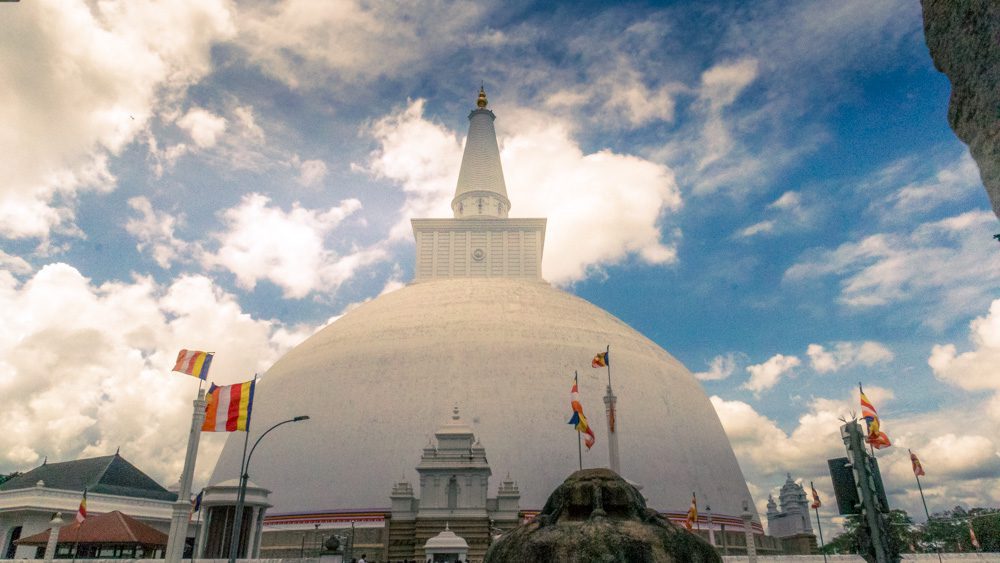
Anduradhapura was the first ancient capital of Sri Lanka, believed to have been established in the 4th century BC. The city was the royal capital for over a thousand years and saw the rise and fall of kings and the emergence of Buddhism. It is known for its well-preserved palace ruins, colossal stupas, ancient reservoirs, and intricate stone carvings.
King Dutugemunu, who reigned in Anuradhapura in the 1st century BC (161 to 137 BC), is celebrated for uniting Sri Lanka. His armies defeated the Tamil king, Elara. King Dutugemunu is known for his advancement of Buddhism, including the building of the Ruwanweli Maha Seya stupa.
The stunning, white Ruwanweli Maha Seya stupa stands around 103 m (338 ft) and with a circumference of 290 m (951 ft). It is one of the world’s tallest ancient monuments.
Jetavanarama Monastery and Stupa which was built in the 3rd century, is also worth visiting. While it is still the original brick, it is the tallest stupa at 122 metres (400 ft).
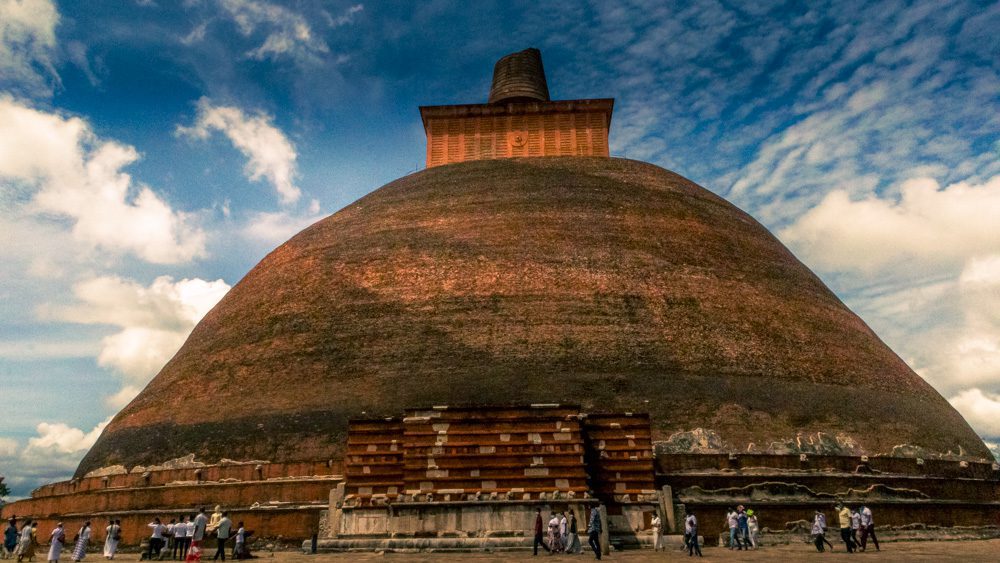
The Thuparama Stupa was built during the reign of King Devanampiya Tissa (247-207BC). It is one of the oldest stupas in the world and is believed to enshrine a collarbone of the Buddha.
The ticket price for entrance is quite steep, but I think it is worth it to be able walk in so much ancient history.
- What to Know: Anuradhapura is a living testament to Sri Lanka’s rich past and holds immense religious and cultural significance for Buddhists worldwide.
- Don’t Miss: The Sacred Bodhi Tree, grown from a cutting of the original Buddha’s fig tree under which he attained enlightenment, and the Ruwanwelisaya stupa.
- Don’t forget: Remember to remove your shoes and walk clockwise around the stupa.
- Top Tip: Take toilet paper with you in case you need to go to the loo. There are few Western loos, there is rarely any loo paper and you may have to squat!
- Where to stay: Check out accommodation near Anuradhapura
Sacred City of Kandy (1988)
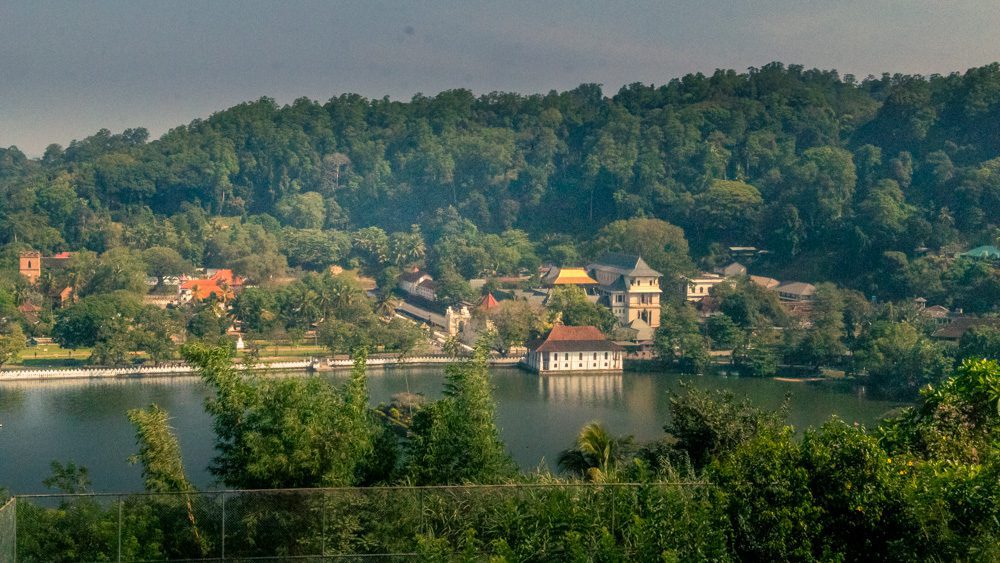
At the heart of Kandy lies the Temple of the Sacred Tooth Relic, one of the most important Buddhist sites in Sri Lanka.
The Sacred Tooth Relic is the left canine tooth of Lord Buddha, and it is kept securely in the Temple. There are three opportunities daily to watch the ceremony and potentially see the Sacred Tooth Relic. These are 5.30 a.m. to 7.00 a.m.; 9.30 a.m. to 11.00 a.m. and 6.30 p.m. to 8.00 p.m. These sessions do get quite busy with Buddhist pilgrims, and you may have to queue for some time.
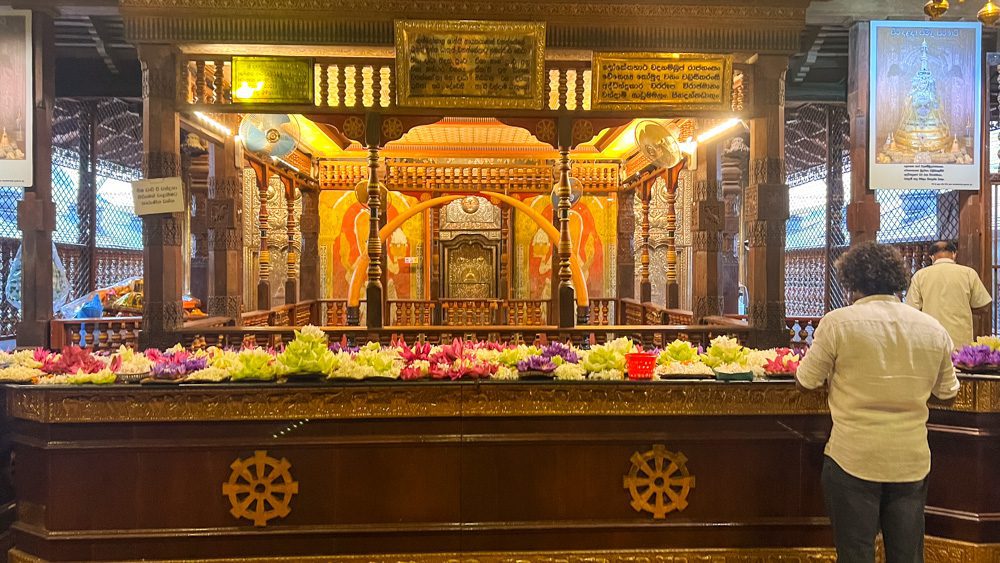
The ceremony starts with drummers and horns as Buddhist monks open the doors and the Sacred Tooth is brought out and carried upstairs. It is put on display and worshippers can pass to pay homage.
Before you enter the temple of the tooth, you need to buy a ticket from one of the booths or one of the machines outside. The machines are in English and have very clear instructions given in colourful steps. You have to leave any bags and your shoes at the counter.
Do take time to walk around the temple and the grounds. The mosaics, tiles and buildings are beautiful. There are also 3 museums with artefacts, photos and descriptions of Sri Lanka’s ancient history.
This bustling city is also surrounded by lush hills, offering a mix of cultural and natural attractions. For a beautiful view of Sri Dalada Maligawa, head for the viewing platform on Rajapihilla Mawatha.
- What to Know: The temple houses a sacred tooth relic of Buddha, revered by Buddhists worldwide.
- Don’t Miss: The Esala Perahera festival, held annually in July or August, featuring vibrant parades and traditional performances and ceremonial elephants.
- Travel Tip: Combine your visit with a peaceful walk around Kandy Lake or a stop at the Royal Botanic Gardens in nearby Peradeniya.
- Where to stay: Check out accommodation near Kandy
Old Town of Galle and its Fortifications (1988)
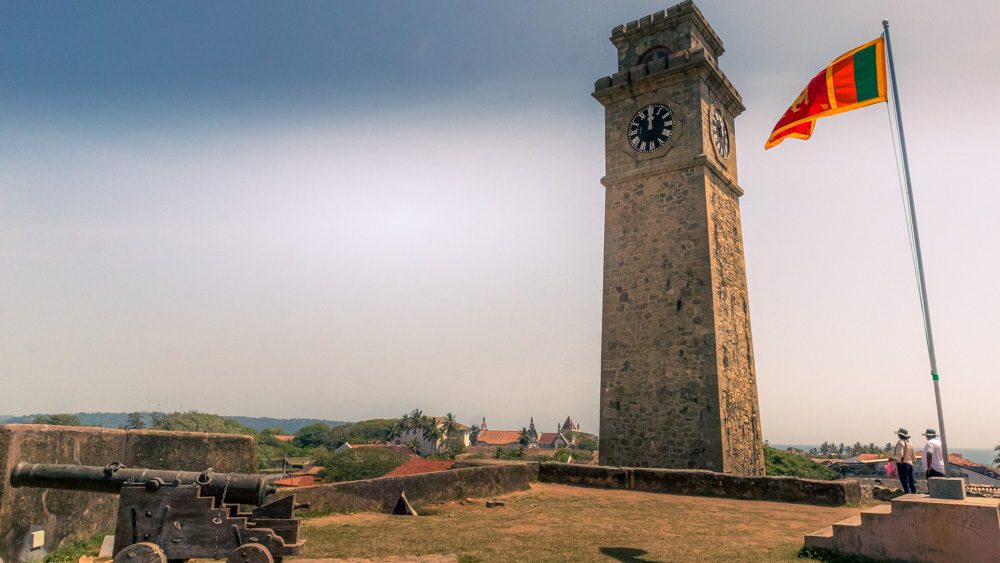
Step into Sri Lanka’s colonial past at the walled city of Galle Fort, a beautifully preserved 17th-century Dutch fort.
Galle was an important international trading port in Asia before the Europeans took it over. In the 16th century, the Portuguese first established a fort and trading post at Galle.
In 1640, the Dutch took over from the Portuguese and fortified the ramparts. Above the entrance to the Fort is the Dutch Coat of Arms of the East India Company featuring a rooster on a rock above a shield. with the letters VOC and flanked by two lions with the date: ANNO MDCLXIX – The Year 1669.
In the late 18th Century, the British took over and made some modifications to Galle Fort. Nowadays, the town retains its colonial feel while also preserving the heritage of the fort.
If you are exploring the fort, there is a comprehensive map with locations and dates of the Old Town of Galle and its Fortifications to follow. You can visit the towers, the ramparts as well as view the cannons (weirdly aimed at the cricket pitch now!).
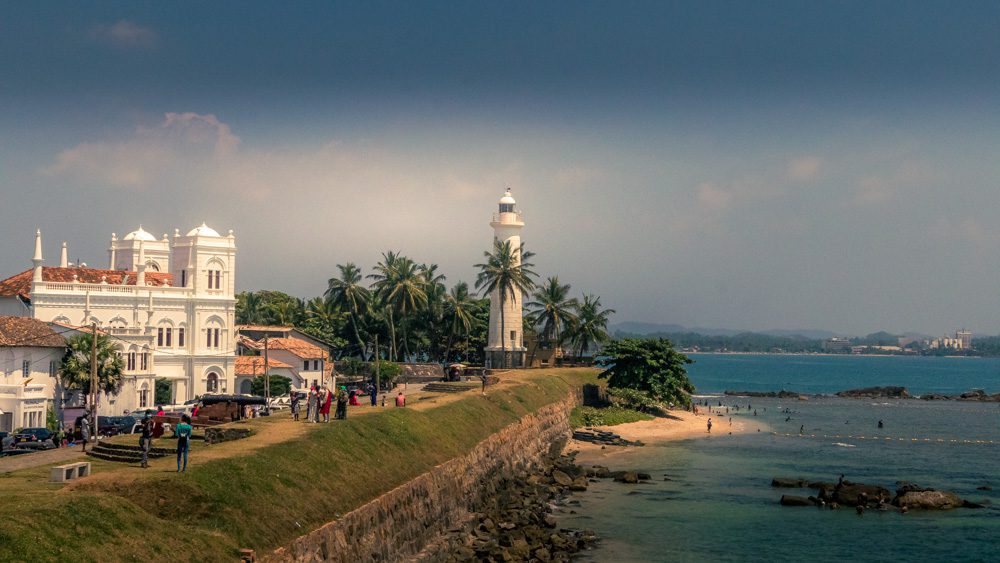
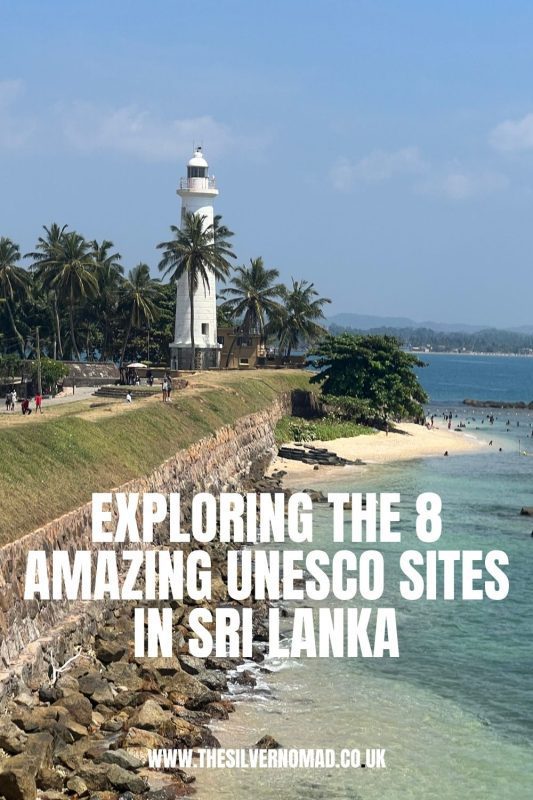
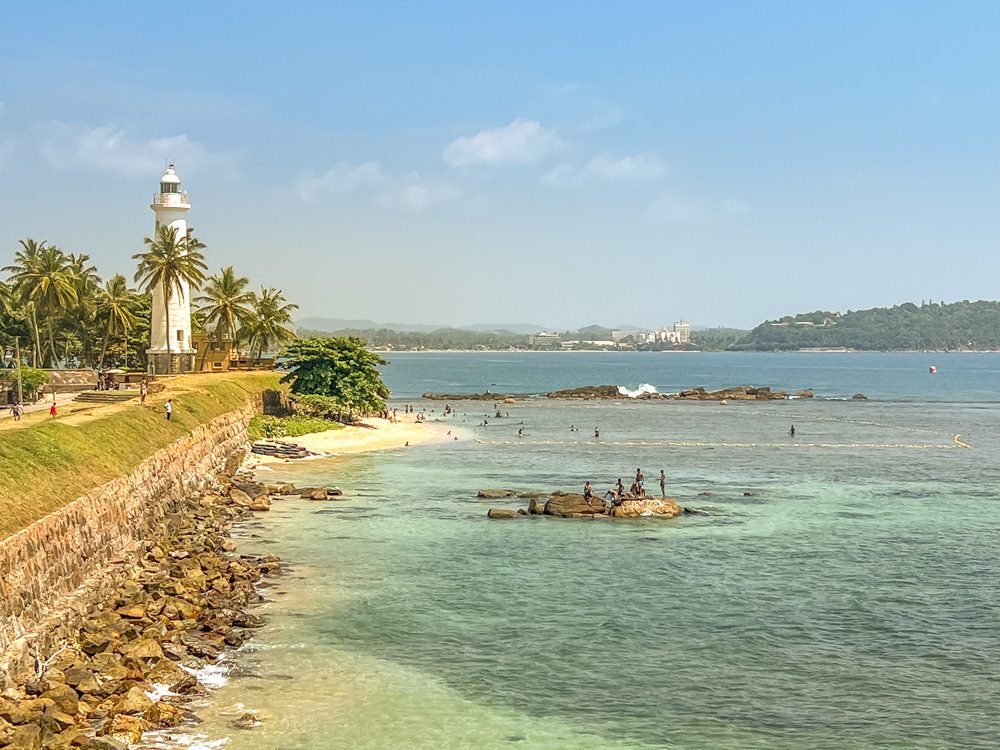
One of the most iconic views in Galle , however, is of the Galle Lighthouse. Built by the British in 1848, the lighthouse stands 26.5 metres tall. It is the oldest lighthouse in Sri Lanka and although it had to be rebuilt in 1939, it remains in operation today.
Each occupation has left its touches on Galle (pronounced gawl).
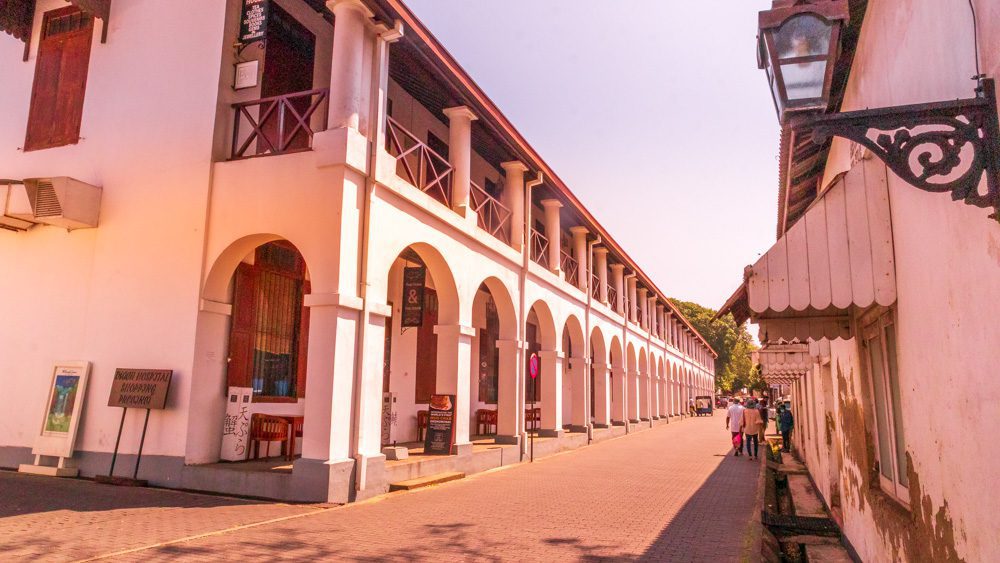
The cobblestone streets are lined with boutique shops, art galleries, and cafes, making it a perfect place to wander and soak in the atmosphere. Look out for the Old Dutch Hospital, which has been converted into an elegant shopping area with chic bars and restaurants.
- What to Know: A UNESCO World Heritage Site since 1988, Galle Fort is a blend of European architecture and South Asian traditions.
- Don’t Miss: The Galle Lighthouse, the old Dutch Reformed Church, the National Maritime Museum and the old red British postbox from King George V in 1929. The white Morris Minor that drives around Galle.
- Travel Tip: Explore during the cooler hours of the day. Sunset views from the fort walls are magical.
- Biblical Legend: It is thought that Galle was the biblical city “Tarshish”. In 1,000 BC, King Solomon, is said to have shipped elephants, apes, peacocks, jewels, and spices back to woo the Queen of Sheba.
- Where to stay: Have a look at places to stay in Galle
Rangiri Dambulla Cave Temple (1991)
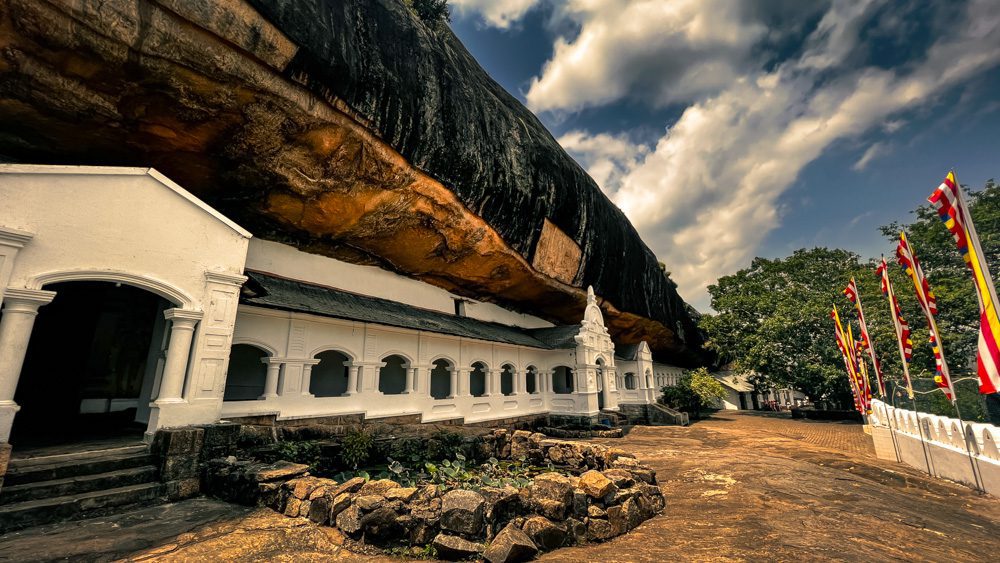
There are two entrances to the Golden Temple of Dambulla. What seems to be the main one has a huge golden Buddha outside with a sign saying “Golden Temple”. However, this is not where the ticket office is. The ticket office is also not at the top. It is actually round the other side of the hill. Check the map below for where to go if you are travelling independently.
There are 364 steps to climb from the parking lot to the cave temple, which takes about 10 minutes.
Climbing the 364 steps up to Dambulla Cave Temple and takes around 10 minutes. Do stop to take in the views over the surrounding countryside. Once you get to the top, you leave your shoes; you can either leave them with the attendant for a small fee, or leave them by the entrance.
There are normally many hawkers offering necklaces, toys and other souvenirs. If you are not interested, several polite “nos” normally is enough for them to lose interest.
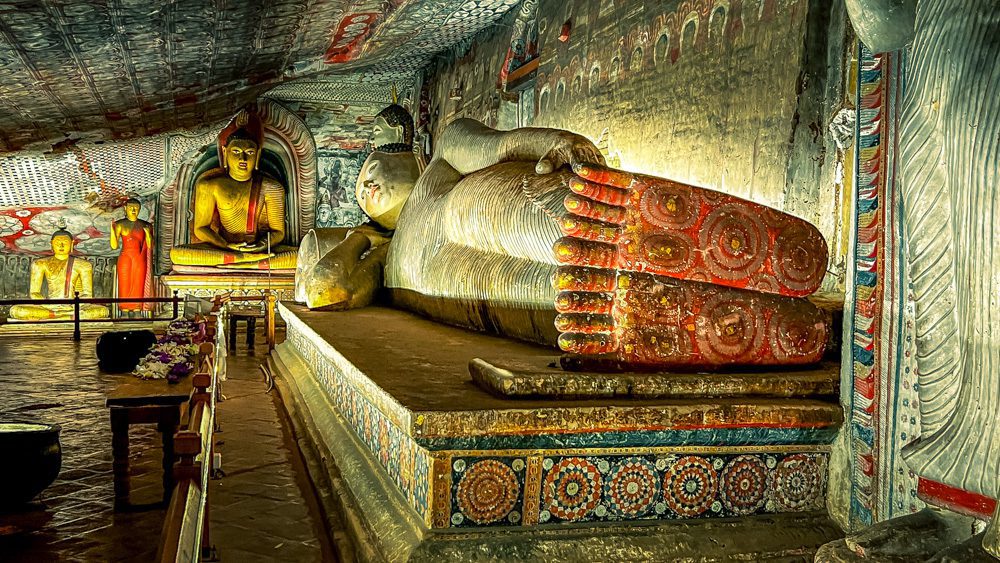
The Golden Temple of Dambulla is an impressive complex of five caves, filled with over 150 statues of Buddha and adorned with ancient murals. This sacred site has been a place of worship for over 2,000 years and offers visitors a serene atmosphere combined with stunning art and architecture.
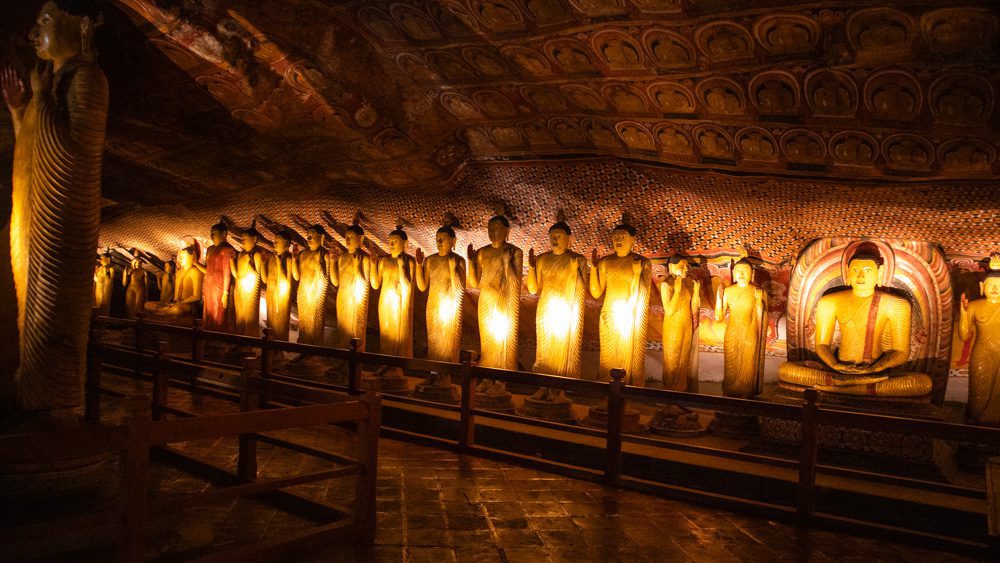
Each temple is different and the paintings and statues dated back to the 3rd century BC. The temples are remarkably well preserved.
- What to Know: Each cave has a unique theme and showcases statues of Buddha, kings, and deities.
- Don’t Miss: The 46-foot reclining Buddha and the panoramic views of the surrounding countryside from the temple entrance.
- Top Tip: Dress modestly, covering shoulders and knees. You will need to leave your shoes before you enter, but carry some socks, as the stone pathways can get quite hot during the day.
- Blessings: For a small donation, you can be blessed by a monk. He ties a white three-strand string around your right wrist while blessing you.
- Where to stay: Have a look at places to stay in Dambula
UNESCO Natural Sites in Sri Lanka
Not only is Sri Lanka blessed with six cultural UNESCO sites, but it also has two UNESCO natural sites.
UNESCO value these amazing natural places for their biodiversity, natural beauty, ecosystems or the geological value they represent.
Sinharaja Forest Reserve (1988)
Added to the list of UNESCO Natural World Heritage Sites in 1988, the Sinharaja Forest Reserve in the southwest of Sri Lanka is a biodiversity hotspot. Over half of Sri Lanka’s endemic species of birds, mammals, insects, reptiles and amphibians are in Sinharaja Forest Reserve. Many of which are endangered species.
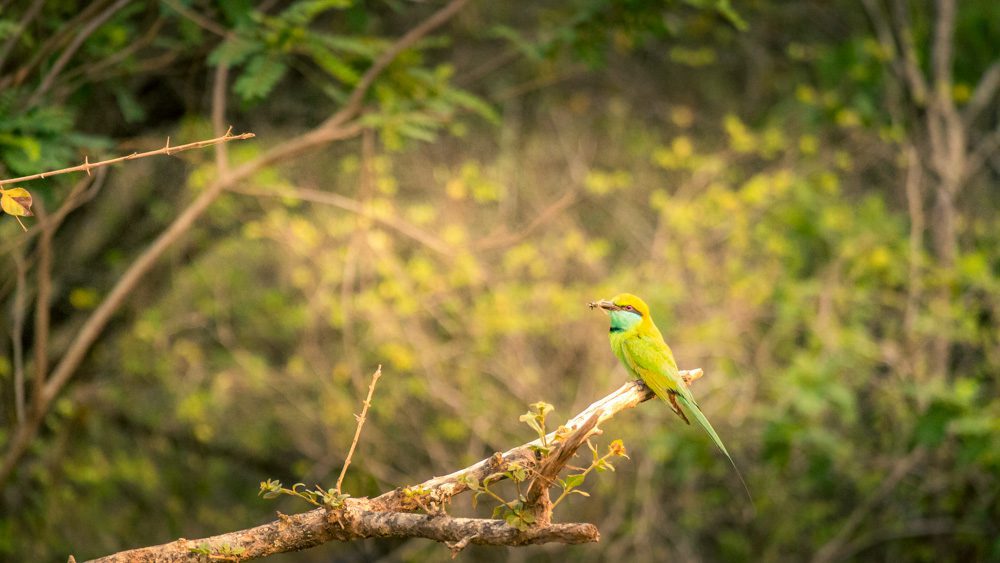
The lush tropical rainforest and dense vegetation spread over 8,864 hectares and is one of the wet-zone parks in Sri Lanka. The Reserve is home to the Sri Lankan Leopard, Asian elephants, purple-faced Langurs and the beautiful Sri Lanka blue magpie
It is mandatory to have a guide when trekking through the Sinharaja Forest Reserve. They will help you negotiate your way through the forest and know where the best spots are for flora and fauna. You can choose a 3, 6 or 9-hour trek.
There are 4 different entrances to the Sinharaja Forest Reserve; make sure you get the right one to meet your guide.
So far, this is the only one of the UNESCO sites in Sri Lanka I have not visited, but I intend to on my trip to Sri Lanka.
- Top Tip: Start your trip early in the morning to avoid the heat of the afternoon and to have better chances of spotting wildlife.
- What to Know: Sinharaja is a wet-zone park and there are leeches. Avoid them by going in the drier months or wearing long trousers.
- Don’t Miss: Take binoculars. Also don’t forget your swimming costume for a dip in the waterfall pools.
- Where to stay: There is a range of places to stay near Sinharaja Rain Forest Reserve.
Central Highlands of Sri Lanka (2010)
The Central Highlands of Sri Lanka cover the Peak Wilderness Protected Area, the Horton Plains National Park and the Knuckles Conservation Forest.
The mountains of the Adam’s Peak range near the small village of Dalhousie, are stunning to look at but a challenge to climb. With over 5,000 concrete steps to reach the summit, it is preferable to start as early in the morning – 2 to 3 am is good – so that you are climbing in the cool.
Cloud forests cloak the upper slopes, while lower elevations are rich in tropical rainforest, creating a patchwork of habitats that are increasingly rare elsewhere in the world.
Adam’s Peak is also deeply woven into Sri Lanka’s cultural and spiritual life. The famous Sacred Footprint at the summit is revered by Buddhists, Hindus, Christians and Muslims alike, making this one of the island’s most important pilgrimage sites. Whether you climb for faith, nature or the unforgettable sunrise views, the Adam’s Peak range offers a powerful blend of wilderness, wildlife and living tradition.
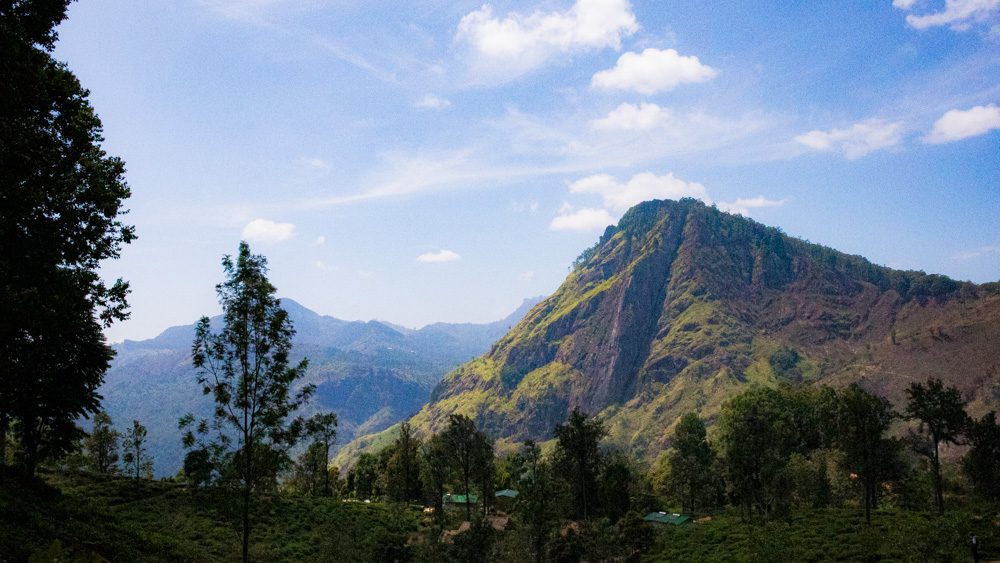
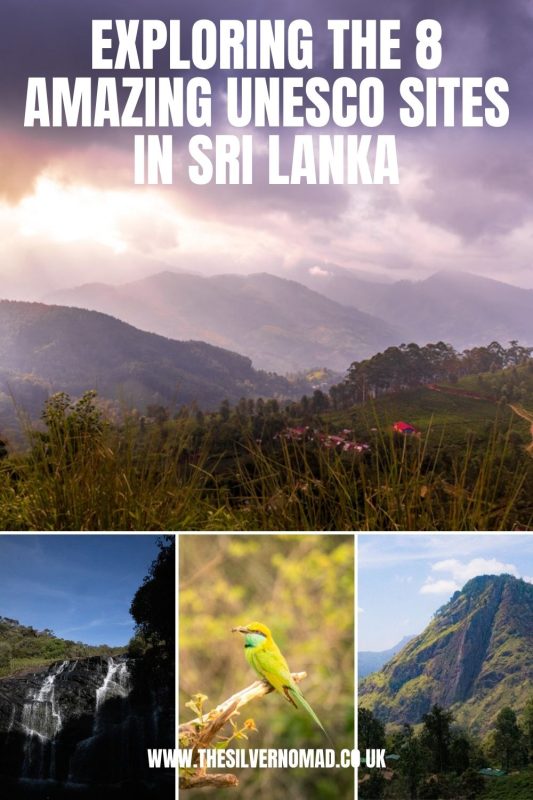
Offering some of the island’s most breathtaking landscapes, the region is perfect for nature lovers, climbers and hikers. From the misty peaks of Horton Plains to the lush tea plantations of Nuwara Eliya and the hill country areas of the Knuckles Range, this region is perfect for climbers, trekkers and hikers.
Pidurutalagala, the highest point of Sri Lanka, Adam’s Peak and Little Adams Peak offer great views across the valleys around Ella and Nuwara Eliya.
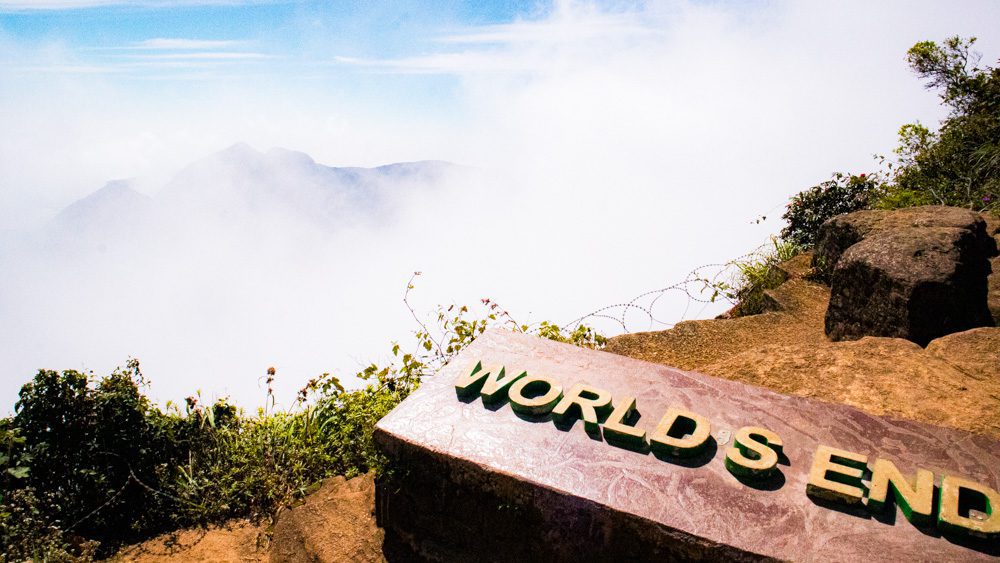
Horton Plains offers a gentler hike than Knuckles or the Adam’s Peaks. It is a national park and you can see quite a few endemic species as well as samber deer, mongeese, lizards and a variety of birdlife. All the routes are signposted with degree of difficulty and approximate durations.
At the World’s End in Horton Plains, you will be at the edge of a 800 metre sheer drop with spectacular views over the surrounding landscape. If you get there after late morning, your view may be covered by the mist, but it is still awesome.

The Knuckles Mountain Range in central Sri Lanka is a spectacular and biologically rich highland landscape named for the series of rugged peaks that resemble the knuckles of a clenched fist when seen from certain viewpoints.
The range stretches across the Kandy and Matale Districts and rises to nearly 1,900 m at its highest point, creating a dramatic mosaic of ecosystems from lowland forests to mist-shrouded cloud forests. It supports an extraordinary level of biodiversity, including many endemic plant and animal species.
- Travel Tip: Start your hikes early in the morning for clear skies and better chances of spotting wildlife.
- What to Know: The area includes Horton Plains National Park, Knuckles Conservation Forest, and Peak Wilderness.
- Don’t Miss: The hike to World’s End in Horton Plains, a visit to a working tea estate, the views from the top of Adam’s Peak and the stunning waterfalls in the area.
- Top Tip: If you enjoy walking, try the Pekoe Trail, a 323 km trail through the Central Highlands of Sri Lanka.
Where to stay: The Madukelle Tea & Eco Lodge is the perfect way to combine a visit to a tea estate with a view of the Knuckles Mountain range.
Exploring Sri Lanka’s UNESCO World Heritage Sites
Planning Your Visit
Getting Around:
Sri Lanka’s UNESCO World Heritage sites are spread across the island, so plan your itinerary to minimise travel time.
You could link the golden triangle of Anuradhapura, Sigiriya and Polonnaruwa with visiting Dambulla. Head down to Kandy and the Central Highlands. The Knuckles Range first, then trips to Nuwara Eliya for Horton Plains and Ella for the Peak Wilderness Protected Area. In the south, combine a visit to Galle with visiting Sinharaja.
Hiring a driver or joining a guided tour can make your trip more convenient.
When to Go:
The best time to visit varies by region. For most sites, the dry season (December to March) is ideal though I have travelled in Sri Lanka and it really does depend on the day, no matter what season.
Staying Ethical:
Respect the cultural and natural significance of these sites by following local guidelines, avoiding littering, and supporting sustainable tourism initiatives.
Tips for visiting Religious sites in Sri Lanka
Tips: Dress modestly at religious sites, remove your shoes before entering temples, and avoid pointing with your feet. Do not take photos with your back to a statue of a Buddha. Yes, turning your back on a Buddha statue in Sri Lanka is considered disrespectful and is a serious offence.
Here are some other things to keep in mind when visiting Buddhist sites in Sri Lanka:
- Avoid wearing depictions of Buddha: Don’t wear clothing or tattoos with images of Buddha.
- Face the statue when taking photos: If you take a picture of a Buddha statue, make sure you’re facing the statue, not standing next to it or with your back turned to it.
- Don’t touch a monk: Touching a monk is considered disrespectful.
- Dress appropriately: Dress modestly when visiting religious sites or temples.
- Remove your shoes: You will be expected to remove your shoes when entering religious sites.
- Walk around the statue or stupa clockwise: In many Buddhist traditions, walking around a Buddha statue in a clockwise direction is considered a respectful way to show reverence.
- Be aware of Full Moon Poya Days: On Full Moon Poya Days, alcohol and meat are not served or sold.
Final Thoughts
Sri Lanka’s UNESCO World Heritage Sites offer an unforgettable journey through time and nature. From ancient cities to lush highlands, each destination tells a unique story.
| UNESCO SITES IN SRI LANKA | WHERE IN SRI LANKA | INDUCTED |
| Ancient City of Polonnaruwa | North Central Province | 1982 |
| Ancient City of Sigiriya | Central Province | 1982 |
| Sacred City of Anuradhapura | North Central Province | 1982 |
| Sacred City of Kandy | Central Province | 1988 |
| Old Town of Galle and its Fortifications | Southern Province | 1988 |
| Sinharaja Forest Reserve | Sabaragamuwa and Southern Provinces | 1988 |
| Rangiri Dambulla Cave Temple | Central Province | 1991 |
| Central Highlands of Sri Lanka | Central Province | 2010 |
Which of Sri Lanka’s UNESCO World Heritage Sites will you explore first? Share your thoughts or questions in the comments below — I’d love to hear from you!
Map of Sri Lanka’s UNESCO World Heritage Sites
Use these Sri Lanka Travel Tips to plan your adventure!
- Plan your trip with these Sri Lanka Travel Guides.
- Take a guided tour with one of G Adventures Sri Lanka trips
- Get the best deals on flights with Skyscanner.
- Find the perfect place to stay in Sri Lanka on Booking.com.
- Buy your e-sim before you go with Airalo.
- Explore more about Sri Lanka with local experiences.
- Don’t forget to arrange your travel insurance.
Like this post? Pin it for Later