
Tamil Nadu, in the southeast of India, is a place where the past and present blend seamlessly. Known as the cradle of Dravidian culture, the state is a living museum of history, spirituality, and tradition.
Here, colossal temples stand as architectural marvels, their soaring gopurams painted in dazzling colours, while daily rituals carried out by priests continue practices that are thousands of years old.
*This site uses affiliate links and I may earn a small commission when you use my links and make a purchase without incurring an additional fee yourself.
Thank you for supporting this website. See my disclaimer page for more details.
But Tamil Nadu is not just the land of temples. It is a land of contrasts. Bustling cities like Chennai balance colonial heritage with cosmopolitan modernity, while serene hill stations such as Ooty and Coonoor offer cool escapes among tea estates and rolling hills.
A special thank you to the team at the Incredible Legends Holidays for hosting me during my trip in Tamil Nadu. All opinions expressed above are entirely my own.
Stretching along the coast of the Bay of Bengal, you’ll find golden beaches, UNESCO-listed sites like Mahabalipuram, and a vibrant French Quarter in nearby Pondicherry.
For travellers seeking culture, comfort, and a touch of luxury, Tamil Nadu is one of the best places in South India. You can immerse yourself in the rich cultural heritage and history by day, then relax in boutique hotels or heritage properties by night. Add to this the warmth of Tamil hospitality, delicious South Indian cuisine, and easy connections by air and train, and you have the perfect destination for a rewarding and immersive journey.
This Tamil Nadu travel guide covers everything you need to know for planning your Tamil Nadu adventure — from must-see destinations, cultural highlights, to when to go and how to get around and practical tips.
Top Destinations in Tamil Nadu
Tamil Nadu is dotted with destinations that combine history, culture, and natural beauty. Here are some of the highlights:
Chennai
Often used as a gateway or starting point, Chennai is worth at least a couple of days. The international airport welcomes flights from around the world.
The capital of Tamil Nadu, Chennai was originally called Madras. In 1639, the British East India Company founded the city around the Fort St. George. In 1996, 360 years later, the Tamil Nadu Government officially changed the name from Madras to Chennai.
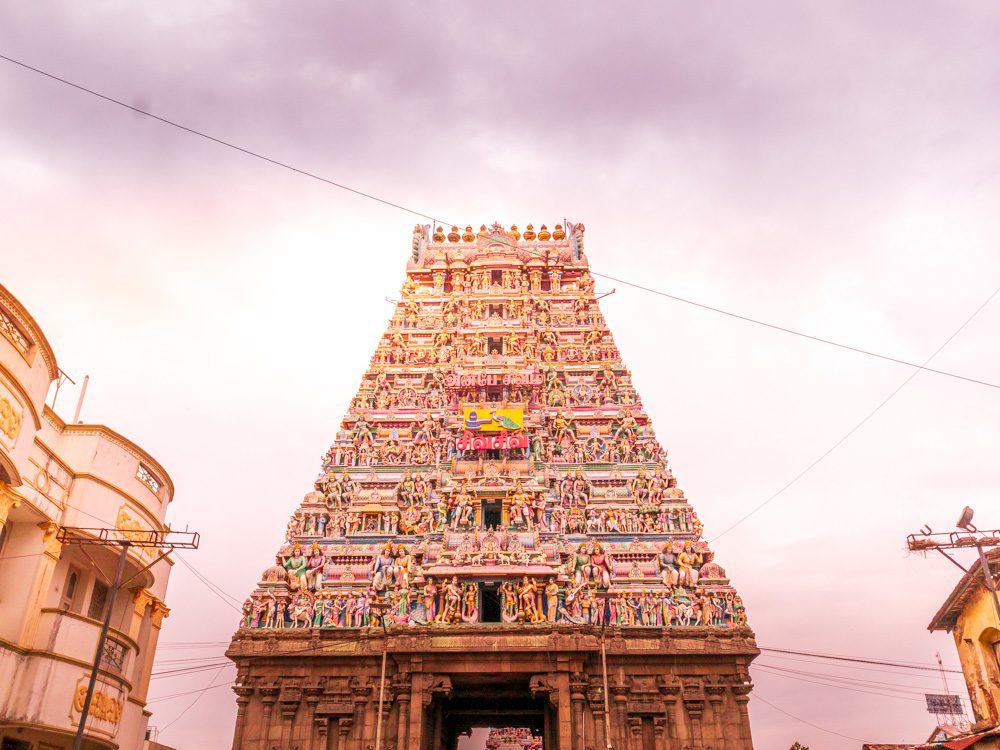
Highlights include Marina Beach, Kapaleeshwarar Temple, the striking white colonial San Thome Basilica, the Government Museum, home to Chola bronzes and the Vivekananda Heritage Museum.
Take a walking tour around the city, is the best way to see Chennai. I enjoyed one with Get Your Guide and had a fascinating tour, visiting the temple, as well as a serene, marble floored Jain temple and the stunning white San Thome Basilica.

Walking along Marina Beach, we visited the fish market, before admiring the street art on the walls of the fisherman’s high-rise homes. We passed the triangular lighthouse and on to Vivekananda Heritage Museum.
Chennai is also India’s hub for Carnatic music and Bharatanatyam dance, making it the perfect place to catch a live performance.
Places to stay in Chennai
Madurai

One of the oldest cities in India, Madurai is best known for the Meenakshi Amman Temple. Its towering gopurams, covered in thousands of carved figures, dominate the skyline.
Meenakshi Amman Temple is currently undergoing a renovation. They are renewing the colouring on the gopurams. Colour references are taken before the towers are lime white-washed, then recoloured.
The temple site is huge and you can spend hours walking around. The Hall of a Thousand Pillars is worth visiting – there is a small charge for entry. Inside ,there are nearly one thousand intricately carved pillars. It is now a museum where you can see artefacts and the layout of the site.
The temple comes alive at dawn and dusk during daily rituals. Try to avoid the mid-day sun as it can be punishing. There are mats to walk on as the ground gets hot underfoot.
You can also visit the Gandhi Memorial Museum and the vibrant local markets.
Thanjavur (Tanjore)
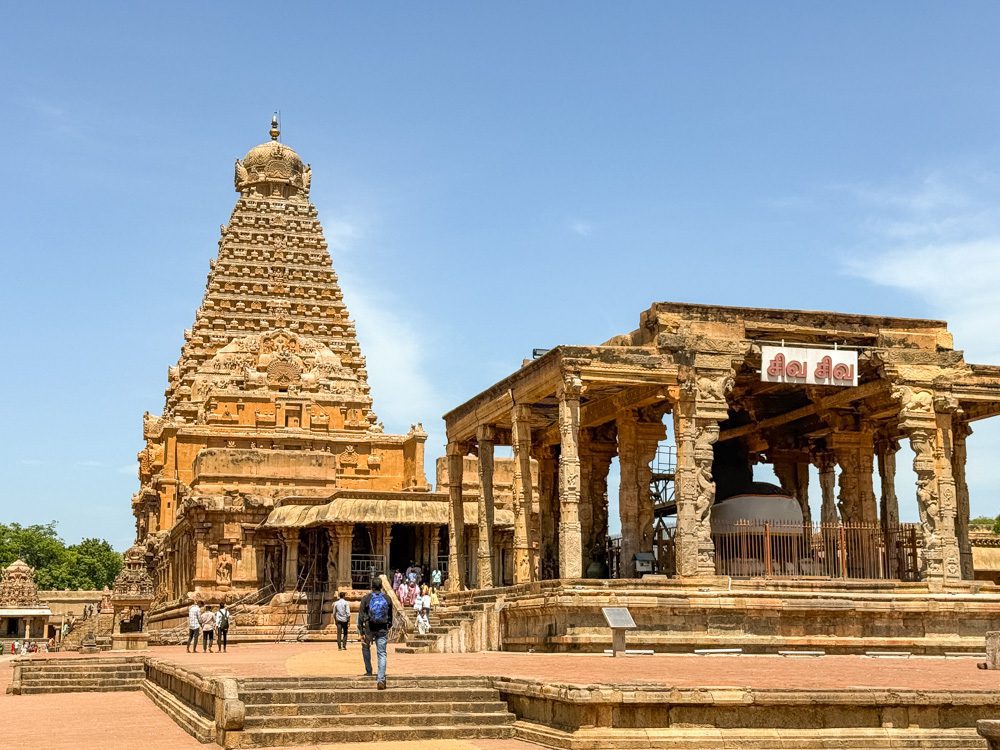
Thanjavur is home to the Brihadeeswarar Temple, a UNESCO World Heritage site and one of the finest examples of Chola architecture. Take time to walk around it as it is an amazing temple.
Beyond the temple, visit the Saraswathi Mahal Library, which houses ancient manuscripts, and watch artisans creating the famed Tanjore paintings.
Chidambaram Nataraja Temple

In the heart of Tamil Nadu lies the magnificent Chidambaram Nataraja Temple, one of the most important Shaivite shrines in India and a masterpiece of Dravidian architecture. Dedicated to Lord Shiva in his cosmic dancing form as Nataraja, the temple complex spans over 40 acres and dates back more than a thousand years. Its soaring gopurams, intricately carved with scenes from Hindu mythology, dominate the skyline and guide pilgrims into a sacred world.
Chidambaram is unique for symbolising the union of spirituality and art — the temple is as much a celebration of dance as it is of devotion.
Srirangam Ranganatha Swamy Temple
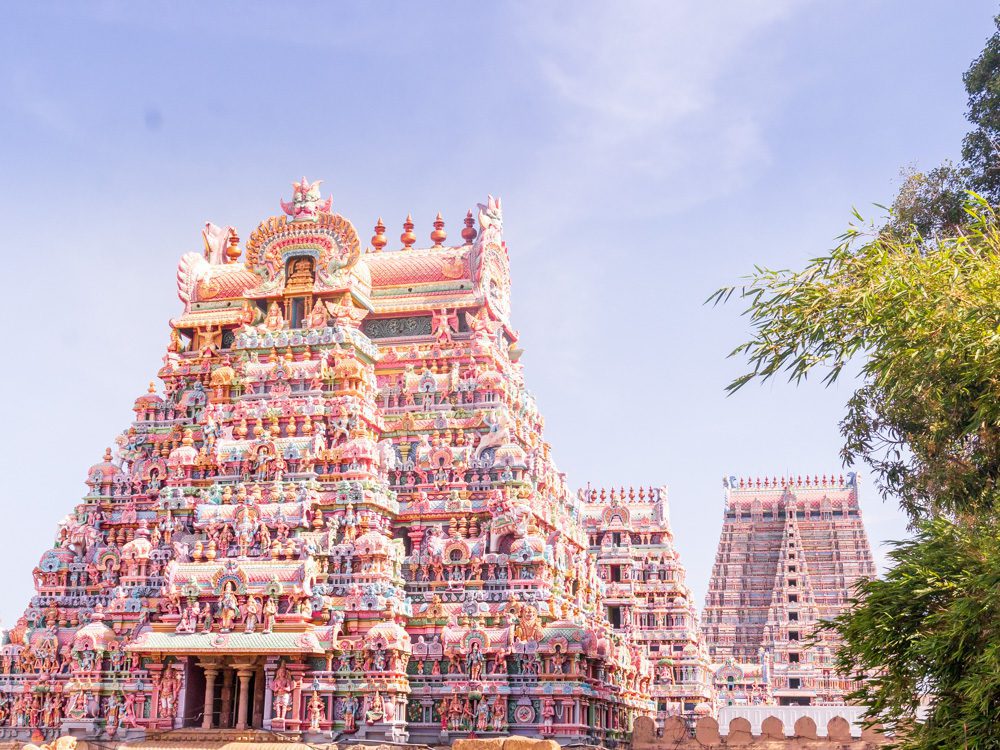
The Srirangam Ranganatha Swamy Temple is one of India’s largest and most magnificent temple complexes, occupying the island of Srirangam in the Kaveri River.
Dedicated to Lord Ranganatha, a reclining form of Vishnu, the temple is a cornerstone of Tamil Nadu’s religious and architectural heritage. Its massive gopurams rise dramatically above the surrounding town, adorned with intricate sculptures depicting scenes from Hindu mythology.
Spanning over 156 acres, the complex features multiple concentric enclosures, pillared halls, and sacred water tanks and it is worth taking time to explore.
The temple is a living centre of worship, with daily rituals and annual festivals such as Vaikunta Ekadashi, when thousands of devotees gather to witness the temple’s elaborate ceremonies. If you are lucky you will be able to watch one of the daily rituals taking place.
Mahabalipuram
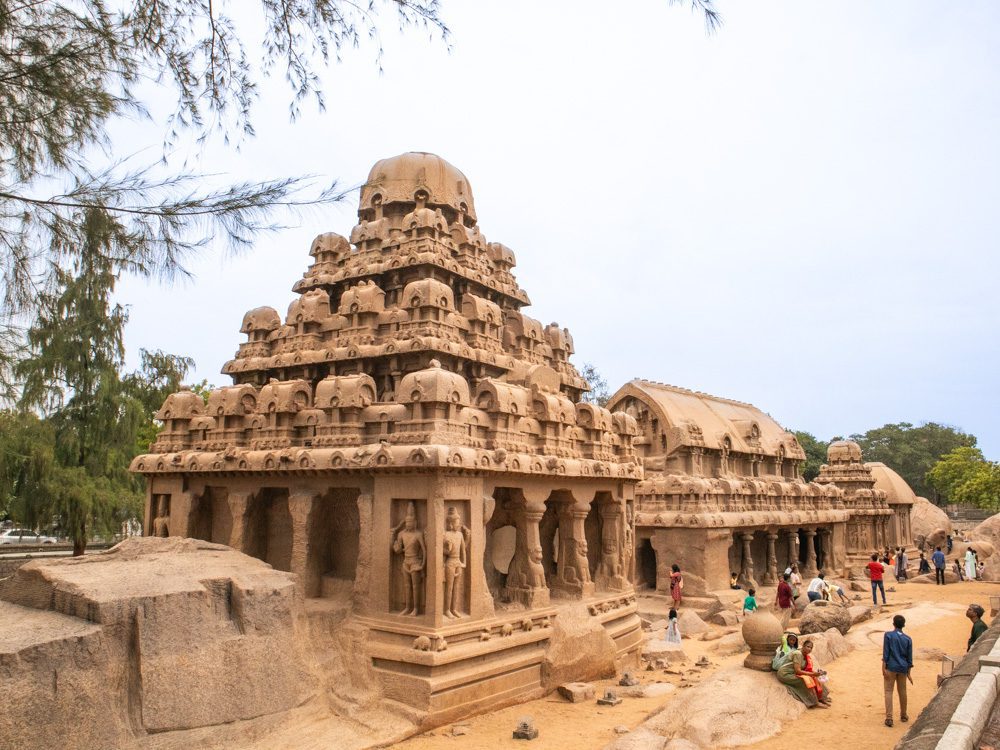
Mahabalipuram is a coastal town, and its Group of Monuments has UNESCO World Heritage site status.
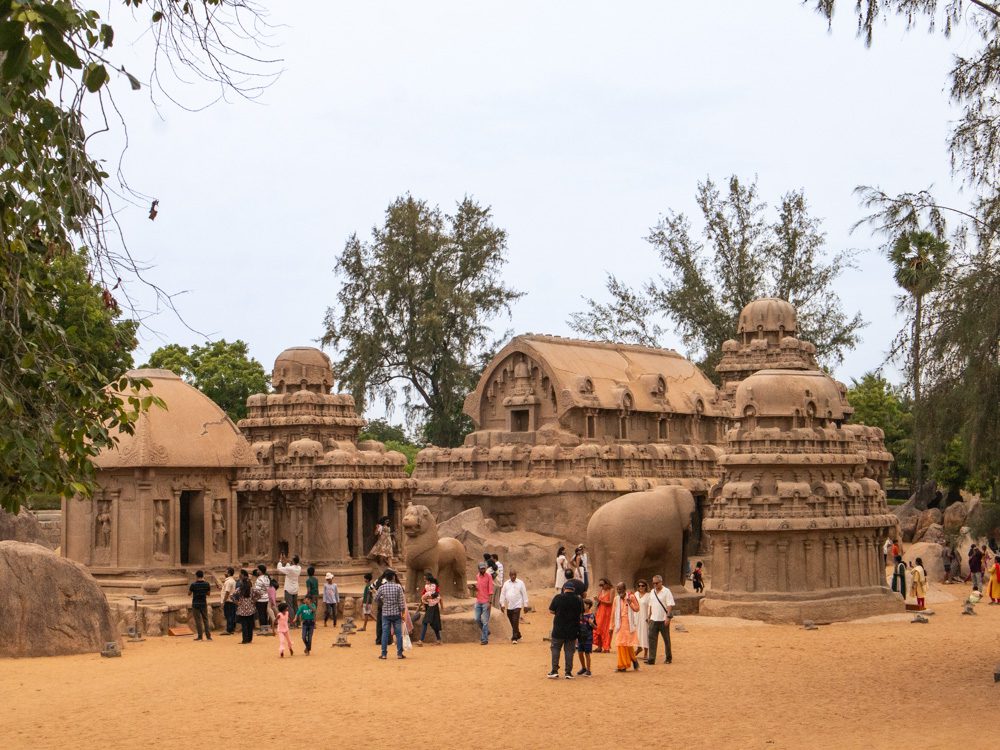
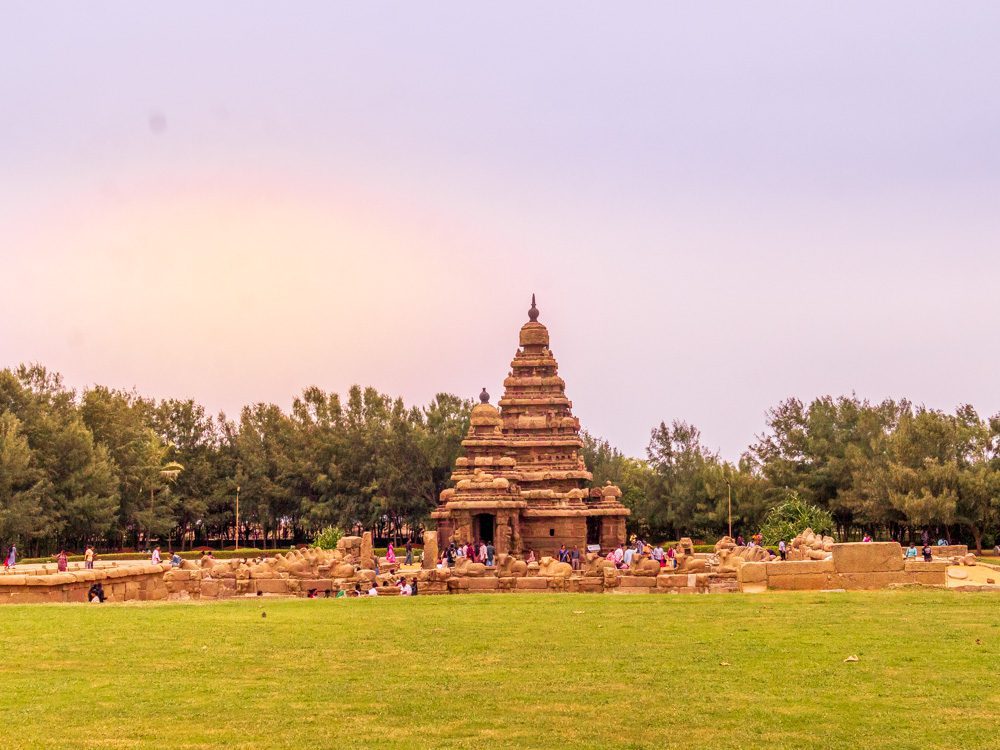
The incredible eventh and eighth centuries CE rock-cut temples and sculptures of the Five Rathas, The Shore Temple, Arjuna’s Penance, and cave sanctuaries are must-sees.
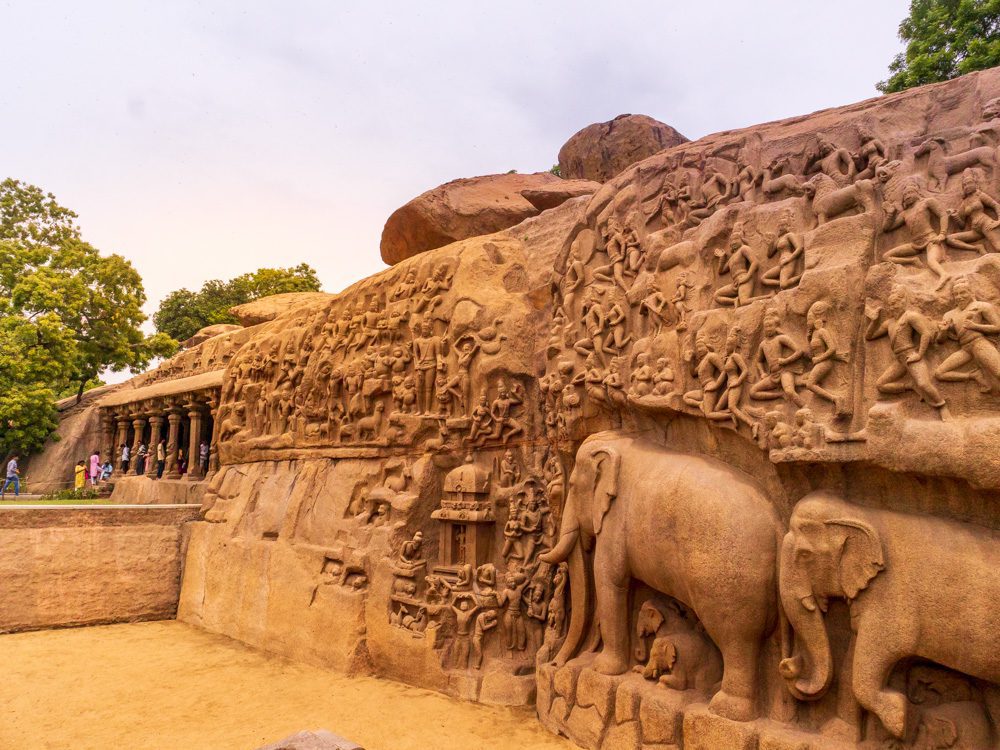
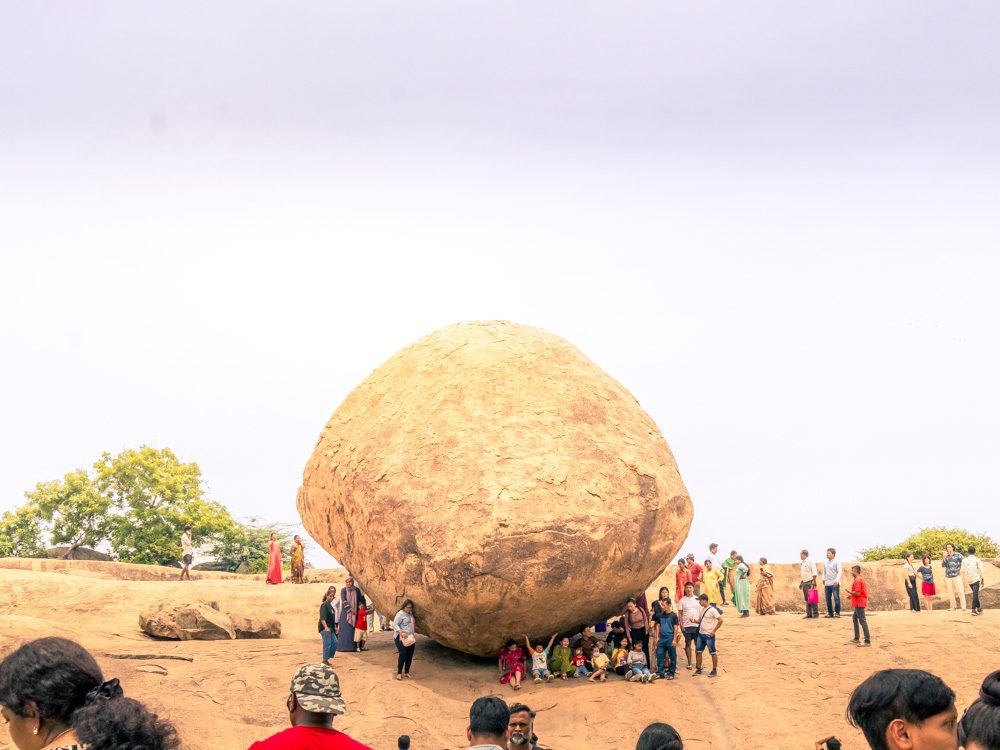
Look out the the Krishna’s Butterball, a huge granite boulder balancing on a small hill. It looks precarious and about to tumble down at any moment, but the 1,200-year-old rock is there to stay.
Mahabalipuram also has a laid-back beach vibe, perfect for unwinding after sightseeing or catching some waves.
Kanchipuram
Known as the “City of a Thousand Temples,” Kanchipuram is both a spiritual hub and the centre of silk weaving in Tamil Nadu. Visitors can tour workshops to see traditional sarees being woven.
The Kailasanathar Temple, dating back to the 8th century, is one of the oldest structures here.
Pondicherry

Though technically a Union Territory, Pondicherry (or Puducherry) is often included in Tamil Nadu itineraries.
Pondicherry’s French Quarter is lined with pastel-coloured colonial architecture, chic cafés, and boutique hotels like the CGH Earth Palais de Mahe.
Although on the coast, the only beach that you can really swim or surf at is Eden Beach. The tides at the other beaches along the strip are quite high and not worth risking.
The Sri Aurobindo Ashram and nearby experimental township Auroville add a spiritual dimension.
The Nilgiris: Ooty & Coonoor
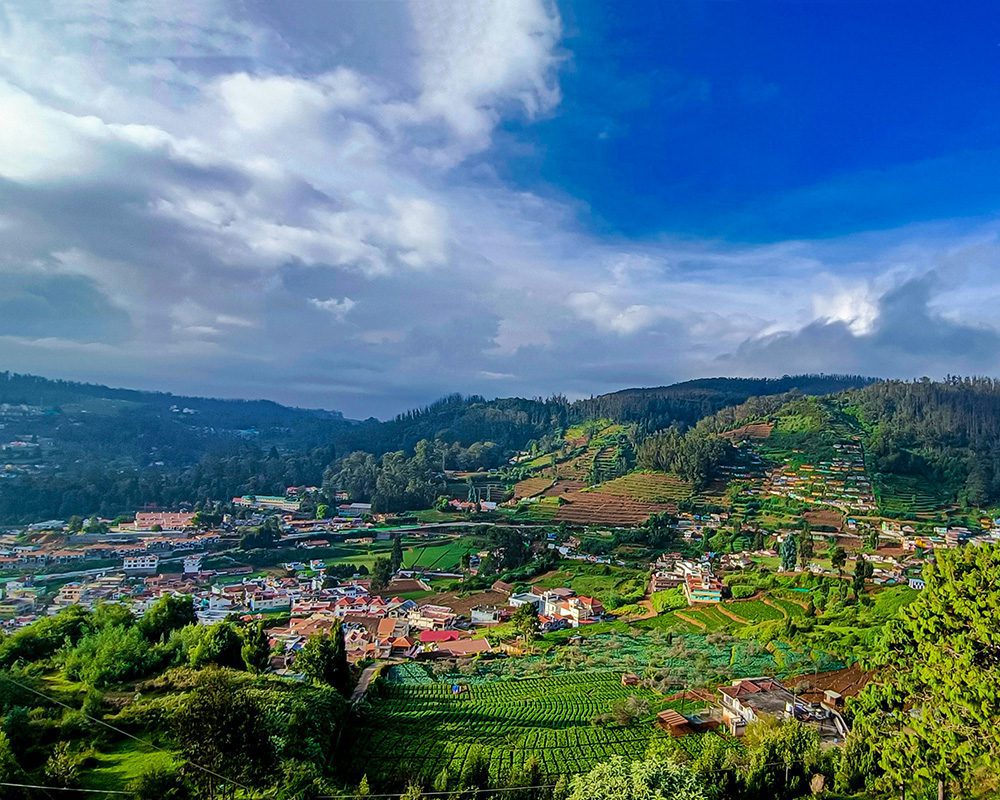
Set in the UNESCO Western Ghats, these hill stations offer cool weather, tea estates, and charming colonial heritage. The Nilgiri Mountain Railway is an experience not to be missed, winding through lush hills and tea gardens. Botanical gardens, rose gardens, and tea factory tours add to the appeal.
Rameswaram & Kanyakumari
Rameswaram, on Pamban Island, is one of the holiest pilgrimage sites in India, home to the Ramanathaswamy Temple with its impressive corridors. Kanyakumari, at the southernmost tip of India, is famous for its dramatic sunrises and sunsets where three seas converge.
History of Tamil Nadu
Tamil Nadu is steeped in history that stretches back thousands of years. Understanding its dynastic past enhances any visit.
Dynastic Heritage
- Pallavas (6th–9th century): Famous for rock-cut temples and sculptures, particularly in Mahabalipuram. The Shore Temple and Pancha Rathas showcase innovative architecture and stone-carving skills.
- Cholas (9th–13th century): Known for monumental temples like Brihadeeswarar Temple, bronze casting, and temple arts. The Chola dynasty shaped the cultural identity of Tamil Nadu through architecture, sculpture, and patronage of the arts.
- Pandyas and Nayaks: Built forts, palaces, and promoted classical arts like Bharatanatyam. Their influence is evident in the intricate gopurams of Madurai and Thanjavur.
Cultural Highlights of Tamil Nadu
Tamil Nadu’s cultural wealth is one of the reasons travellers are drawn back again and again.
Temples and Temple Etiquette:
Tamil Nadu is rightly called the “Land of Temples”, with many of its temples designated as UNESCO Heritage Sites. It is essential to be aware of the etiquette that needs to be observed.
Always remove your shoes before entering temples and dress modestly. Shoulders and knees should be covered. Photography is often restricted inside the inner sanctums. Many temples have special queues (darshan) tickets for quicker access, which can be worth the small fee.
If you are entering a Jain temple, photography is strictly forbidden, and I found that any conversation with my guide was conducted in hushed tones.
Performing Arts

Tamil Nadu is the birthplace of Bharatanatyam, one of the oldest classical dance forms in India. Performances can be seen in Chennai, especially during the December music season. The dancers use facial expressions and dance to convey emotions and the story.
Carnatic music, with its complex rhythms and devotional themes, is another cornerstone of Tamil culture.
Handicrafts
The state is famed for Kanchipuram silk sarees, Tanjore paintings, and bronze casting in Swamimalai. Buying directly from workshops supports artisans and makes for meaningful souvenirs.
Cuisine

Tamil and Chettiar cuisine are a highlight of any trip. Breakfasts of idli, vada, and dosa with chutneys and sambar are staples. In Chettinad, expect fiery chicken and meat curries.
Coastal areas serve excellent fish curries and prawn dishes. Don’t miss filter coffee, served piping hot in a metal tumbler. For something unique, try jigarthanda, a cold milk-based drink from Madurai.
Best Time to Visit Tamil Nadu
Tamil Nadu can technically be visited at any time of year, but some seasons are far more pleasant than others.
Winter (November – March)
This is the best season to visit. Days are warm but not stifling, nights are comfortable, and you can explore temples and towns without wilting in the heat. It’s also festival season, with events like Pongal in January, a harvest festival celebrated with colourful kolam designs, traditional dances, and feasts.
The Chennai Music and Dance Festival, running through December and January, brings together world-class Carnatic musicians and Bharatanatyam dancers.
Summer (April – June)
Inland areas can be punishingly hot, with temperatures over 40°C. If you’re keen to travel during this time, head to the Nilgiri Hills or Kodaikanal, where the climate is much cooler. Hill stations are popular summer retreats for locals, so book accommodation in advance.
Monsoon (July – September)
The rainy season. Expect heavy rains, especially along the coast. These tend not to last all day, and can be just a quick deluge, but can mar your day.
Travel is possible, but sightseeing can be interrupted by sudden downpours and humid conditions. Pack a light jacket (or buy one in Tamil Nadu) and a good hair conditioner, if, like me, you suffer from frizzy hair in humid weather.
On the plus side, the landscapes are lush and green, prices for accommodation are generally lower, and the crowds are fewer. The rain can be sporadic and short-lived, so don’t let it deter you.
Autumn (October)
A shoulder season before the winter crowds arrive. Temperatures begin to drop, making it a good time for sightseeing.
Festivals worth planning:
- Pongal (January): A four-day harvest festival, celebrated with decorated cows, sweet dishes made from rice, and community gatherings.
- Natyanjali Dance Festival (February/March): A celebration of classical dance in Chidambaram, honouring Lord Nataraja.
- Tamil New Year (April): Marked with rituals, feasts, and special prayers in temples across the state.
- Chithirai Festival (April/May): Held in Madurai, this marks the celestial wedding of Meenakshi and Sundareshwarar. Expect vibrant processions and temple rituals.
Language and Communication
The official language is Tamil, one of the world’s oldest living languages. English is widely spoken in cities and tourist hubs.
- Learning basic Tamil phrases, such as Vanakkam (hello) and Nandri (thank you), is appreciated by locals.
- Road signs are typically bilingual (Tamil and English).
- Buying an e-sim in advance really helps and ensures easy navigation and connectivity. Try Saily or Airalo for the best deals, or buy a local SIM card on arrival
How to Get to Tamil Nadu
Tamil Nadu is one of the most accessible states in India, with excellent air, rail, and road connections.

By Air:
Chennai International Airport is the primary entry point, with direct international flights from Europe, the Middle East, and Asia. If your entry point into India is Delhi, Mumbai or one of the other hubs, you should easily be able to get a connecting flight to Chennai.
Domestic flights connect Chennai with Madurai, Coimbatore, Tiruchirappalli, and Tuticorin. For a smoother experience, smaller international airports like Coimbatore and Madurai are often less crowded.
By Train
Tamil Nadu is well integrated into India’s railway network. Overnight express trains link Chennai with Bengaluru, Hyderabad, and Mumbai.
Within the state, trains connect major cities and smaller towns. Travellers can choose from sleeper class (budget but basic) to first-class air-conditioned compartments (comfortable for longer journeys).
The Nilgiri Mountain Railway, a UNESCO World Heritage train, is a highlight for anyone heading to Ooty.
By Road
Tamil Nadu’s road network is very good. Long-distance buses (both government and private) run regularly between states. Hiring a private car with a driver is a comfortable option for exploring at your own pace — ideal if you want flexibility and ease.
Travel Tip: If you’re flying long-haul into Chennai, consider spending at least two nights there before heading elsewhere. This helps you adjust to the climate and time difference while giving you time to explore the capital.
Getting Around Tamil Nadu
Once in Tamil Nadu, you’ll find a variety of transport options:
By Train
Reliable, inexpensive, and a great way to see the countryside. Advance booking is recommended, especially for overnight routes. First AC or Second AC coaches are the most comfortable for longer journeys.
Private Driver/Taxi
Many travellers, especially international visitors, opt to hire a car and driver. This gives you the freedom to create your own itinerary without the stress of navigating Indian traffic. Daily rates are reasonable, and English-speaking drivers are common.
Buses
State-run and private buses connect every corner of Tamil Nadu. They are cheap, but comfort levels vary. For longer journeys, opt for private operators with air-conditioned coaches.
City Transport
In Chennai and larger cities, Ola and Uber are convenient. Auto-rickshaws are plentiful but be prepared to negotiate fares if not using the meter. In smaller towns, cycle rickshaws are still in use.
Tip: Tamil Nadu is relatively easy and safe to get around, but comfort levels differ. For long distances, trains or a private driver are the best choices.
Accommodation in Tamil Nadu

Whether you prefer luxury hotels or boutique stays, Tamil Nadu has options for every style of traveller.
Chennai: International chains like Taj Connemara, ITC Grand Chola, a boutique hotel or heritage mansion in the French-influenced quarters.
Madurai: Heritage properties near Meenakshi Temple offer easy access to the rituals. Try the Geoffrey Bawa-designed Heritage Madurai.
Thanjavur: Stay in heritage homes or boutique hotels that celebrate local art and culture.
Ooty & Coonoor: Colonial bungalows turned into boutique hotels surrounded by tea estates.
CGH Earth Hotels: The group has properties across Tamil Nadu that combine comfort with sustainability and cultural immersion. They are the perfect hotels for your trip.
Practical Travel Tips for Tamil Nadu
- What to Pack: Lightweight cotton clothing, a scarf or shawl for temple visits, sun cream, mosquito repellent, and comfortable walking shoes. A small umbrella is handy in the monsoon season.
- Health & Safety: Stick to bottled or filtered water, carry hand sanitiser, and be cautious with street food if you have a sensitive stomach. Tamil Nadu is generally safe, but use normal precautions with valuables.
- Local Customs: A friendly “Vanakkam” with hands joined is a warm greeting. Eating with your right hand is traditional. Respect temple rules, especially regarding photography.
- Money & Payments: ATMs are widely available in cities. Credit cards are accepted in hotels and larger restaurants, but smaller shops prefer cash.
- Language: Tamil is the official language, but English is widely spoken, especially in hotels and tourist areas. Learning a few Tamil words — like nandri (thank you) — will always be appreciated.
Final Thoughts
Tamil Nadu is a destination that rewards travellers who slow down and take time to absorb its rhythms. It is not just about sightseeing but about experiencing a living culture that continues traditions passed down over centuries.
From marvelling at the Meenakshi Temple in Madurai to sipping filter coffee in a Chennai café, from watching a Bharatanatyam dancer bring mythology to life to winding your way up to the tea gardens of Ooty — every day in Tamil Nadu brings a new discovery.
For those seeking meaningful, immersive travel, Tamil Nadu is unforgettable, meaningful, immersive travel, Tamil Nadu is unforgettable.
I loved my time in Tamil Nadu; the temples, the food, the heritage hotels, it was exciting, interesting. I hope to visit again so I can explore more.
I hope this Tamil Nadu Travel Guide has inspired you to visit. Let me know in the comments where you would visit first.
Planning a trip to India?
- Explore: Read these India Travel Guides.
- Stay: Find accommodation in India on Booking.com
- Connect: Arrange your India eSIM with Airalo.
- Protect your trip: Compare travel insurance.
Save this post for later


This is such a helpful guide to Tamil Nadu I really liked how you covered the temples, food, culture, and different places to visit. It definitely makes me want to explore Tamil Nadu soon.
I hope you make it to Tamil Nadu, it is an amazing place.