
On the banks of the river Kabini in Karnataka, Nagarahole National Park sits in the picturesque state of Karnataka in the southern part of India. The park includes Kabini Wildlife Sanctuary and offers a unique opportunity to see the incredible wildlife of India in its natural habitat.
Once the private hunting ground for the Maharajah and the Royal Families of Mysore, the park is now a protected Tiger reserve.
*This site uses affiliate links and I may earn a small commission when you use my links and make a purchase without incurring an additional fee yourself.
Thank you for supporting this website. See my disclaimer page for more details.
A special thank you to the team at the Karnataka Tourism Society and Jungle Lodges for hosting me during my stay in Kabini. All opinions expressed above are entirely my own.
This serene, lush green park is a haven for wildlife enthusiasts and nature lovers alike, offering the perfect blend of wildlife safaris, birdwatching, and immersive nature experiences.
For those seeking to explore India’s rich biodiversity, a visit to Nagarahole National Park is an unforgettable journey. Whether you are a first-time safari-goer or a seasoned traveller, the experiences here are nothing short of magical.
About Nagarahole National Park
Nagarahole National Park, also known as Rajiv Gandhi National Park, is part of the Nilgiri Biosphere Reserve and spans across an area of 643 square kilometres (248 square miles).
The park was established in 1955 as a sanctuary and later upgraded to national park status in 1988. It is one of the most famous wildlife sanctuaries in India. It is renowned for its breathtaking landscapes, including lush tropical forests, rolling hills, grasslands, and riverine habitats.
The park is divided into 2 zones: Zone A and Zone B. Zone A is the densely wooded area inland, while Zone B stretches along the river’s edge.
The park’s strategic location, nestled in the Western Ghats, makes it a biodiversity hotspot. The Nilgiri Biosphere Reserve, which encompasses several protected areas, is recognized as a UNESCO World Heritage site. Nagarahole’s position as part of this reserve allows it to play a crucial role in protecting the ecosystem and wildlife of southern India.
What can you expect to see in Nagarahole National Park
Nagarahole is home to a wide variety of flora and fauna. The forest is primarily composed of dry and moist deciduous forests like sandalwood and teak, mixed forests, and grasslands, making it an ideal environment for a vast range of animals and birds.
Wildlife Species
The park is also known for its Nagarahole Tiger Reserve, and it especially famous for its population of Bengal tigers. So there is a good chance that you will see a bengal tiger relaxing in the undergrowth, sleeping under a bridge or padding silently through jungle.
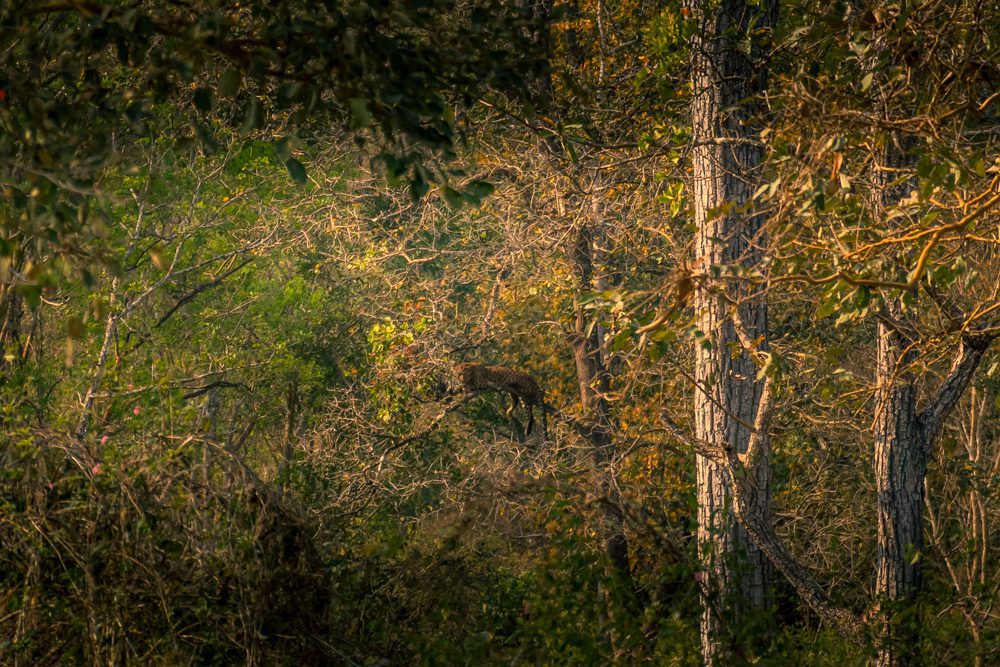
Tigers are not the only big cats in the park. Leopards stroll about or hang snoozing on branches of trees. Much more elusive are the black panthers, an endangered species, and are rarely seen.
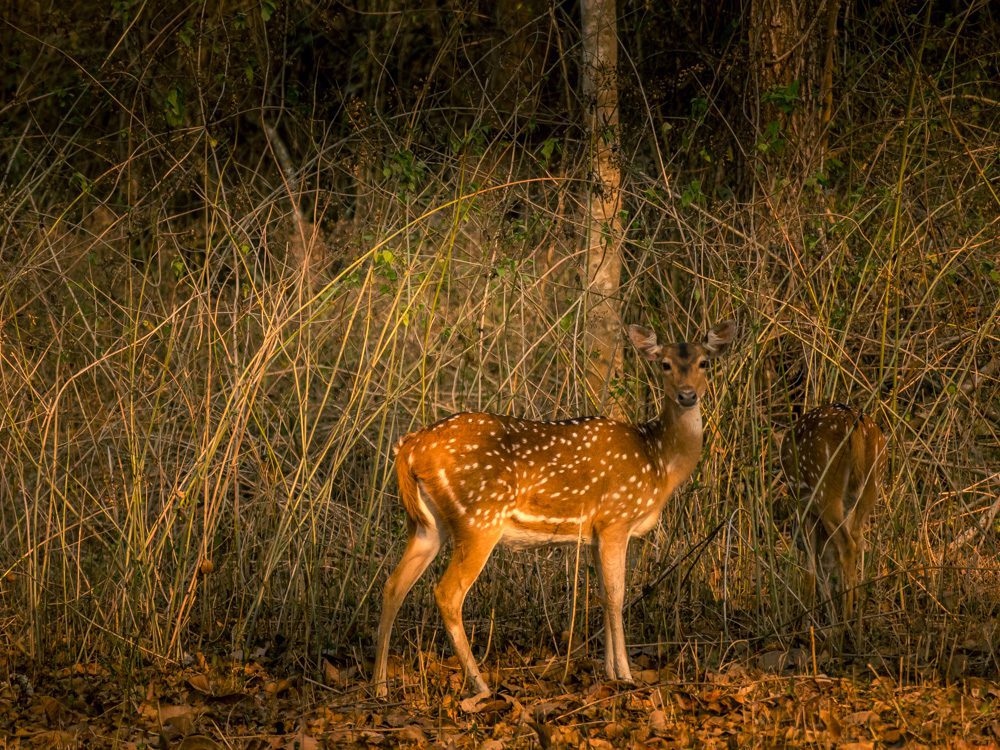
Visitors can also spot Asian elephant, the elusive sloth bear, wild dogs (dholes), Indian bison (gaur), wild boar, a plethora of antelope species like chital (spotted deer), sambar deer, and nilgai.
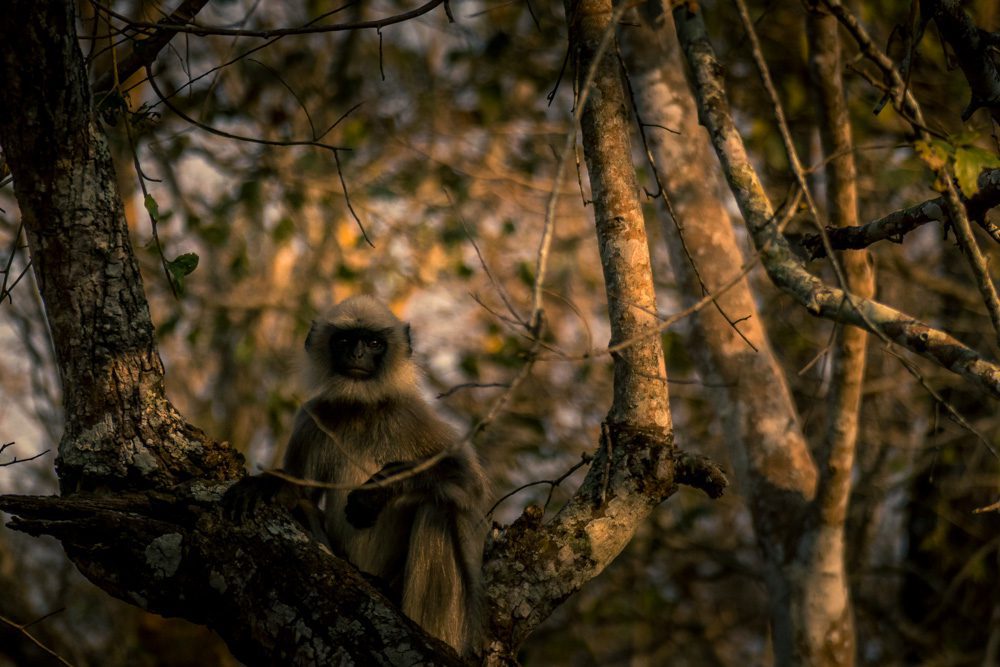
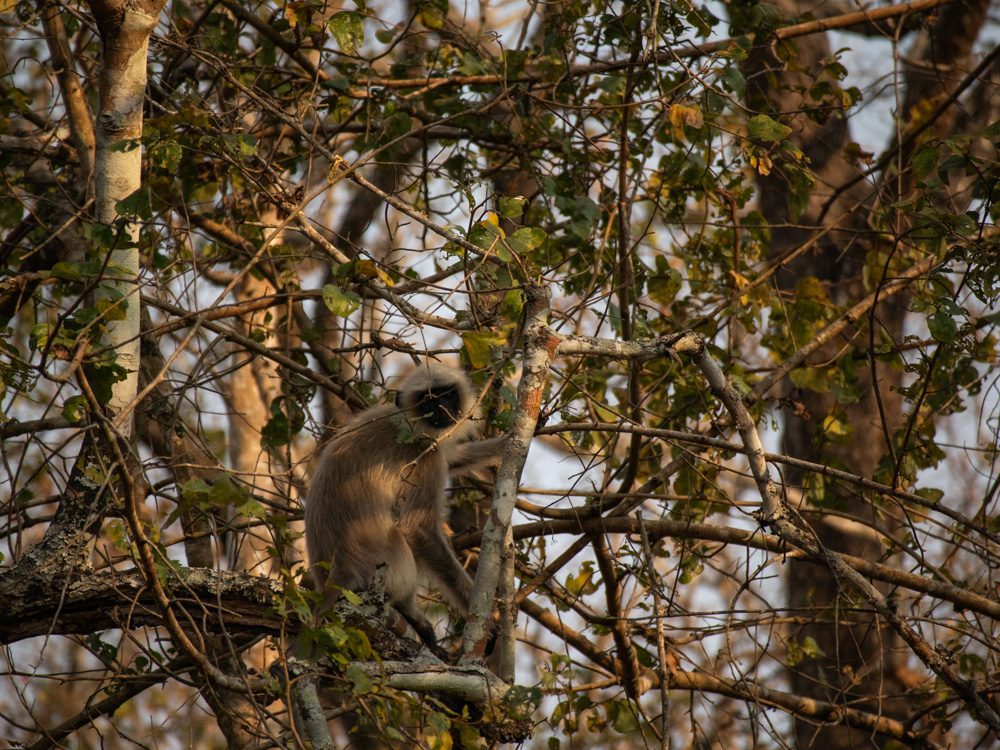
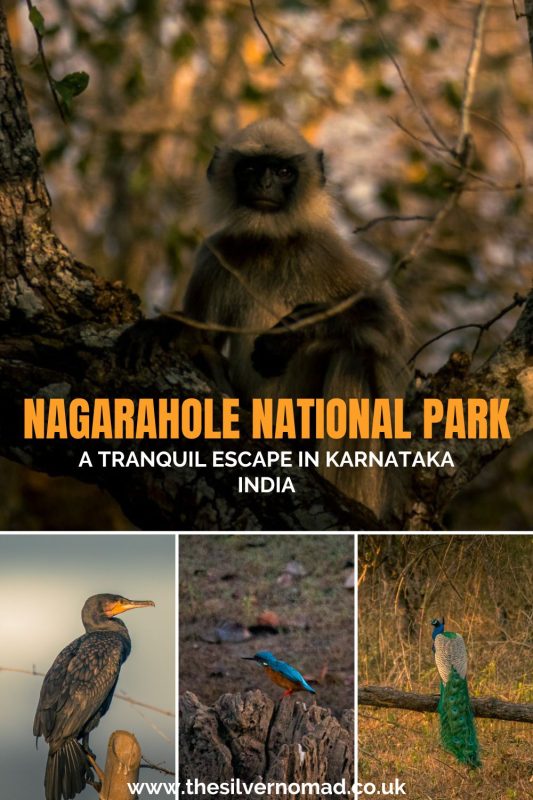
Swinging in the trees, or scampering across the roads, are the cheeky black-faced langur monkeys. The langurs and the chital have a special relationship. Both warning about potential tiger or leopard attacks, the langurs from the trees and the chital on the ground.
Diverse Species of Birds
The park is also home to a vibrant array of bird species, including the Malabar hornbill, the pied hornbill, painted and woolly neck storks, grey herons, as well as spot-billed ducks.
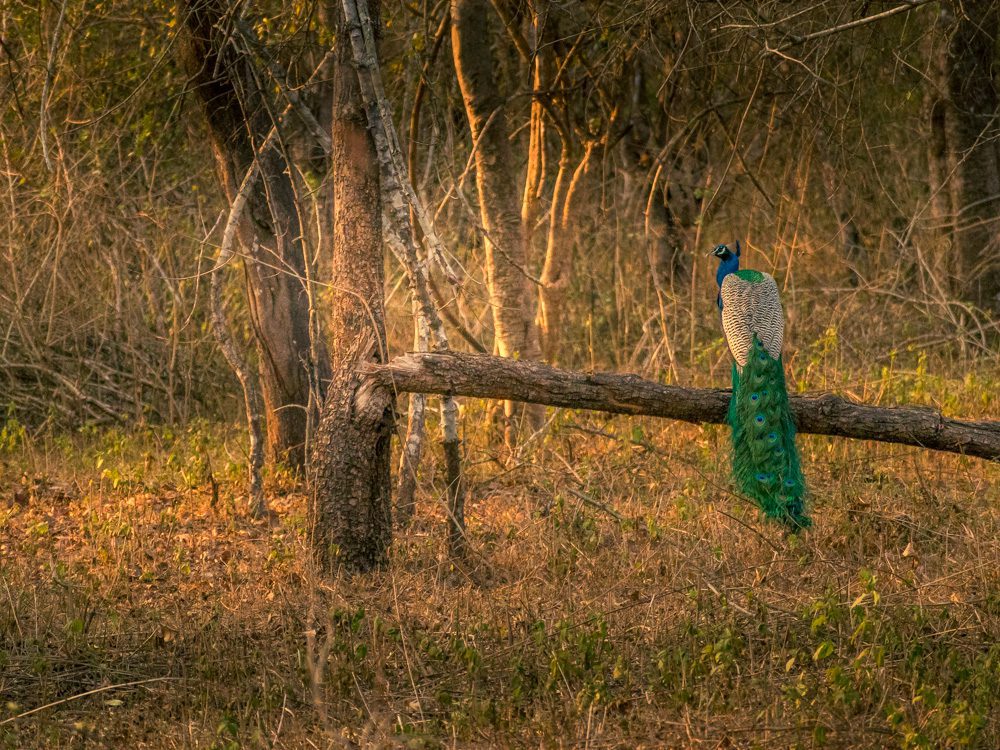
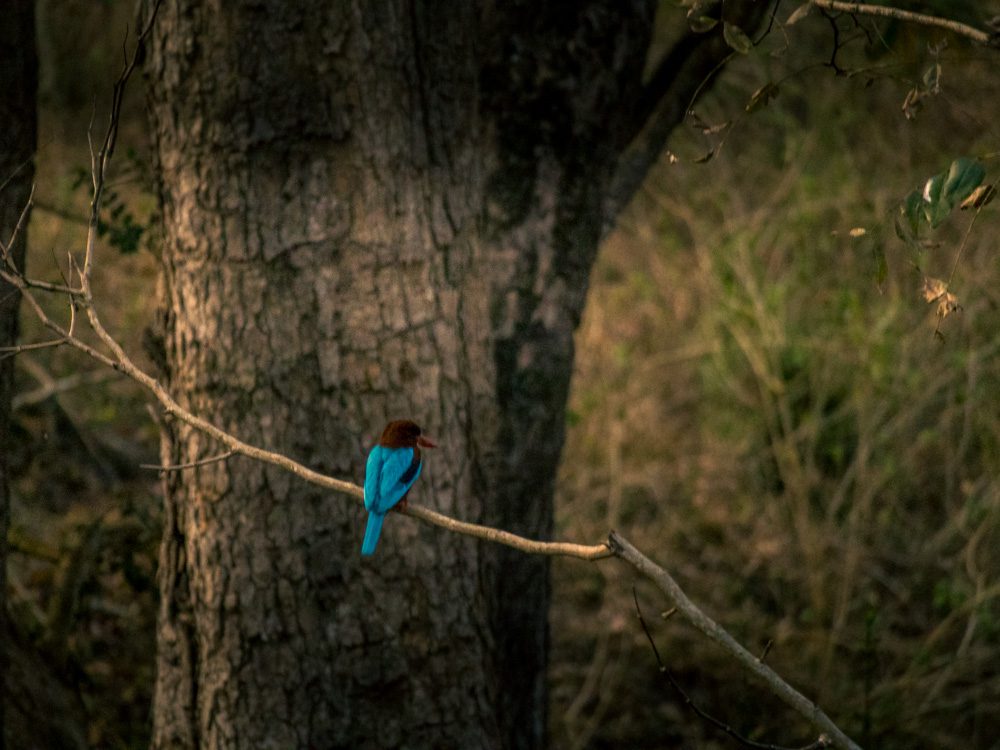
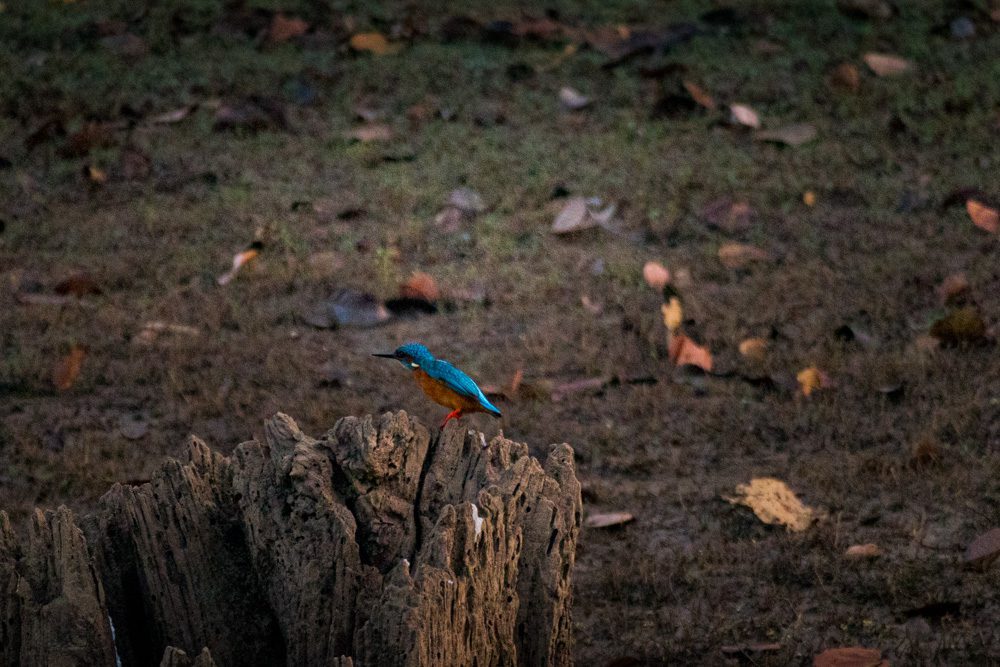
Colourful peacocks and the duller peahens strut through the undergrowth as small blue kingfisher dart about diving for fish.
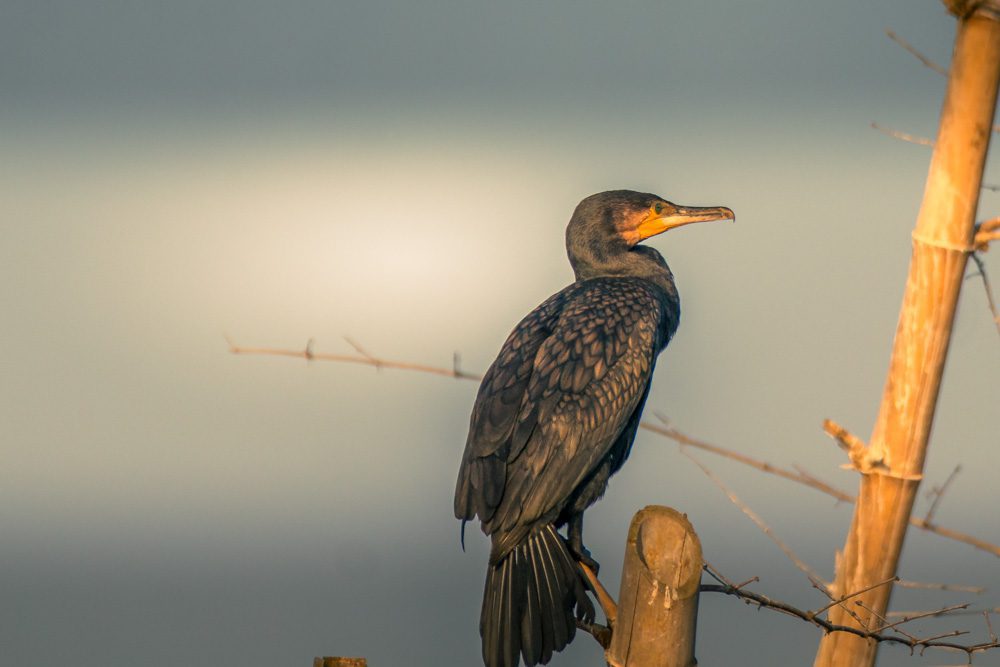
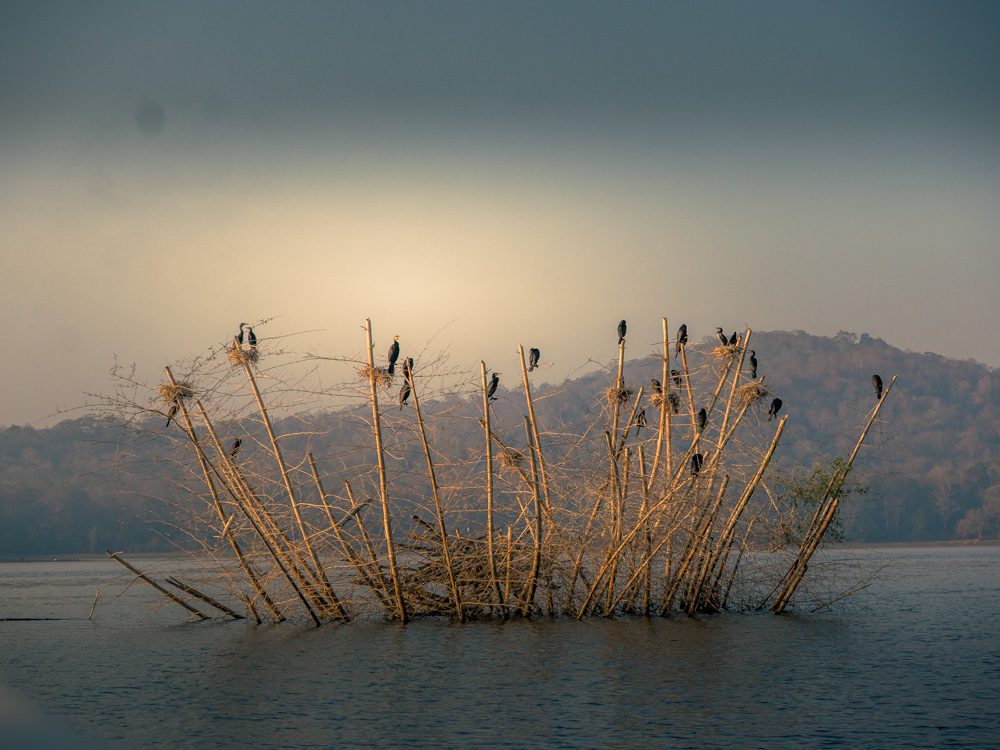
Black-necked ibis, cormorants, and anhingas – snake birds with longer necks than cormorants – preen themselves on branches on the river banks or on clumps of trees in the middle of the river.
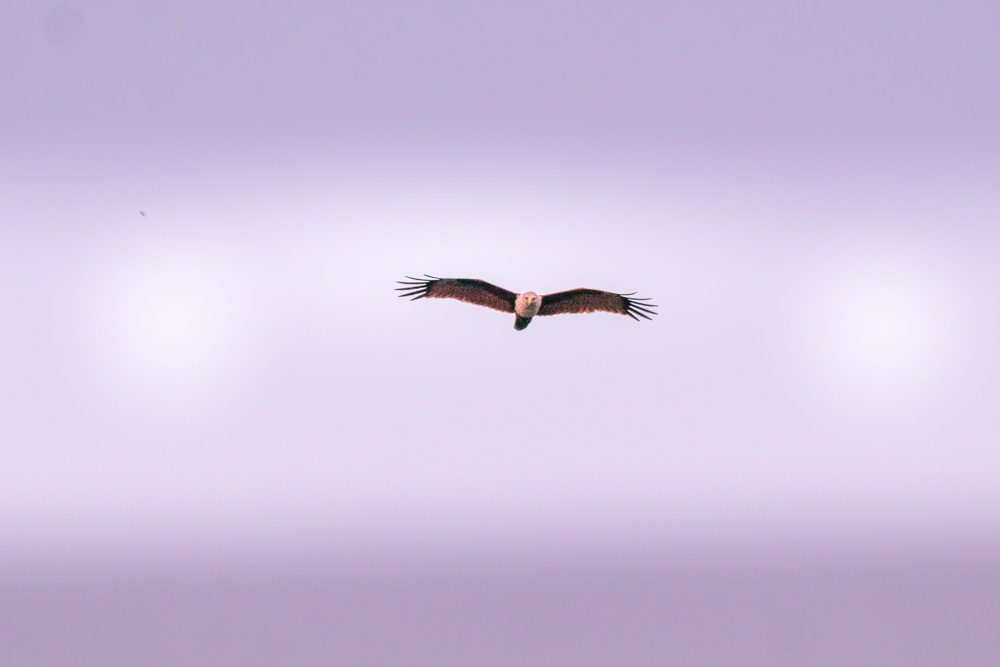
Above Brahminy kites, grey headed eagles and Indian eagle owls search for prey while red-headed vulture and white-backed vulture scavenge for any leftovers.
When to Visit Nagarahole National Park
Because of its diversity of wildlife, Nagarahole is a popular tourist destination for both foreign visitors and Indian nationals. The park also remains open throughout the year, unlike most of the tiger reserves in India.
The best time of the year to visit Nagarahole is during the dry season, from November to April. During these months, wildlife sightings are more frequent, especially as animals tend to gather near water sources.
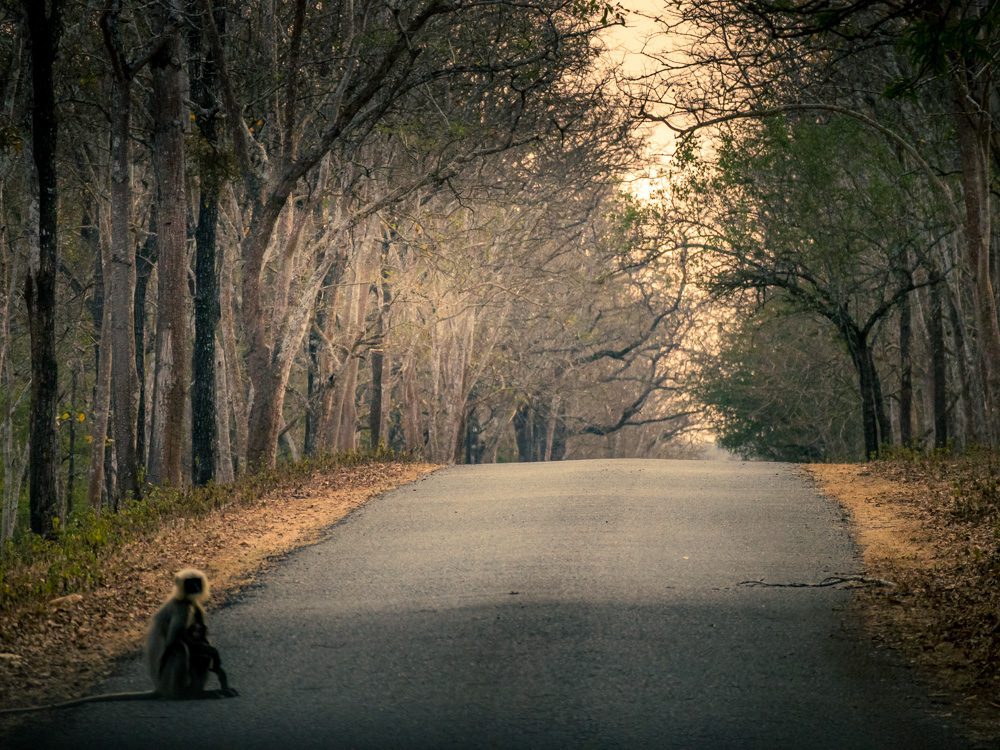
The months of March and April are particularly good for spotting tigers, as they venture out more frequently in search of water.
However, if you’re interested in birdwatching, the monsoon months of June to September, brings lush greenery and a surge in migratory bird species, making it a great time for bird enthusiasts.
While the monsoon may restrict safari timings due to weather conditions, it offers a different, quieter, and more peaceful experience of the park.
Wildlife Safari Experience in Kabini
A visit to Nagarahole National Park is incomplete without experiencing the safaris that take you deep into the heart of the park either in a jeep or a minibus (canter).
Safaris are run twice daily; morning safaris from 6.30 am to 9.00 am and an evening safari 3.30 pm to 6.00 pm when the park closes. Both are spectacular for dawn and sunsets.
The park offers jeep safaris, minibus safaris or boat safaris all led by expert knowledgeable guides who share their keen knowledge of the park’s wildlife, flora, and conservation efforts.
Jeep Safaris
Jeep safaris are the most popular and sought-after way to explore Nagarahole. These safaris typically last around 2-3 hours and take visitors to various zones of the park, where sightings of tigers, leopards, elephants, and other animals are common.
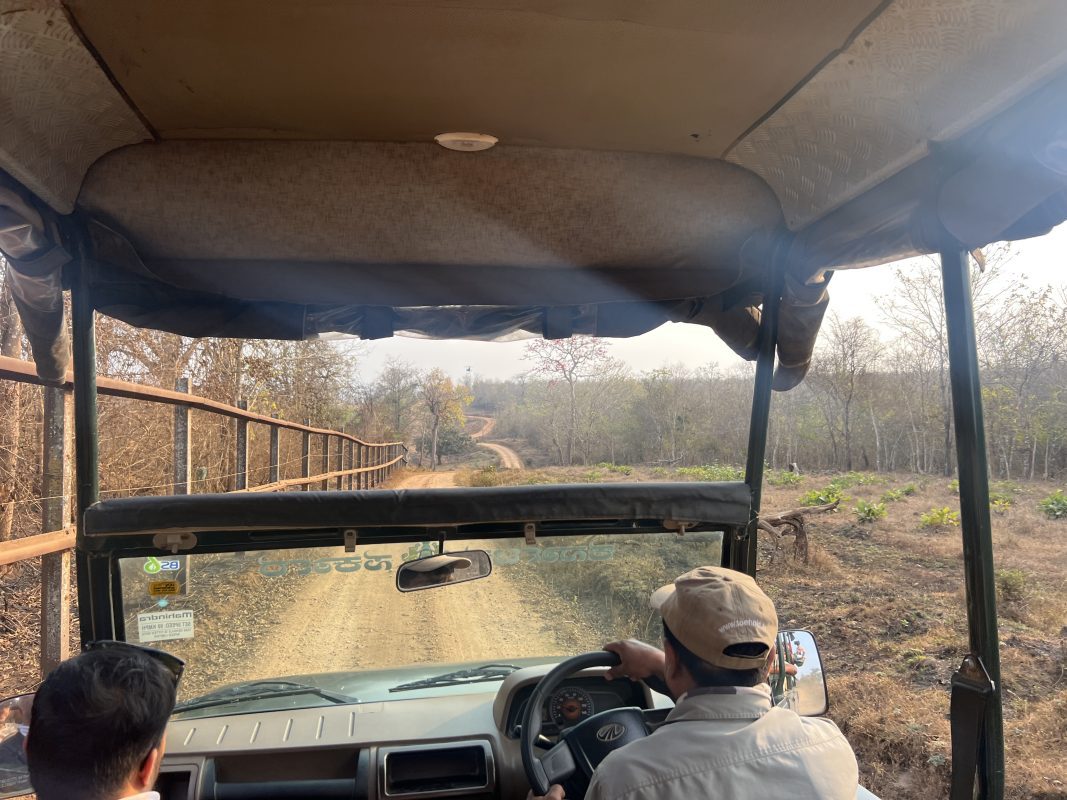
Early morning and late afternoon safaris are the most productive, as animals are most active during these cooler parts of the day. The safari provides an intimate and thrilling experience as the jeep makes its way through narrow forest trails.
The jeeps are open-sided and some are open-topped. Normally if you are in a group, you have a jeep to yourself, but you may have to share if you go solo or in a couple.
Minbus (Canter) Safari
If you prefer a group experience, a minibus or canter safari is a great option. It’s a more affordable alternative for larger groups or families and covers a larger area of the park. Most of the minibuses seat 18 people plus.
While it may not offer the same level of intimacy as a jeep safari, it still provides excellent opportunities for wildlife sightings, especially during the peak safari hours.
Boat Safari
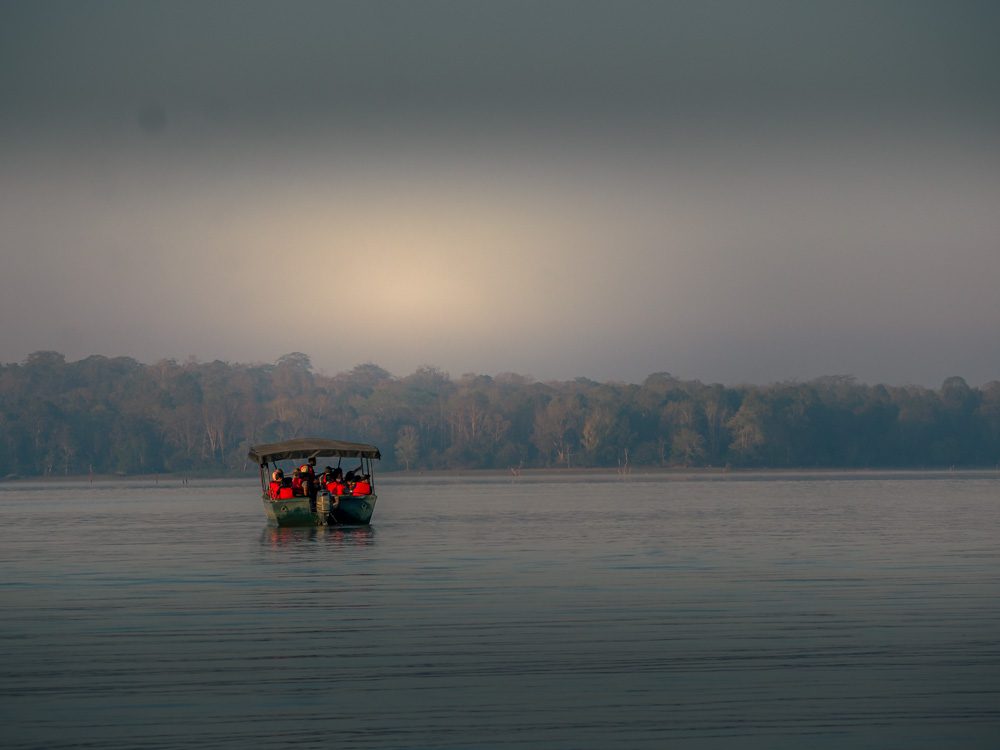
For a unique perspective of the park, consider taking a boat safari along the banks of the Kabini River. This type of safari offers an opportunity to see wildlife from the water, where animals often come to drink or bathe.
The Kabini River safaris are particularly popular for spotting crocodiles, elephants, chital, wild boar, gaur and a wide variety of birds including cormorants, jungle fowl, kingfishers along the riverbanks.
My Safari Experience at Nagarahole National Park
During my stay at Kabini River Lodge, I went on two safaris, a jeep safari in the late afternoon and an early morning boat ride at 6.30am. Both were magical experiences.
I have been on safaris in Botswana, Namibia, Zimbabwe and Sri Lanka, and taken photos of lions, leopards, elephants, monkeys and numerous exotic birds. However, I have never seen a tiger in the wild. So, this was my wish, to see a majestic tiger.
And, boy, Nagarahole did not disappoint!
Afternoon Jeep Safari
During our afternoon jeep safari we soon saw chital, wild boar, guar, langur monkeys chattering above us, brilliantly coloured kingfishers.
We were alerted about a tiger up ahead, as there were already a couple of jeeps watching her, we went off in a different direction.
Our driver soon stopped and pointed over into the distant trees. With my camera and telephoto lens, I was able to pick out a leopard draped over the branch of a tree enjoying an afternoon snooze.
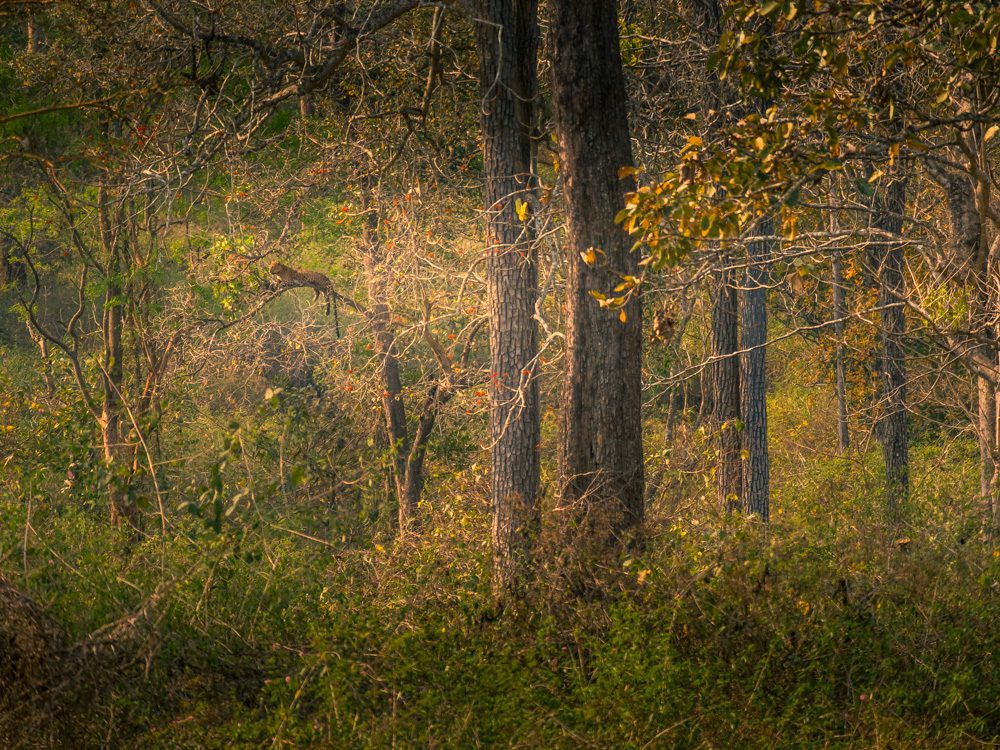
After ten minutes of watching the leopard, it was time to go back to see the sleeping female tiger. She was beautiful, quite oblivious to us eagerly snapping away on phones and cameras.
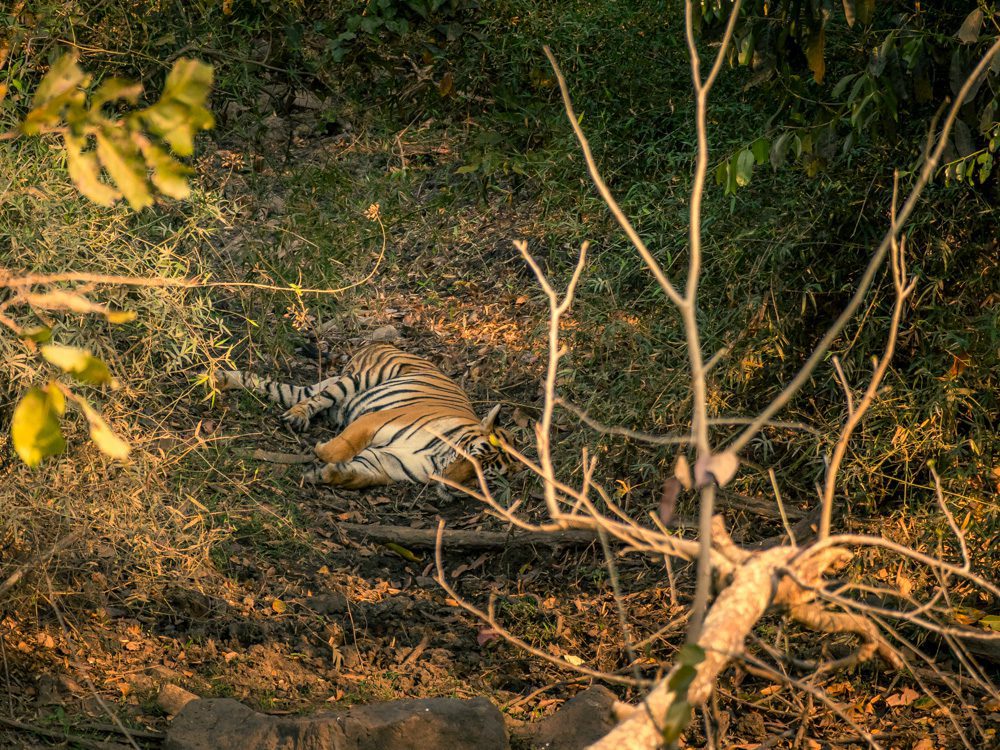
When we had our fill of her, it was time to explore closer to the water’s edge. More chital were grazing, alongside a snuffling family of wild boar watched over by grey-headed fish eagle looking for the flash of a fish for a bite to eat.
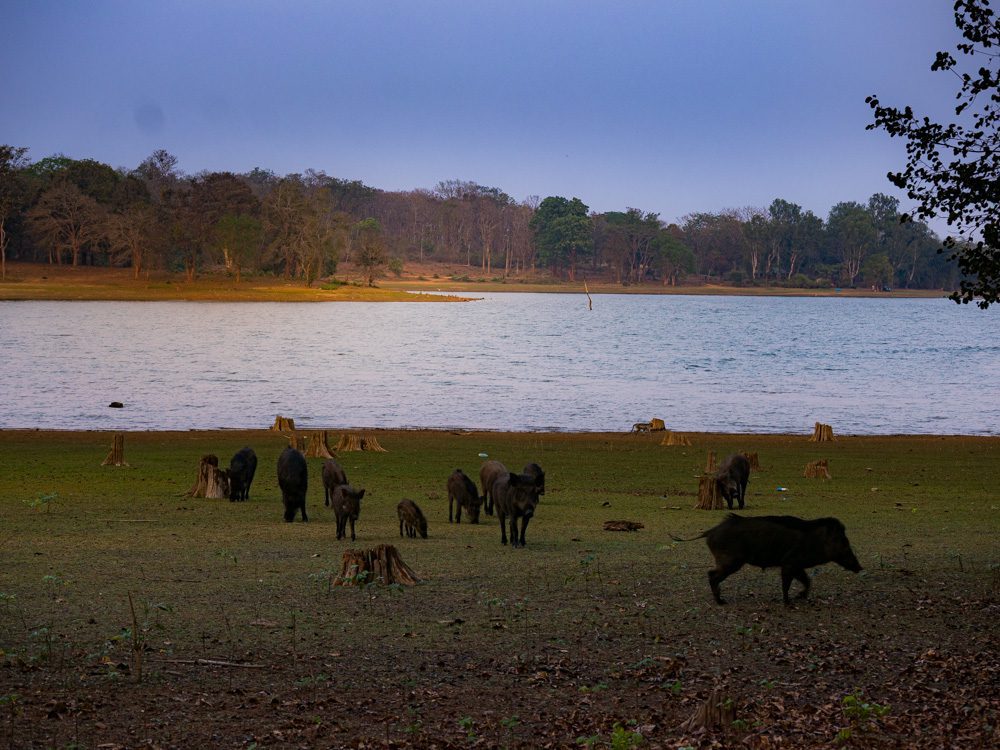
As the sun was setting we moved to the perfect view point to see the river iridescent with reds and oranges.
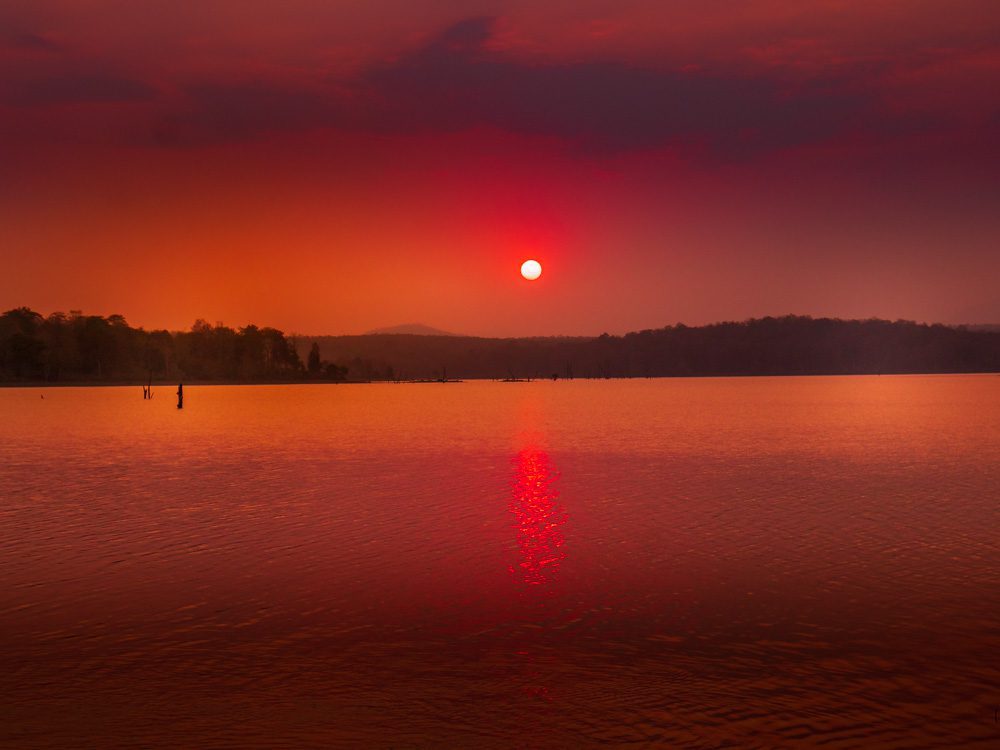
The jeep turned back up the track towards the entrance. The driver held up his hand and gestured for us to be silent. Up ahead, was another jeep, with everyone intently looking to the undergrowth to the right. Looking over, we were amazed to see a large male Bengal tiger, serene and majestic, his head and chest standing out in the surrounding green.
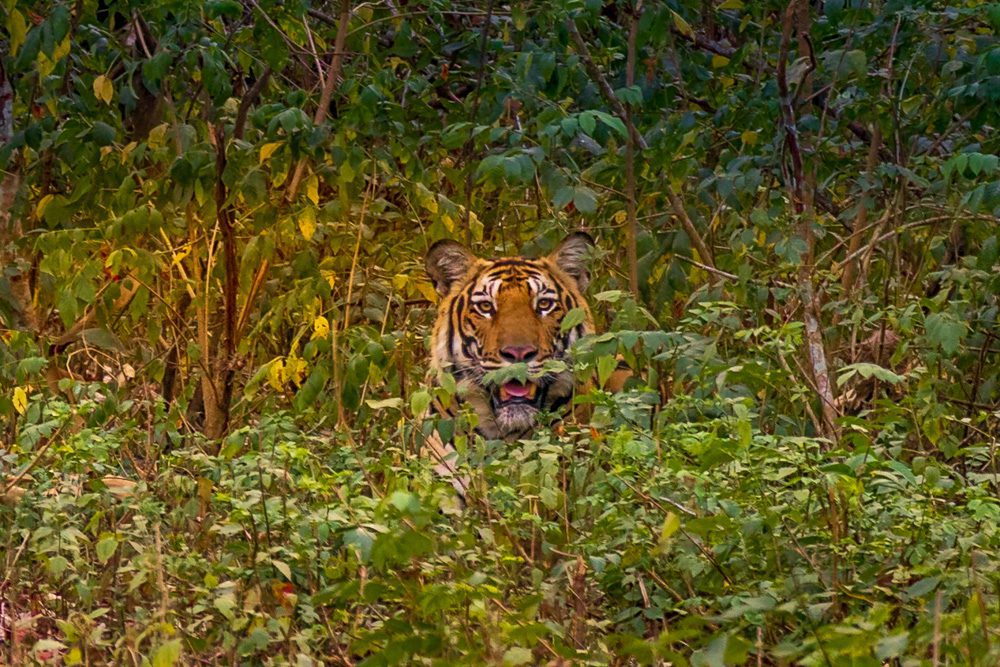
He surveyed us with disdain, as we gasped and took endless photos of him. Slowly he yawned, stood up and sauntered away, his powerful muscles rippling under his striped skin. He sank down to the ground again, in full view of us.
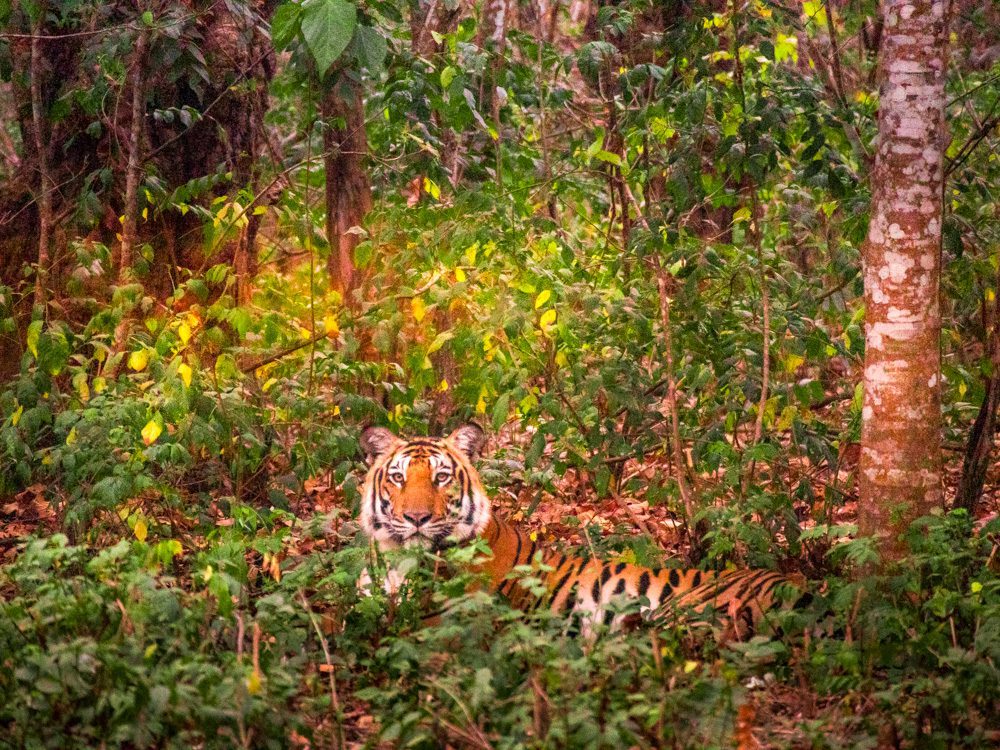
Was I scared of this awesome beast? No, I was mesmerised by him. Even when we locked eyes, I did not have a twinge of fear, however stupid that may sound.
Ten minutes later, as if he knew we had to leave, our beautiful tiger got up and slipped back into the jungle. What better way to end to my first safari in Nagarahole?
Morning Boat Safari
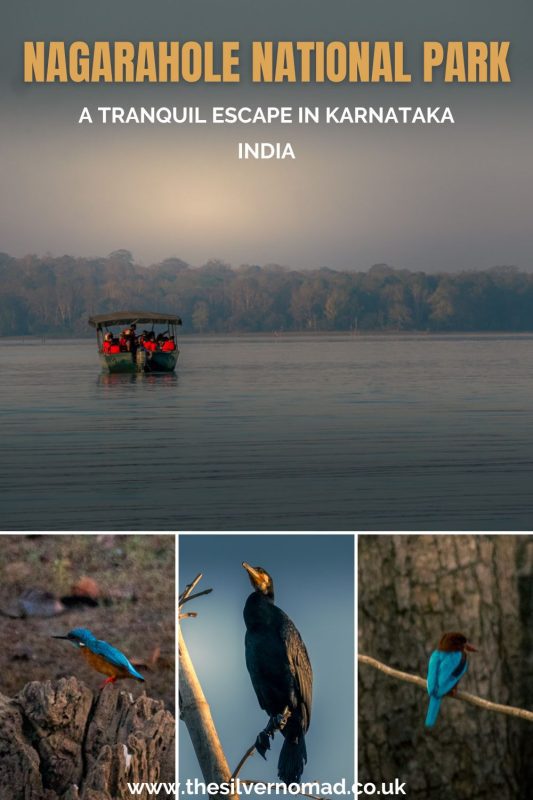
As the first pink fingers of dawn tinged the sky, we climbed into our boat and put on our lifejackets. The mists were hovering over the river, and there was still a chill in the air.
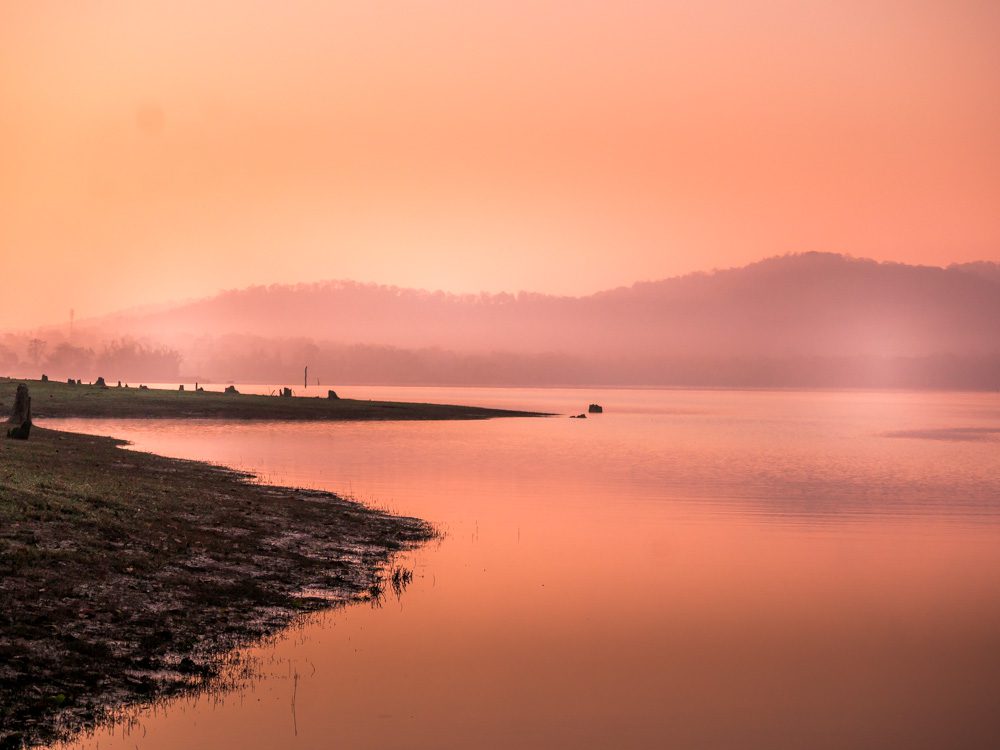
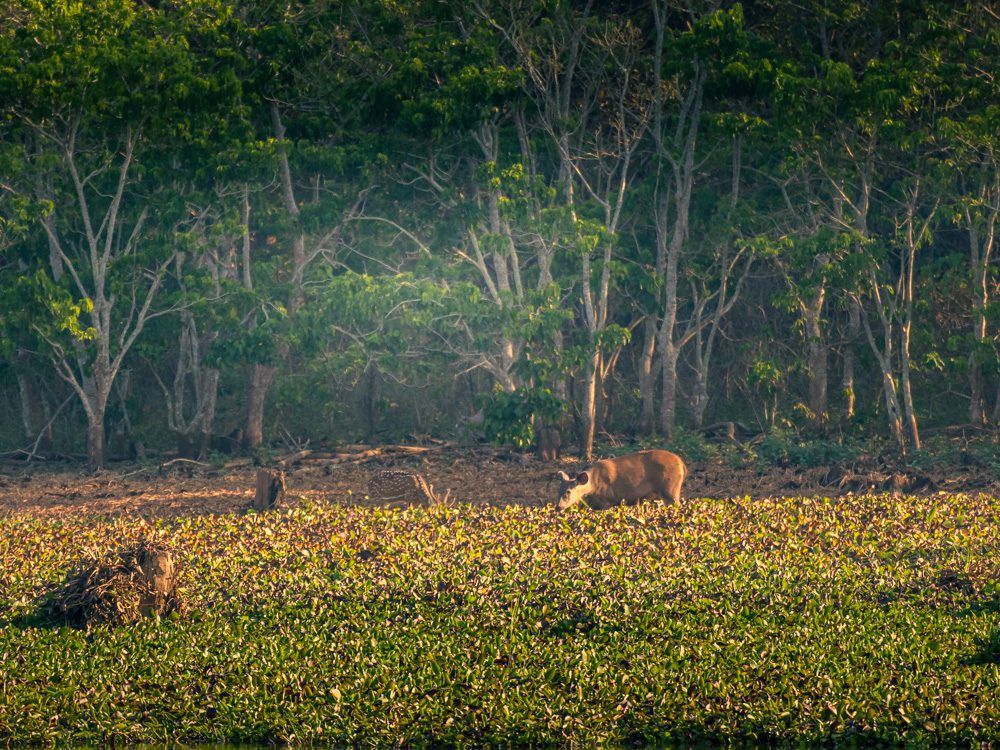
Skimming across the water the mists slowly disappeared and left a different view of the park. We could see the animals picking their way to the waters edge. The chital, langurs and boars, mixed in with grey heron, black-necked ibis and the occasional kingfisher.
On clumps of old trees in the river, cormorants stretched their wings to dry their feathers in the growing heat of the day. While above grey headed eagle surveyed everything that was happening below, and Brahmin kites soared and flew above us.
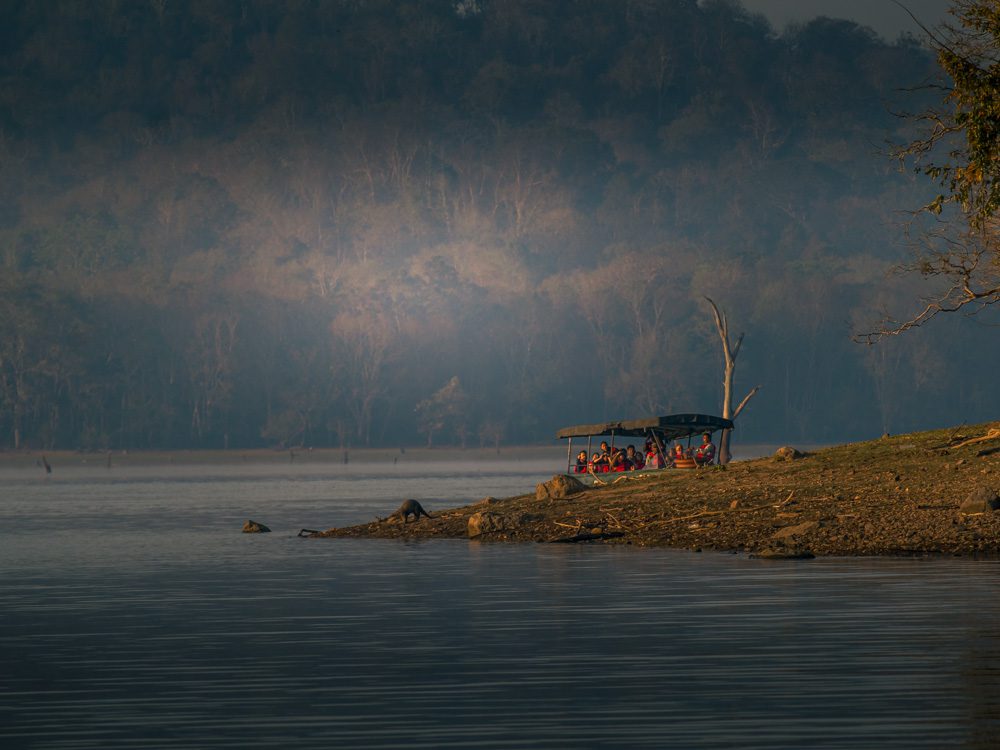
The large gaur, strode through the green marsh areas munching on leaves as the walked and a dog-like dhole trotted away as we approached. Asiatic elephants were sadly nowhere to be seen, but one surprising animal we saw was an otter. I hadn’t imagined there were any in India. Looking a bit larger that its European counterparts, it ran across the shore and slipped into the water, much happier swimming than walking.
After 3 hours on the river, we returned to the dock, we had all fallen for the Nagarahole National Park and its diverse inhabitants.
Where to Stay in Kabini
Kabini offers a variety of accommodations, ranging from budget-friendly stays to luxurious resorts, ensuring that every traveller has an option suited to their preferences and budget.
Luxury Resorts
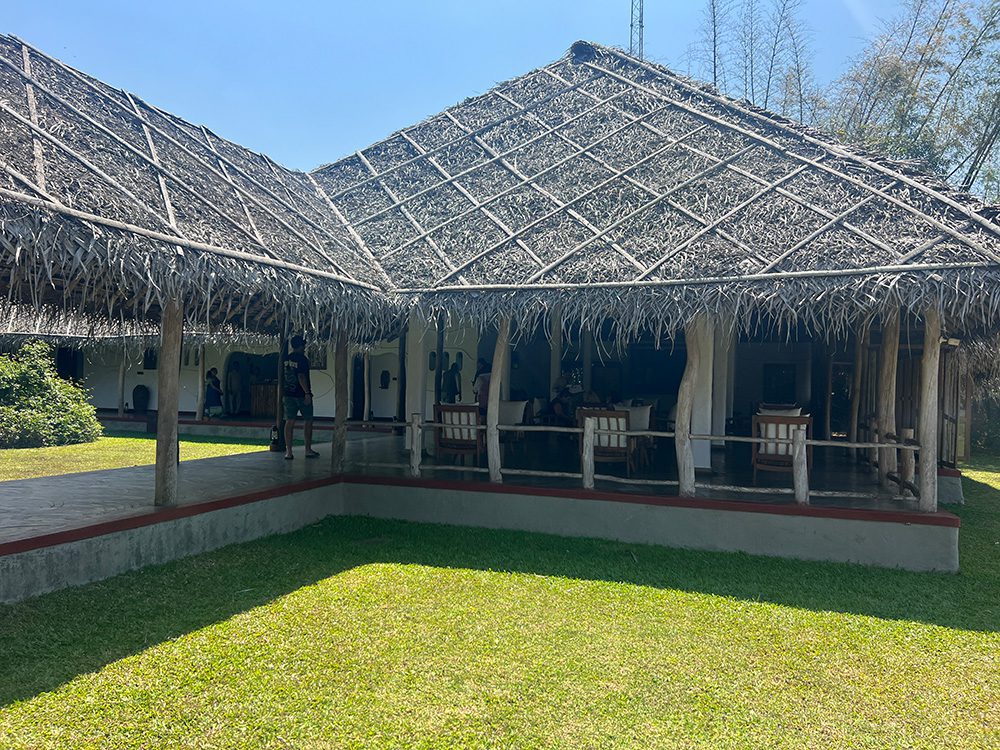
For those seeking an indulgent experience, Evolve Back (formerly Orange County) is one of the most renowned luxury resorts in Kabini. Set amidst lush surroundings and offering wildlife-themed experiences, it offers guests the opportunity to stay in luxurious cottages with views of the river and surrounding forests. The resort organizes guided safaris, nature walks, and boat rides, making it ideal for wildlife enthusiasts.
KAAV Safari Lodge is another premium option that provides exclusive safari experiences with the perfect blend of luxury and nature. With its eco-friendly ethos, it focuses on sustainability while providing guests with comfort, privacy, and exceptional service.
Budget and Mid-Range Accommodations
For travellers on a budget, there are several comfortable options around the park.
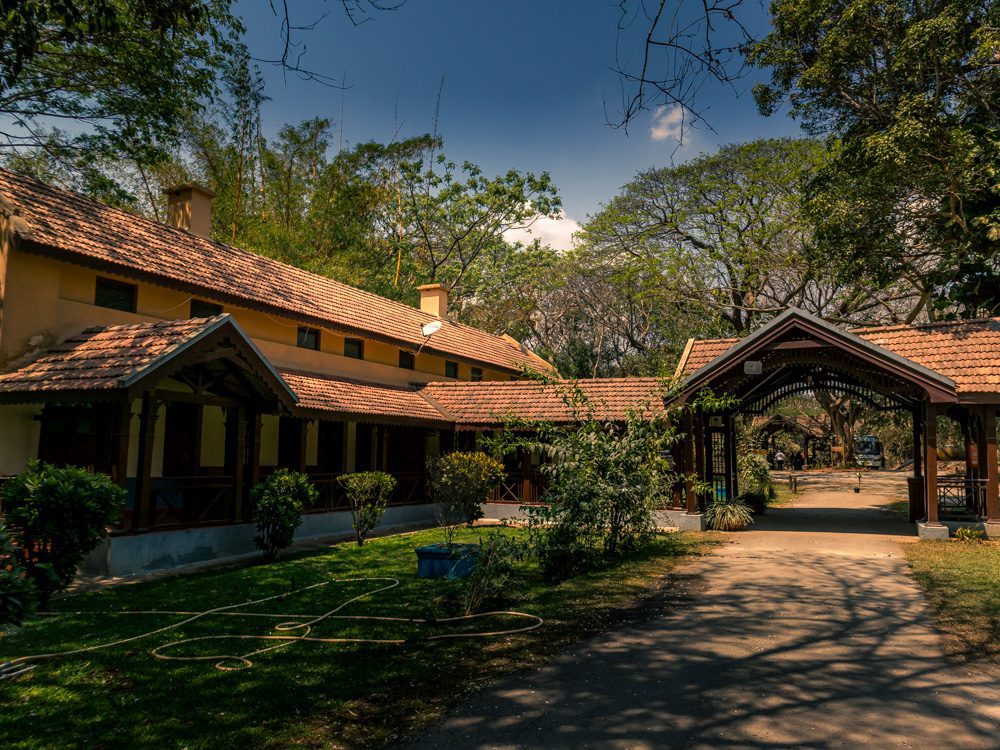
The Kabini River Lodge, managed by Jungle Lodges and Resorts, offers a more affordable yet charming experience with excellent safari packages and cosy accommodation. Kabini River Lodge was the former hunting lodge of the Maharajah of Mysore and offers a range of accommodation from Kabini Tents, dormitories, or the Maharajah or Viceroy suites.
The lodge also provides both jeep and boat safaris, ensuring an unforgettable wildlife experience.
There are also a variety of homestays and guesthouses in the area, perfect for those seeking a more rustic and authentic experience. Many of these properties are located on the banks of the Kabini River, offering peaceful views and a close connection to nature.
Things to Do Beyond the Safari
While the wildlife safaris are the main attraction, Kabini offers several other activities for those looking to explore beyond the usual.
Birdwatching
Kabini is a paradise for birdwatchers. The park’s diverse ecosystems make it home to over 300 bird species, including migratory and resident species. Early mornings are the best time for birdwatching, as the birds are most active at this time. You may spot species like the Malabar hornbill, grey-headed fish eagle, and painted stork.
Nature Walks
Guided nature walks through the forest are a great way to learn more about the flora and fauna of Nagarahole. These walks are conducted by expert naturalists who provide insights into the park’s ecosystems, medicinal plants, and lesser-known wildlife.
Cultural Experiences
In addition to the wildlife, the nearby tribal villages offer visitors a chance to learn about the local culture. Many resorts organize cultural performances or village visits, where you can experience the traditions and customs of the indigenous communities living around Nagarahole.
Tips for Visiting Nagarahole National Park
- Pack Light and Smart: Neutral-coloured clothing, sunscreen, sunglasses, insect repellent, and comfortable shoes are essential for a safari. Also take a jumper or jacket as it can be cold in the early morning or as the sun goes down.
- Photography Tips: Bring a good camera with a zoom lens to capture wildlife at a distance without disturbing them. I used a Canon M50 with a 75-200mm lens to take the photos in this post.
- Respect Nature: Follow all rules and guidelines provided by your safari guide, including maintaining a safe distance from animals.
- Leave nothing behind: Don’t drop any litter, even food stuffs can affect the ecosystem in the park.
- Stay Safe: Always travel with a registered guide, especially when venturing off the main trails.
How to Get To Nagarahole National Park
Nagarahole National Park is well-connected by road, and the nearest airport and railway stations are in Mysore, Bangalore, and Coorg.
By Air
The nearest airport to Nagarahole is Mysore Airport, about 90 kilometres away, which offers domestic flights to major cities. The next best option is Bangalore International Airport, about 220 kilometres from the park, which is well-connected to major international and domestic destinations.
By Train
The nearest railway station is in Mysore, which is well-connected to major cities like Bangalore, Chennai, and Mumbai. From Mysore, you can take a taxi or private vehicle to reach the park.
By Road
If you’re traveling by road, the drive from Bangalore to Nagarahole takes about 5-6 hours, while the drive from Mysore is approximately 2 hours. Road trips to Kabini are scenic and provide a chance to see the rural landscapes of Karnataka.
Conclusion
A visit to Nagarahole National Park in Kabini, Karnataka, is a chance to reconnect with nature and witness the beauty of India’s wildlife in its most raw and untouched form. With its abundance of wildlife, diverse ecosystems, and serene landscapes, Nagarahole offers an unparalleled safari experience. Whether you are seeking an adrenaline rush spotting tigers or simply want to immerse yourself in the tranquillity of nature, Nagarahole promises an adventure of a lifetime.
If you’re a nature enthusiast or wildlife lover, make sure to add Nagarahole National Park to your travel bucket list. A safari here will leave you with memories that will last a lifetime!
Use these India Travel Tips to plan your adventure!
- Plan your trip with these India Travel Guides.
- Take a guided tour with one of G Adventures India trips
- Get the best deals on flights with Skyscanner.
- Find the perfect place to stay in India on Booking.com.
- Buy your e-sim before you go with Airalo.
- Explore more about India with local experiences.
- Don’t forget to arrange your travel insurance.
Don’t forget to pin this article so you can come back to it later


Sounds like an enchanting safari experience, and you got to see so many different animals! I would love to do a safari here one day.
Thank you, Kacie. Where would you go on safari? Africa, India, Sri Lanka?