

Far from the houseboats and familiar tourist trail of southern Kerala, Kannur offers a different experience of the state. Kannur is both a city and a district, located in northern Kerala.
The coastal city of Kannur brings together ancient temples, pristine beaches, traditional art forms and historical sites shaped by Portuguese, Dutch and British rule.
*This site uses affiliate links and I may earn a small commission when you use my links and make a purchase without incurring an additional fee yourself.
Thank you for supporting this website. See my disclaimer page for more details.
Best known for traditional religious performances of Theyyam, Kannur’s appeal stretches far beyond its ritual traditions. You can explore an ancient monument overlooking a natural harbour, admire a remarkable temple stepwell, discover the region’s local cuisine and finish the day watching the sun descend over the Arabian Sea.
The wider Kannur district also extends inland towards the Western Ghats, a UNESCO World Heritage Site, where lush greenery, dense forests and hill stations provide outdoor activities for walkers and nature lovers.
I spent two nights in the Kannur area, which gave me time to experience its rich history, religious traditions and natural beauty. These are my best things to do in Kannur, along with some nearby places you could add if you have longer.
Why Visit Kannur?
Kannur receives fewer international visitors than destinations such as Kochi, Munnar and Alleppey, but that is part of its appeal. Its tourist places feel less packaged, while meeting and chatting with local people become as memorable as the historic sites themselves.
The city and surrounding region are particularly associated with:
- Theyyam and other traditional art forms
- Ancient forts and colonial history
- Kerala’s distinctive temple architecture
- The handloom industry
- Quiet beaches and fishing communities
- Malabar’s local cuisine
- Backwaters, islands, hills and wildlife
Kannur is a great place for curious travellers who want to see another side of South India without completely leaving the comforts of a well-connected city.
Things to do in Kannur
Explore St Angelo Fort

Standing on a headland overlooking the Arabian Sea and Mappila Bay, St Angelo Fort is one of the most important historical sites in Kannur.
Also known as Kannur Fort, it was constructed in 1505 under Dom Francisco de Almeida, the first Portuguese Viceroy of India. The Dutch captured and strengthened the historical fort in the seventeenth century before it eventually came under the control of the British East India Company in 1790.
Each colonial power left its mark, giving St Angelo Fort Kannur several layers of historical significance.
Built from local laterite stone, the triangular fort is surrounded by thick walls, bastions and sections of moat. Its elevated position provides views across Mappila Bay, the Arabian Sea and Kannur’s natural harbour.

As I walked through the fort, I saw rows of cannons pointing out to sea to defend the fort. There was also a hoard of some of the thousands of cannonballs discovered during archaeological excavations. Former stables stand close to the edge of the promontory, while barracks, storage areas and defensive structures hint at the fort’s military past.

Our guide also showed us a deep punishment chamber where, according to the history we were told, prisoners were placed as seawater entered. Details like this helped bring the fort’s more unsettling past to life.
The atmosphere was not entirely solemn. During our visit, a group of girls began practising a dance and several members of our group were encouraged to join in. It was an unexpected moment that changed the mood completely.

Allow at least an hour to explore the fort, although photographers and history enthusiasts may want longer. There is relatively little shade across parts of the site, so carry water and wear sun protection.
When I visited, the entry fee for foreign visitors was ₹300, and the fort was open from 8:00 am until 5:30 pm. Entry fees and opening hours can change, so check the current information before travelling.
Experience Theyyam at Sree Oorpazhachi Kavu Temple

Experiencing Theyyam was one of the highlights of my visit to Kannur.
Theyyam is a traditional ritualistic performance art form combining worship, dance, music, storytelling, elaborate costumes and painted faces. During the ritual, the performer is believed to embody a deity.
The main Theyyam festival season generally runs between December and April, with ceremonies held at sacred groves, ancient temples and ancestral homes across North Kerala. There are hundreds of different manifestations, each with its own appearance, stories and religious significance.

We visited Sree Oorpazhachi Kavu Temple in Edakkad, around 12 kilometres from Kannur town. The temple is known for its Daivathar Vellattom, a ritual performance considered a preliminary form of Theyyam.
We entered through a large open space before approaching the low temple buildings. Inside, numerous brass oil lamps added to the atmosphere and sense of ceremony.
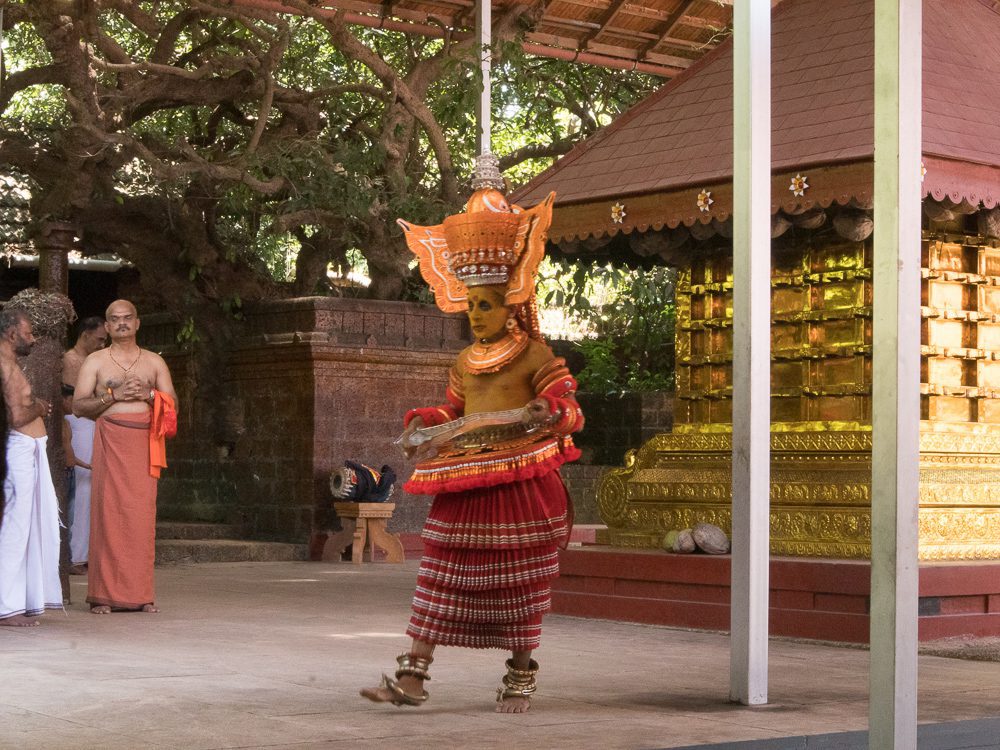
The performer’s face was painted yellow, while his dramatic costume was dominated by rich reds and oranges. Bells fastened around his ankles sounded as he moved around a golden, pagoda-like structure. The rhythmic movement, vivid colours and sound of the bells made the ritual mesmerising to watch.

The arrangements reflected the customs of this particular temple. Male visitors had to remove their shirts before entering the temple. They were permitted to stand on the raised platform near to the performer, while the rest of the women and I watched from the side until the ceremony ended. We were then allowed to enter the space, although we could not make direct contact with the performer.
Visitors should remember that Theyyam performances are acts of devotion rather than shows created for tourists. Dress modestly, follow instructions, remove your shoes, avoid obstructing worshippers, be quiet and respectful and always check whether photography is permitted. Customs may differ between temples and ceremonies, so do not assume that the access arrangements I experienced will apply everywhere.
Sharing Lunch at the Temple

After the ritual, we were invited to share lunch with the people at the temple.
This simple act of hospitality became an important part of my experience. Sitting down on the long benches to eat transformed the visit from something we had merely watched into an opportunity to feel briefly included in the life of the temple.
If seeing Theyyam is important to your visit, check the calendar before travelling. A knowledgeable local guide can help you find an appropriate ceremony and explain the customs surrounding it. Early mornings and evenings are often particularly atmospheric, although the Vellattom we witnessed took place closer to lunchtime.
Admire Kalarivathukkal Bhagavathi Temple

Kalarivathukkal Bhagavathi Temple at Valapattanam offered a quieter opportunity to appreciate Kerala’s distinctive temple architecture.
Having previously travelled through Tamil Nadu, I was accustomed to temples dominated by soaring, pyramid-shaped gopurams covered in elaborate figures. Kerala’s ancient temples have a markedly different appearance.

The buildings at Kalarivathukkal felt lower and more horizontal, with broad, sloping roofs and pavilion-like forms. The architecture is particularly suited to Kerala’s tropical climate, monsoon season and periods of heavy rainfall. It also creates a more intimate atmosphere than the monumental temple complexes I had encountered elsewhere in South India.

Even without attending one of the temple’s major festivals, it was worth pausing to study its proportions, rooflines and decorative details.
As at any active place of worship, visitors should dress respectfully and follow the guidance given at the entrance, including removing their shoes before entering. Access to some areas may be restricted, particularly for non-Hindu visitors, and photography may not always be allowed.
Visit Peralassery Temple and Stepwell
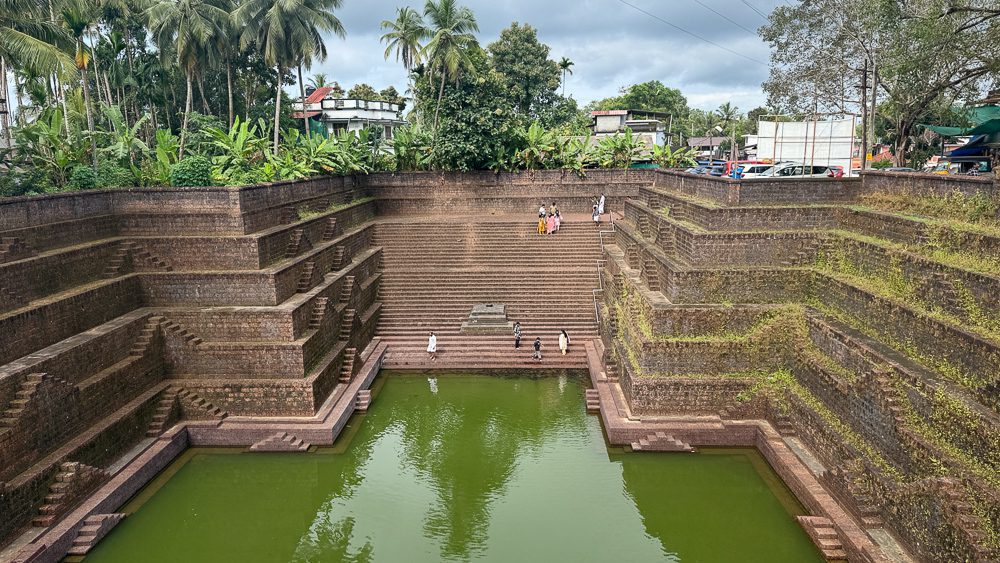
One of the most visually striking places I visited near Kannur was the stepwell at Sree Peralassery Subrahmanya Temple. It is the largest stepwell pond in Kerala and a National Water Heritage Site

The temple lies approximately 14 kilometres from Kannur city and is best known to visitors for its large stepped temple tank. Layers of stone steps descend towards the water in a precise geometric pattern, creating an almost hypnotic effect when viewed from above. Near the water, tiny fish gathered around our feet and nibbled at our toes – an unexpected and rather ticklish addition to the visit.
Compared with the ornate stepwells I had previously seen in other parts of India, this one felt restrained and peaceful. Its symmetry provides excellent photographic opportunities, although it remains part of an active religious site and must be treated accordingly.

We were able to walk around the temple complex rather than entering its most sacred areas.
I also found myself being asked repeatedly to pose for photographs with local visitors. This happens surprisingly often when travelling in India and usually begins with one request before attracting several more people. It became another cheerful and memorable interaction.

Dress modestly when visiting Peralassery Temple and be prepared to remove your footwear. Avoid sitting or standing in areas reserved for worshippers, and ask before photographing people or religious rituals.
Try Traditional Malabar Snacks

Northern Kerala has a strong culinary identity shaped by its maritime history and long-standing connections with Arab traders.
Between our temple visits and the coast, we stopped to sample some traditional snacks. After a day filled with history and religious sites, this provided a welcome change of pace and another way to experience the local culture.

Malabar snacks can be sweet or savoury, with ingredients including rice flour, coconut, bananas, lentils and spices. Rather than rushing through them, take time to ask what each snack is called and how it is made.
Small local cafés and snack shops can reveal as much about a popular destination as its formal restaurants.
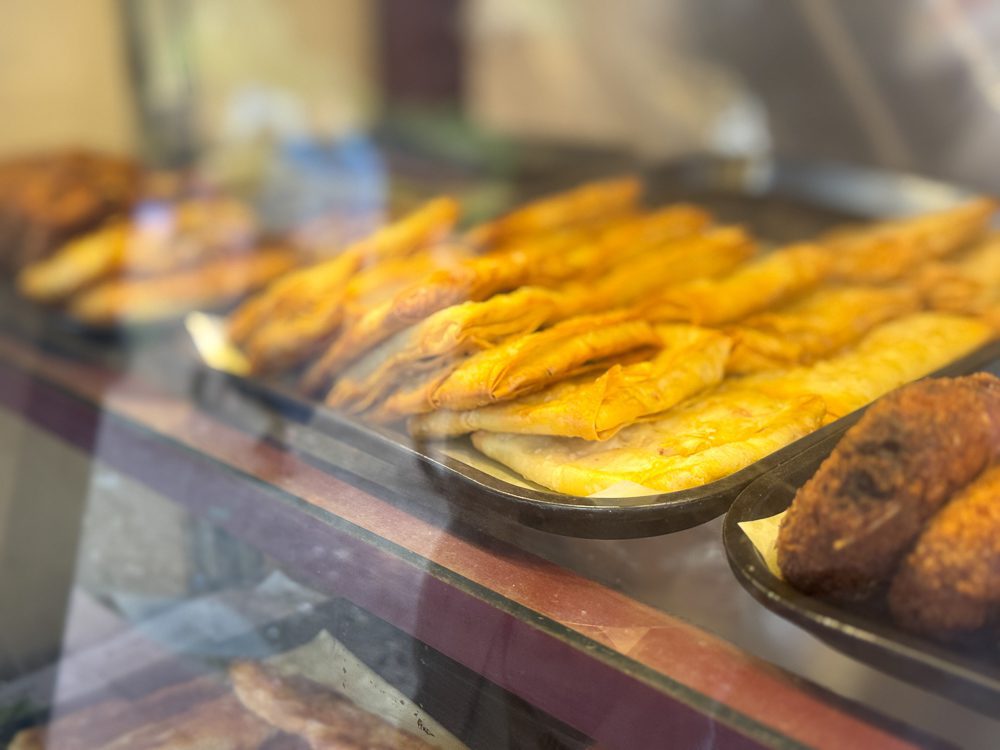
For pescatarians and vegetarians, it is still worth confirming the ingredients. Some snacks may contain egg, ghee, fish or unfamiliar meat fillings. I also bit into snacks that I thought were savoury to find out they were actually sweet!
Parisons Plantations Tea
I have to admit, I am a bit of a tea-aholic. I have a cup of tea morning, noon and night. So visiting a tea plantation for me is quite exciting.

Driving past the bright green fields filled with the orderly rows of tea bushes, we watched as ladies nimbly plucking the leaves. They wore small umbrellas as headgear to keep both sun and rain off them.
Parisons Plantations Tea Factory was fascinating. The leaves arrive and are immediately loaded onto large mesh trays to let them dry ready for processing. Depending on which type of tea leaves are being produced, the machinery then rolls, crushes or tears the leaves. Oxidation chambers are next wher the aroma, colour and flavour are developed. Leaves are then dried and sorted.


You can take a guided walk around the estate and have a factory tour with a tea tasting at the end. Perfect for me!
Painted Vehicles

On your drive through the Kannur area, you may see many buses and lorries that have been painted and decorated. We came across a whole row of them. Each truck has been personalised and elaborately painted.
Sadly, with the introduction of vinyl wrapping, stickers and corporate fleets, the tradition is dying out, so look out for them when you see them.
Drive Along Muzhappilangad Drive-in Beach

Muzhappilangad offers one of Kannur’s most unusual coastal experiences: the opportunity to travel directly along firm sand in a car or on a motorbike.
Frequently described as India’s longest drive-in beach, it has a motorable stretch extending for several kilometres along the Malabar Coast. Driving with the sea on one side and a long stretch of golden sand ahead feels completely different from arriving at a conventional beach car park.
The beach is around 15 kilometres from Kannur Railway Station, so it is not necessarily convenient to squeeze into a busy day exploring central Kannur. It makes more sense if you are travelling between Kannur and Thalassery or staying near the beach.
I stayed at KTDC Malabar Courtyard, which gave me easy access to Muzhappilangad and made the visit a natural addition rather than a lengthy detour. It was a short walk across the road to the beach. I must admit it was quite a surprise to see the cars and bikes driving past, splashing through the shoreline or stopping to take photos as the sun set behind them.
Water sports and other outdoor activities are sometimes available in the area, although these may depend on the weather and season. There were boys playing football like almost every beach in the world!

Conditions on a drive-in beach can change with the tides, weather and local restrictions. Follow any instructions, remain on the designated motorable section and avoid driving too close to the water. Be especially careful around pedestrians, children and other vehicles.
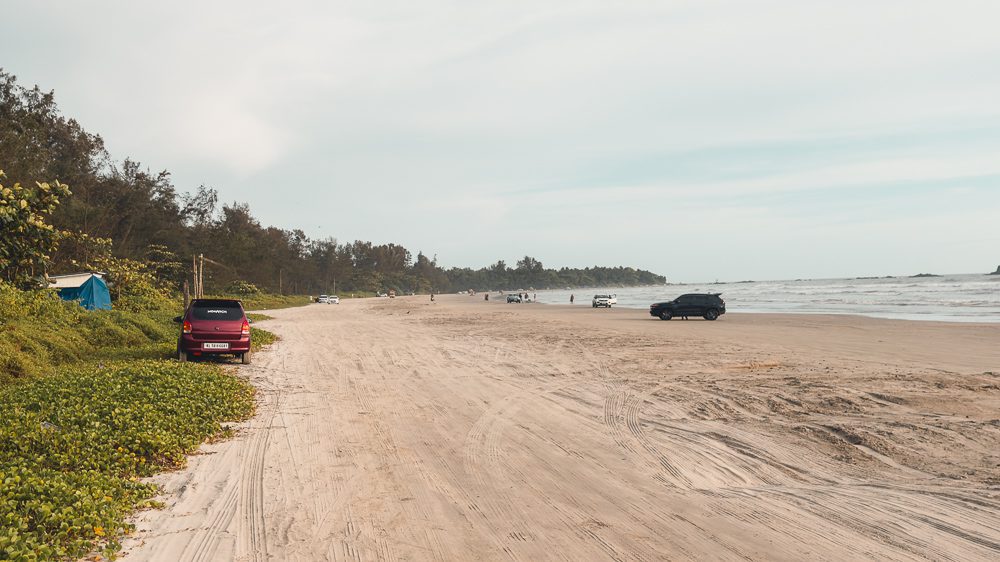
If you only have time for one beach, choose Muzhappilangad for the novelty of driving on the sand. Choose Chal Beach for a more relaxed sunset and the opportunity to experience local life.
Watch the Sunset at Chal Beach

Chal Beach provided one of the warmest and most spontaneous moments of my time in Kannur.
Located approximately 10 kilometres north of Kannur, the beach is quieter than many of Kerala’s more famous coastal destinations. Its serene atmosphere makes it an ideal spot for an evening walk, especially when the heat of the day begins to ease.

While we waited for sunset, I joined a group of local people playing a game along the beach. Cups had been arranged in a line beside the pathway, and the challenge was to weave between them while blindfolded without knocking any over.
Somehow, I won.
My prize was a set of colouring pencils, which I gave to our driver to take home to his sons. It was a small interaction, but it became one of those travel memories that stays with you precisely because it was neither planned nor staged.
Chal Beach has received Blue Flag recognition, reflecting its standards for cleanliness, environmental management and visitor facilities. It also has a designated swimming zone, although you should always follow local safety advice before entering the sea.

For me, however, the appeal was not about its amenities. It was the simple pleasure of watching the sunset, joining in with local people and finishing the day with laughter.
More Beaches Around Kannur
Kannur district has several other beaches worth considering if you have additional time.
Payyambalam Beach
Payyambalam Beach is one of the most accessible beaches from Kannur town. Its long stretch of golden sand makes it a popular destination for evening walks and sunset views.
The nearby Kannur Lighthouse and Baby Beach can be combined with Payyambalam as part of a coastal outing close to Kannur city.
Meenkunnu Beach
Meenkunnu Beach is a quieter alternative north of Payyambalam. It is a peaceful place for travellers looking for fewer crowds and a more relaxed glimpse of Kannur’s coastline.
Kizhunna Beach
Kizhunna Beach is another relatively secluded option surrounded by coconut palms and lush greenery. It is a good choice for visitors seeking natural beauty rather than extensive tourist facilities.
I did not visit Payyambalam Beach, Meenkunnu Beach or Kizhunna Beach during this trip, so check current access, swimming conditions and facilities before including them in your plans.
Other Tourist Places in Kannur
If you have more than two days, these historic sites, temples and natural attractions can be added to your itinerary. They were not part of my visit, so I have kept them separate from my first-hand recommendations.
Arakkal Museum and Arakkal Palace
Arakkal Kettu, also called Arakkal Palace, was the seat of the Arakkal family—the only Muslim royal family to have ruled in Kerala.
Part of the palace complex has been converted into the Arakkal Museum. Exhibits explore the Arakkal family’s maritime connections, royal administration and relationship with European colonial powers.
Arakkal Kettu is approximately three kilometres from Kannur town and can be combined with St Angelo’s Fort. The museum is normally closed on Mondays, but check its current entry fee and opening hours before visiting.
Kannur Lighthouse and Baby Beach
Kannur Lighthouse stands near Baby Beach and offers another perspective over the Arabian Sea. Together, the lighthouse, Baby Beach and nearby Payyambalam Beach can form an easy half-day outing from Kannur city.
Thalassery Fort
Thalassery Fort was built by the British East India Company in 1708 and is another of the important ancient forts along the Malabar Coast.
It makes an interesting comparison with St Angelo Fort, particularly for travellers interested in Kannur’s rich history and colonial-era architecture. Thalassery is also known for its local cuisine, making it a good day trip from Kannur.
Parassinikadavu Sree Muthappan Temple
Parassinikadavu Sree Muthappan Temple is dedicated to Sree Muthappan, a folk deity commonly regarded as a manifestation of Lord Shiva and Vishnu.
The worship of Lord Muthappan differs from practices at many other Kerala temples, and ritual performances are an important part of the temple’s identity.
The nearby Parassinikadavu Snake Park houses a variety of snakes and other reptiles. This may appeal to families or visitors interested in wildlife, although animal welfare standards should always be considered before visiting captive-animal attractions.
Palakkayam Thattu
Palakkayam Thattu is a hill station in the Kannur district of Kerala, offering views across the foothills of the Western Ghats.
The landscape, walking opportunities and lush greenery make it an appealing day trip for nature lovers. It is best visited when visibility is good, as mist and heavy rainfall can obscure the views during the monsoon season.
Aralam Wildlife Sanctuary
Aralam Wildlife Sanctuary protects an area of forest on the western slopes of the Western Ghats. Its dense forests support birds, butterflies and other wildlife, while guided walks provide a different experience from Kannur’s coast and historical sites.
It is some distance from Kannur city, so allow a full day rather than treating it as a quick excursion.
Kavvayi Backwaters and Kavvayi Islands
The Kavvayi Backwaters near Payyannur offer a quieter alternative to Kerala’s better-known backwater destinations.
A boat ride through the waterways and around the Kavvayi Islands provides an opportunity to experience mangroves, village life and the natural beauty of North Kerala. This is another full-day excursion from Kannur rather than a central-city attraction.
Ezhimala Hills
The Ezhimala Hills rise close to the coast in northern Kannur district. The landscape has historical and cultural significance as well as coastal views, although access to some areas may be restricted because of the naval academy.
Where to Stay in Kannur
Your choice of accommodation will depend on whether you want to stay near Kannur city’s tourist places or closer to Muzhappilangad Beach.
Grand Plaza Inn by RAK Rooms
I spent my first night at Grand Plaza Inn by RAK Rooms, opposite Kannur Railway Station. Its central position was extremely convenient after arriving in the city and would suit travellers continuing their journey by train.
Staying in Kannur town also provides easier access to St Angelo Fort, Arakkal Kettu, Payyambalam Beach, Kannur Lighthouse and other central attractions.
KTDC Malabar Courtyard

I subsequently stayed at KTDC Malabar Courtyard, near Muzhappilangad. This is the more convenient option if India’s longest drive-in beach is an important part of your plans or you prefer to stay outside the city.
However, it is less practical for exploring central Kannur independently. You will probably need a car with a driver or pre-arranged transport.
How to Reach Kannur
By Train
Kannur Railway Station is the nearest railway station for the central city and many of its principal attractions.
Rail connections run along Kerala’s coast and link Kannur with major cities elsewhere in South India. Travelling by train can be one of the easiest ways to arrive, particularly from Kochi, Kozhikode, Mangaluru or destinations along the coastal route.
By Air
Kannur International Airport is approximately 28–30 kilometres from Kannur city. Arrange a transfer in advance or use an authorised airport taxi.
If you look for the “Pre-Paid Taxi” stand just outside the airport (to the left of the entrance as you come out), you can arrange and pay for your taxi at the stand. My taxi into Kannur was 1,500 INR or approximately £12.
By Road
Kannur can be incorporated into a longer road trip through North Kerala, potentially combining the city with Thalassery, Wayanad, Kozhikode or Kasaragod.
Distances may look relatively short on a map, but journey times can be longer than expected. Avoid adding too many places to the same day.
Also it is probably better to hire a driver in India. The roads can be quite tricky to negotiate.
Getting Around Kannur
Kannur’s attractions are spread across the city and wider district.
St Angelo Fort, Payyambalam Beach, Baby Beach, Kannur Lighthouse and Arakkal Palace are relatively close to the centre.
Sree Oorpazhachi Kavu Temple, Peralassery Temple, Muzhappilangad, Chal Beach and other nearby places require additional travel time.
Hiring a car with a driver is the easiest option if you want to visit several tourist places in a limited period. A knowledgeable local guide is particularly valuable when attending a Theyyam festival or visiting active temples where customs and access arrangements may not be immediately apparent to international visitors.
Taxis and autorickshaws may work for individual journeys, but arranging a full-day vehicle makes a multi-stop itinerary considerably easier.
How Long Should You Spend in Kannur?
Allow at least two nights in Kannur to cover its main cultural attractions and beaches. Add another day or two if you want to explore its backwaters, wildlife or hills.
Suggested First Day
- Explore St Angelo’s Fort
- Visit Sree Oorpazhachi Kavu Temple
- Experience Vellattom or Theyyam if a suitable ceremony is taking place
- Visit Kalarivathukkal Bhagavathi Temple
- Try traditional Malabar snacks
- Watch the sunset at Chal Beach
Suggested Second Day
- Visit Peralassery Temple and stepwell
- Drive along Muzhappilangad Beach
- Stop in Thalassery or continue to your next destination
With Additional Time
Choose a day trip to:
- Palakkayam Thattu
- Aralam Wildlife Sanctuary
- Kavvayi Backwaters
- Thalassery Fort
- Payyambalam Beach and Kannur Lighthouse
When Is the Best Time to Visit Kannur?
The cooler period between October and March is generally the most comfortable time for sightseeing and outdoor activities.
The main Theyyam festival season usually runs from December until April, although dates vary between temples and communities. If Theyyam performances are important to you, research the local calendar before booking rather than assuming that a ceremony will be available every day.
The summer months can be extremely hot and humid. Kerala’s monsoon season brings heavy rainfall, which intensifies the region’s lush greenery but can disrupt beach visits, walking routes and road journeys.
I visited in September, when the weather was hot and humid. Lightweight clothing, comfortable footwear, a reusable water bottle and sun protection were essential.
Is Kannur Worth Visiting?

Kannur is worth visiting if you are interested in cultural traditions, ancient temples, historic sites and places that sit beyond Kerala’s conventional tourist route.
It does not offer the manicured ease of a resort destination, and its attractions are distributed across a relatively wide area. That is also part of its appeal. Kannur invites you to slow down, look more closely and experience a side of Kerala that many visitors miss.
Kannur Fort reveals the region’s colonial history. The temples introduce a distinctly Keralan architectural style. Theyyam offers a glimpse into a living spiritual tradition, while the pristine beaches provide opportunities for both unusual experiences and spontaneous encounters.
My strongest memories are not only of the places themselves. They are of eating alongside a temple community, being photographed by strangers, joining a game on the beach and giving my unexpected prize to our driver’s children.
Those unscripted moments made Kannur far more than another stop on an itinerary.
Save This Kannur Travel Guide for Later


Frequently Asked Questions About Kannur
What Is Kannur Best Known For?
Kannur is particularly known for Theyyam, a traditional ritualistic performance art form practised at temples, sacred groves and ancestral homes across North Kerala. The district is also known for ancient forts, beaches and its handloom industry.
What Are the Best Places to Visit in Kannur?
Some of the best places include St Angelo Fort, Sree Oorpazhachi Kavu Temple, Peralassery Temple and stepwell, Muzhappilangad Drive-in Beach, Chal Beach, Payyambalam Beach, Kannur Lighthouse and Arakkal Museum.
Can Tourists Attend Theyyam Performances?
Visitors can attend many Theyyam performances, but these are religious occasions rather than tourist shows. Follow local guidance, dress respectfully and ask before taking photographs.
Do I Need a Guide in Kannur?
A guide is not essential for visiting the beaches or major historical sites. However, a knowledgeable local guide is extremely helpful when attending Theyyam or visiting temples.
Is Kannur Suitable for Nature Lovers?
Yes. Beyond its beaches, Kannur district offers access to the Kavvayi Backwaters, Western Ghats, Palakkayam Thattu and Aralam Wildlife Sanctuary.
Is Two Days Enough for Kannur?
Two days is enough for a first visit covering St Angelo Fort, selected temples, Theyyam or Vellattom and one or two beaches. Allow longer for day trips into the hills, backwaters or dense forests.
Is Kannur Suitable for Solo Travellers?
Kannur can be visited independently, but its dispersed attractions make pre-arranged transport useful. Solo travellers should take the same sensible precautions they would elsewhere, particularly when arranging taxis and attending ceremonies in unfamiliar locations.
Final Thoughts on Visiting Kannur
Kannur may not have the instant familiarity of Kochi or Kerala’s famous backwaters, but that is part of what makes it so rewarding. Its attractions are spread out and some require a little planning, yet the combination of history, living traditions, temples and beaches offers a fascinating introduction to North Kerala.
What stayed with me most were the unexpected moments: watching the bells move around the ankles of the Theyyam performer, sharing lunch with the temple community, feeling tiny fish nibbling my toes at the Peralassery stepwell and joining a blindfolded game with local people at Chal Beach. Winning a packet of colouring pencils was a small moment, but one I will always associate with Kannur.
If you enjoy places where culture is still part of everyday life rather than arranged purely for visitors, Kannur deserves a place on your Kerala itinerary. Allow at least two nights, arrange a driver if possible and leave room for the encounters you cannot plan in advance.
Have you visited to Kannur or planning a trip to Kerala soon? Share your thoughts or questions in the comments below — I’d love to hear from you!
Planning a trip to India?
- Explore: Read these India Travel Guides.
- Stay: Find accommodation in India on Booking.com
- Connect: Arrange your India eSIM with Airalo.
- Protect your trip: Compare travel insurance.
Save This Kannur Travel Guide for Later


