

Genoa is a city that rarely shouts for attention – and perhaps that’s exactly why it deserves yours.
Often overshadowed by headline Italian cities such as Florence, Venice and Rome, Genoa is quietly, confidently extraordinary. This is a place of faded aristocratic grandeur, labyrinthine alleyways and a culinary heritage that stretches far beyond its most famous export, pesto Genovese.
*This site uses affiliate links and I may earn a small commission when you use my links and make a purchase without incurring an additional fee yourself.
Thank you for supporting this website. See my disclaimer page for more details.
But what truly sets Genoa apart is that it still feels relatively undiscovered. Quieter than many other Italian cities I have visited, it is one of those places where you can slow down, wander and explore without constantly feeling rushed.
A special thank you to Clara and the team at VisitGenoa for hosting me during my trip in Florence. However, all opinions expressed are entirely my own.
Here, you can step inside palaces that rival any in Italy, discover centuries-old artisan shops, lose yourself in the narrow caruggi of the historic centre and dine in restaurants that have been part of the fabric of the city for generations.
Genoa is layered, elegant, slightly gritty and just a little mysterious – and the more time you spend here, the more it reveals.
In this guide, I’ll take you through some of the best things to do in Genoa, from its opulent palazzi and world-class art to its maritime heritage, hidden corners and unforgettable Ligurian food.
What to Expect in This Post
- The best cultural and historical attractions in Genoa
- Where to find the city’s most beautiful palaces
- Unique experiences you won’t find elsewhere in Italy
- Where to eat and what to try
- Practical tips for planning your visit
Why Visit Genoa?
I must admit I was a little sceptical when I was invited to visit Genoa. I knew it was a port on the Ligurian Sea, but that was about it. I expected plenty of maritime history, but what I found was a city that surprised me at almost every turn.

Genoa is not a polished museum-piece city – and that is part of its appeal. This is a working port with centuries of maritime history, the birthplace of Christopher Columbus and once the centre of one of the most powerful maritime republics in Europe.
The wealth created during those centuries is still visible today, particularly in the magnificent palaces built by Genoa’s aristocratic families. Many survive within the historic centre and some are now museums, galleries or cultural spaces that you can explore.
But Genoa’s grandeur is only part of its story.
Unlike Florence, where beauty can feel immediate and obvious, Genoa reveals itself slowly. You turn a corner and stumble upon a hidden courtyard. Push open a door and there may be a frescoed interior waiting behind it. Follow one of the narrow caruggi and you suddenly emerge into a sunlit piazza, or climb a flight of stairs to discover a garden hidden above the city.
Genoa rewards curiosity – and that’s exactly what makes it so special.
Explore the System of the Palazzi dei Rolli: Genoa’s Aristocratic Heart
One of the most fascinating things to do in Genoa is explore its extraordinary collection of aristocratic palaces. Many form part of the UNESCO World Heritage Site, Le Strade Nuove e il sistema dei Palazzi dei Rolli – the Strade Nuove and the system of the Palazzi dei Rolli.

During the 16th and 17th centuries, when the Republic of Genoa was at the height of its wealth and influence, the city developed an unusual system for accommodating important visitors.
Rather than staying in a royal palace, visiting dignitaries, ambassadors and other notable guests could be hosted in the magnificent private homes of Genoa’s aristocratic families. The eligible residences were recorded on official lists, or rolli, and the palace chosen to receive a particular guest could be selected by drawing lots.
Being included on the Rolli was a sign of considerable status and wealth – although it also meant being prepared to entertain some of the Republic’s most distinguished visitors.
Today, 42 of these palaces are included within Genoa’s UNESCO World Heritage Site, while many more historic palazzi survive throughout the city. Some remain privately owned, while others have become museums, galleries, offices and cultural spaces.
Walking along Via Garibaldi gives you the first sense of just how wealthy Genoa once was, but stepping through the doors of the palaces reveals another world entirely.
Several can be visited, and these were some of my favourites.
Palazzo Rosso

With its distinctive red façade, Palazzo Rosso is one of the most striking palaces on Via Garibaldi and one of my favourites to explore.
Inside, the grandeur continues through rooms filled with paintings, frescoes and historic furnishings belonging to the Brignole-Sale family. Remember to look up as you walk through the palace; many of the ceilings are works of art in their own right, covered with elaborate frescoes and decorative details.
One room that particularly caught my attention was the bedroom alcove on the mezzanine floor in the Anton Giulio apartment. Rich ruby-red fabrics cover the bed, golden angels hover around the floral bedhead and mirrors reflect the decoration around the room. It gives you a wonderful sense of the opulence of aristocratic life in Genoa.

Before you leave, head up to the rooftop terrace. The views across Genoa’s jumble of terracotta rooftops are superb and give you a completely different perspective on the historic centre below.
Palazzo Bianco

Next door to Palazzo Rosso, Palazzo Bianco offers a rather different experience. Its elegant, light-filled rooms provide a backdrop to an impressive collection of European art, including works by Italian and Flemish masters.

As its name suggests, white dominates many of the rooms and walls, allowing the paintings and sculptures to take centre stage. After the rich colours and ornate interiors of Palazzo Rosso, the contrast is quite striking.
One work in particular stopped me in my tracks. In a darkened alcove sits Antonio Canova’s marble sculpture Maddalena penitente (The Penitent Magdalene). With her head bowed, she appears to be silently contemplating the bronze cross resting in her lap. The simplicity of the marble figure against the darkness surrounding her makes it particularly poignant.

Palazzo Bianco also felt wonderfully peaceful when I visited. Without the crowds you can encounter in some of Italy’s major galleries, I could take my time, stand in front of the artworks and really look at them rather than feeling hurried on to the next room.
Palazzo Spinola
Palazzo Spinola gives you a rather different glimpse into Genoa’s aristocratic past. With many of its original furnishings still in place, it feels less like walking through a museum and more like stepping into a private home from another era.


There is an intriguing mixture of extravagance and intimacy. Ornate painted ceilings rise above intricate chandeliers, oversized paintings command the walls and corridors are edged with delicate gilded decoration. Everywhere you look, another detail catches your eye.
But one of the things I particularly enjoyed was seeing what happened behind all that grandeur.
Eventually, you leave the sumptuous rooms behind and find yourself in the kitchens. After the gold, paintings and chandeliers upstairs, these more functional spaces offer a fascinating glimpse into the work that went on behind the scenes to maintain such an elaborate aristocratic household.

It is this contrast that makes Palazzo Spinola so interesting. You don’t just see how Genoa’s wealthy families entertained their guests; you also get a sense of how these extraordinary homes actually functioned.
Palazzo Nocolosio Lomellino
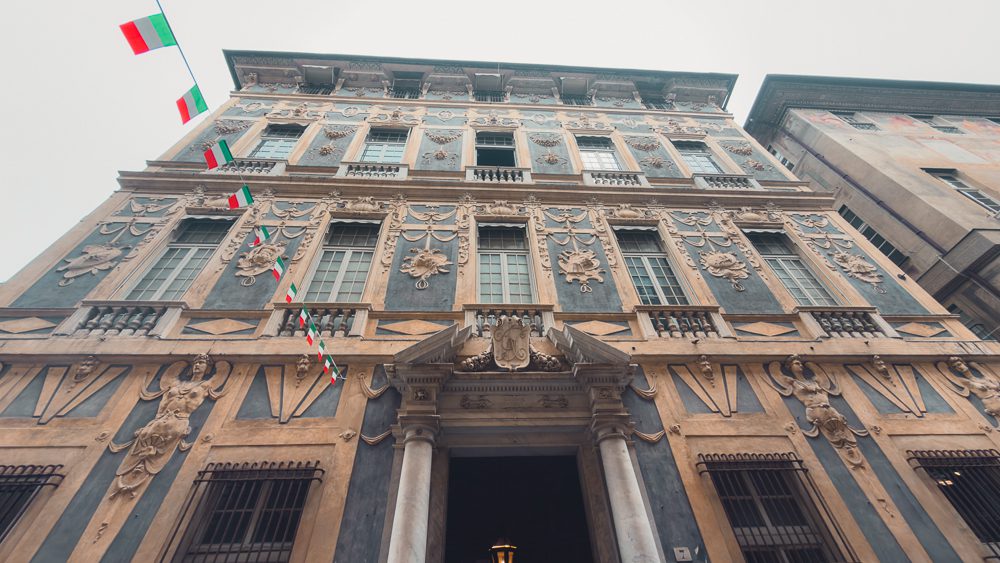
Palazzo Nicolosio Lomellino was one of the biggest surprises of my time exploring Genoa’s palaces. From Via Garibaldi, its beautiful blue and white façade gives you little indication of what is hidden behind it.
Walk through the imposing entrance gates and you emerge into an elegant courtyard, with a grotto and cascading water feature on the rear wall. Even here, there are intricate architectural details everywhere you look.
Climb the stairs and pause at the top to look back across the courtyard. The walls are decorated with wonderful trompe-l’œil details, including painted cornicing, pillars and windows that play tricks with your perception of the building.
Then turn around.
Hidden behind the palazzo is a garden that I simply wasn’t expecting. Orange and lemon trees grow among beds of agapanthus, while shaded paths and terraces offer a cool retreat from the streets below.

It feels wonderfully secluded – a little pocket of green hidden right in the centre of Genoa.
The palace is privately owned and access is more limited than at Palazzo Rosso or Palazzo Bianco, so check opening dates and visiting arrangements before you go. If the garden is open during your visit, it is well worth taking the opportunity to see it.
Other Things to do in Genoa
Visit the Palazzo Ducale and Discover World-Class Art

Standing in the heart of Genoa, Palazzo Ducale was once the seat of the Doges who governed the Republic of Genoa. Today, the former palace has been transformed into one of the city’s most important cultural centres, hosting temporary exhibitions, events and installations throughout the year.
The exhibitions change, so it is worth checking what is on during your visit. I was fortunate enough to see a wonderful exhibition devoted to Van Dyck, whose connection with Genoa dates back to the 17th century.

Many of the exhibition rooms were kept quite dark to protect the artworks, but rather than detracting from the experience, I found that the subdued lighting made me concentrate more closely on the paintings.
Don’t rush through the building itself either. Palazzo Ducale is impressive in its own right, and there are architectural details and artworks to discover beyond the temporary exhibitions.
From the first floor, look across the courtyard towards the painted arches. During my visit, they featured an installation by Marzia Migliora depicting the devastation caused to woodland by a storm and its subsequent resilience.

Palazzo Ducale is also home to another experience that is easy to miss – the Torre Grimaldina, which takes you from the grandeur of the Doges’ palace into a much darker part of Genoa’s history.
Climb the Torre Grimaldina

Hidden within the Palazzo Ducale complex, the Torre Grimaldina reveals a much darker side of Genoa’s history. The tower was used as a prison for centuries, and today you can explore the former cells before continuing upwards for one of the best views over the city.
You can take the lift or follow the wide spiral staircase of brick and metal to reach the prison level. Before entering the cells, I was given a hard hat to wear – and with some surprisingly low ceilings along the way, I soon understood why.
A short video explains the history of the prison before you make your way through the narrow corridors and former cells. It is quite a contrast after the grandeur of Palazzo Ducale below.

From the prison, continue upwards to the viewing platform and the atmosphere changes completely.
The reward is a wonderful 360-degree view across Genoa. From here, you can pick out the maze of narrow streets and historic buildings below, the hills rising behind the city and the harbour stretching towards the sea. When I visited, there was even a cruise ship in port.
For me, the Torre Grimaldina was worth visiting for both sides of the experience: the fascinating history hidden within the tower and that spectacular view from the top.
Wander Through Genoa’s Historic Centre and the Caruggi
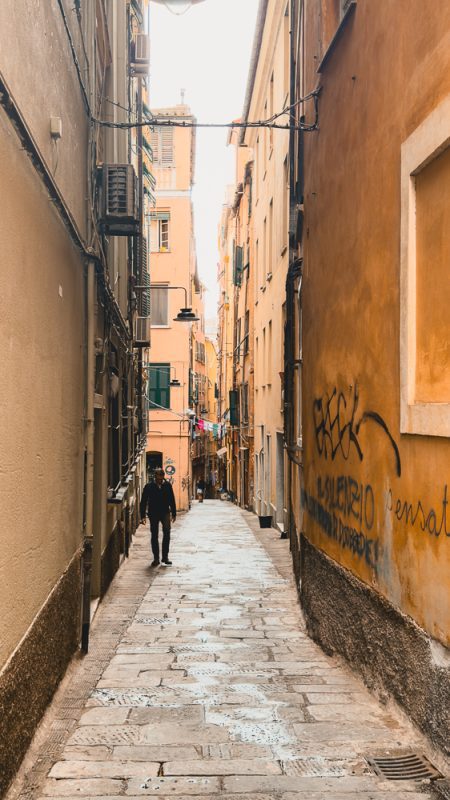
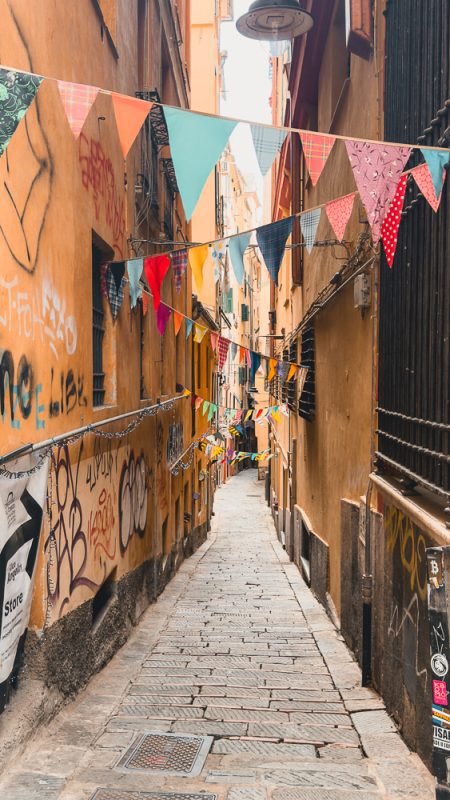

One of the best ways to experience Genoa is simply to wander.
The historic centre is a maze of narrow streets and alleyways known as caruggi, winding between tall buildings where sunlight sometimes barely reaches the street below. They twist and turn seemingly at random, opening unexpectedly onto tiny squares, churches, cafés and hidden courtyards.
Put the map away for a while and allow yourself to get a little lost. Look up as you walk – some of the most beautiful architectural details are several storeys above street level – and don’t be afraid to step through an open doorway or into a church to see what might be hidden inside.
This is also where you begin to see everyday Genoese life. Small shops sit beneath centuries-old buildings, cafés spill onto tiny piazzas and historic businesses continue traditions that have been part of the city for generations.

The caruggi aren’t always polished or picture-perfect, but that is part of their appeal. Genoa feels lived in rather than preserved solely for visitors.
Take your time, follow whichever alley catches your eye and stop when you find an interesting shop or somewhere tempting for coffee or focaccia.
Some of my favourite moments in Genoa came not from looking for a particular attraction, but from discovering what was around the next corner.
Discover Genoa’s Historic Artisan Shops (Botteghe Storiche)
As you explore Genoa’s caruggi, look out for the city’s botteghe storiche – historic shops and businesses that are an important part of Genoa’s living heritage.
Some have been trading for generations, preserving traditional crafts, recipes and ways of working that might otherwise have disappeared. Rather than being recreated for visitors, these are businesses that have evolved alongside the city and continue to be part of everyday Genoese life.

You might find old confectioners and delicatessens, textile shops, traditional workshops and tiny businesses tucked beneath the buildings of the historic centre. Often, the interiors are just as fascinating as what is being sold, with original fittings, counters, shelving and signs offering glimpses into another era.
Take the time to step inside rather than simply photographing the shopfronts. Part of the pleasure is meeting the people who continue these traditions and discovering the stories behind their businesses.
For me, places like these are part of what makes Genoa so interesting. The city’s heritage isn’t confined to museums and palaces – it is still being lived and worked in every day.
Also look out for interesting interiors. There was an ancient statue in the middle of this clothes shop!

If, like me, you enjoy slow travel and discovering the culture of a destination through the people who live there, seeking out Genoa’s botteghe storiche is well worth adding to your itinerary.
Step Inside the Cathedral of San Lorenzo
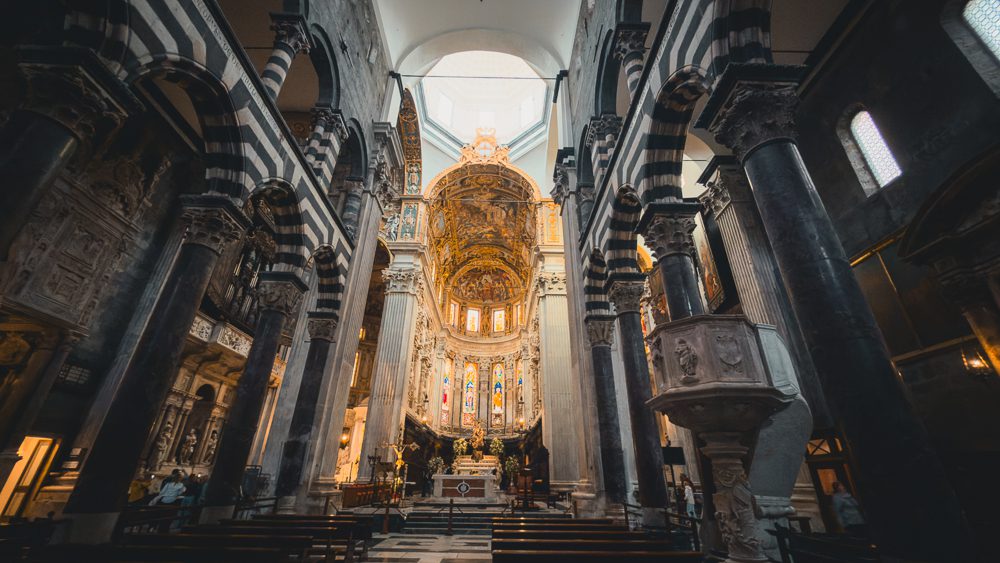
With its striking bands of black and white marble, the Cathedral of San Lorenzo is one of the most recognisable buildings in Genoa and well worth seeking out as you explore the historic centre.
The striped façade immediately stands out from the surrounding buildings, but don’t just admire the cathedral from the piazza. Step inside to explore its ornate chapels, religious artworks and impressive interior.
The cathedral also has a treasury museum, where you can delve further into its religious and artistic heritage.
Even if you only have a short time to spare, San Lorenzo is an easy addition to a walk through the caruggi and offers another glimpse into the layers of history hidden throughout Genoa.
Discover Genoa’s Maritime Heritage

You can’t really understand Genoa without understanding its relationship with the sea. For centuries, the city’s fortunes were shaped by maritime trade, shipbuilding and its position on the Mediterranean, and the harbour remains an important part of Genoese life today.
Visit Porto Antico

Genoa’s historic harbour, Porto Antico, offers a completely different atmosphere from the narrow caruggi and grand palaces of the historic centre.
The waterfront has been transformed into a lively area of promenades, restaurants, cafés and cultural attractions, making it a pleasant place to wander beside the water.
Several of Genoa’s major attractions are clustered around the harbour, including the Aquarium of Genoa and the nearby Galata Maritime Museum, so you can easily combine them as part of a day exploring the city’s maritime heritage.
I particularly like this area later in the day, when you can slow down after sightseeing, walk beside the harbour and see Genoa from another perspective.
Explore the Aquarium of Genoa

One of the best-known attractions around Porto Antico is the Aquarium of Genoa, one of the largest aquariums in Europe.
Its exhibits explore marine environments from around the world, with large tanks housing an extensive collection of aquatic species. It is particularly popular with families and could be a good option if you are spending several days in Genoa or looking for something to do when the weather isn’t cooperating.
You can find the aquarium directly on the waterfront at Porto Antico, making it easy to combine with other attractions around Genoa’s harbour.
Explore the Galata Maritime Museum

For a deeper understanding of Genoa’s long relationship with the sea, the Galata Maritime Museum is well worth visiting. Its exhibits explore centuries of maritime history, from exploration and shipbuilding to migration and life at sea.
One of the highlights for me was the full-scale reconstruction of a 17th-century galley. Stepping aboard gives you a much better sense of just how cramped conditions would have been for those who lived and worked on these ships.
There is also a room devoted to Christopher Columbus, exploring his connections with Genoa and his voyages across the Atlantic.
But the maritime experience doesn’t end inside the museum.

Moored outside is the S518 Nazario Sauro, an Italian Navy submarine that was decommissioned in 2002 and later opened as a floating museum.
Visitors can go aboard the submarine and explore its confined interior, although I chose not to go inside during my visit.
Even without entering the submarine, I found the Galata Maritime Museum one of the most interesting places I visited in Genoa, particularly for understanding just how important the sea has been to the development and identity of the city.
Step Aboard the Amerigo Vespucci

If you are very lucky, you might find the magnificent Amerigo Vespucci in port during your visit to Genoa.
The historic sailing ship is used by the Italian Navy as a training vessel, primarily for cadets from the Naval Academy in Livorno, and is instantly recognisable with its towering masts, black-and-white hull and intricate detailing.
I was fortunate enough to have the opportunity to step aboard while it was in Genoa, and it was one of the most memorable maritime experiences of my visit.
Walking onto the ship feels like stepping back in time. Polished wood, gleaming brass and beautifully maintained details are reminders that this is far more than a working training vessel – it is also a remarkable example of Italian maritime craftsmanship.
Its motto, Non chi comincia ma quel che persevera – loosely, “Not he who begins, but he who perseveres” – seems particularly appropriate for a ship dedicated to training generations of naval cadets.
The Amerigo Vespucci travels extensively and is not permanently based in Genoa, so seeing it here is never guaranteed. If it happens to be in port during your stay and is open to visitors, don’t miss the opportunity to go aboard.
Take in the Best Views of Genoa

One thing you quickly discover about Genoa is that it is a surprisingly vertical city. The historic centre rises from the harbour towards the surrounding hills, which means there are some wonderful viewpoints overlooking the rooftops and out towards the Ligurian Sea.
Fortunately, you don’t have to climb every hill on foot.
Ride Genoa’s Funiculars and Lifts
Genoa has a network of funiculars and public lifts that have been helping residents navigate the city’s steep hills for generations. For visitors, they are not only a practical way to get around but also an experience in themselves.
Take one uphill and you can leave the tightly packed streets of the historic centre behind and emerge to views across Genoa’s terracotta rooftops, the harbour and the hills surrounding the city.
It is another example of why Genoa rewards exploring beyond the obvious sights. Some of the best views come simply from heading uphill and seeing where the city’s lifts and funiculars take you.
Combined with the panoramic views from Torre Grimaldina and the rooftop of Palazzo Rosso, seeing Genoa from above gives you a much better sense of the scale and unusual geography of the city.
Experience Genoa’s Food Scene
Food is an important part of experiencing Genoa. Ligurian cuisine tends to be simple and seasonal, drawing on ingredients from both the Mediterranean coast and the hills surrounding the city.
Genoa has given its name to some of Italy’s best-known specialities, while focaccia, chickpea-based dishes and seafood are all part of the local food culture.
Try Pesto alla Genovese
You can’t really talk about the food of Genoa without mentioning pesto Genovese. Originating in the city, the traditional sauce combines fresh Genovese basil with pine nuts, garlic, Parmigiano Reggiano, Pecorino, extra virgin olive oil and salt.
In Genoa, you will often find pesto served with trofie, the distinctive short, twisted pasta associated with Liguria, or trenette, a long, flat pasta. I brought home a bag of trofie, so I can recreate one of Liguria’s most characteristic pasta dishes in my own kitchen.
Although I didn’t actually eat pesto during this particular visit, it is one of the classic Genoese dishes to look out for on local menus and something firmly rooted in the culinary identity of the city.
Eat Focaccia Like a Local
Focaccia is another food closely associated with Genoa, and you’ll find it in bakeries throughout the city. Unlike the thicker focaccia you may be familiar with elsewhere, traditional focaccia Genovese is relatively thin, with a golden surface generously brushed with olive oil and scattered with salt.
It isn’t reserved for lunch or dinner either. In Genoa, focaccia is eaten throughout the day, including at breakfast, as a mid-morning snack or simply whenever you pass a bakery and the smell proves too tempting.
Look out for the classic plain version, focaccia con cipolle topped with onions, and other variations displayed on bakery counters.
One of the pleasures of exploring Genoa’s caruggi is stopping at a small bakery, buying a slice of focaccia and eating it as you continue wandering through the historic centre.
Try Farinata and Other Genoese Specialities
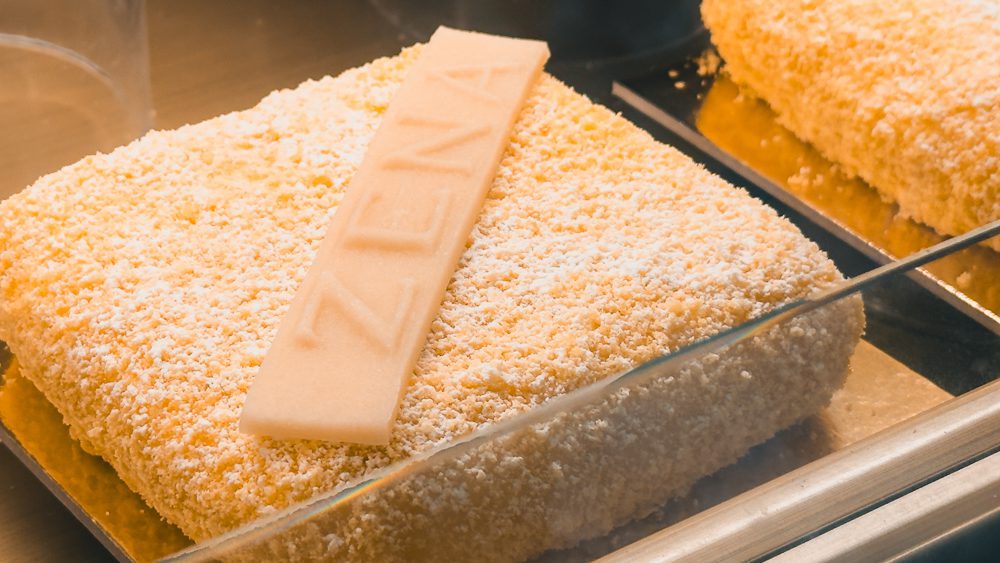
Another speciality to look out for in Genoa is farinata, a thin, savoury pancake made from chickpea flour, water, olive oil and salt. Traditionally baked at a high temperature until the edges become crisp while the centre remains soft, it is a simple dish that is particularly associated with Liguria.
You’ll often find farinata sold by the slice in bakeries and small takeaway shops, making it an easy snack to try while exploring the city.
Beyond farinata, keep an eye out for dishes featuring ingredients typical of Ligurian cooking, including fresh herbs, vegetables, pine nuts, olives and locally produced olive oil. The cuisine here isn’t necessarily elaborate; some of the most characteristic flavours come from relatively simple combinations of good local ingredients.
Part of the pleasure of eating in Genoa is discovering these specialities as you wander, whether displayed on a bakery counter, tucked into the menu of a small trattoria or spotted in one of the city’s food shops.
Enjoy Genoa’s Seafood

With the Ligurian Sea on its doorstep, it is hardly surprising that seafood features prominently on menus across Genoa.
Look out for dishes made with anchovies, mussels, squid and locally caught fish, often prepared simply with olive oil, lemon and fresh herbs. Fritto misto, a mixture of lightly fried fish and seafood, is a good option if you want to sample several things at once.
Another Ligurian speciality to look out for is acciughe al verde – anchovies served with a vibrant green sauce traditionally made with parsley, garlic and olive oil.
You’ll find seafood served everywhere from informal restaurants around the harbour to traditional trattorias tucked into the caruggi. After spending time exploring Genoa’s maritime history, sitting down to a seafood meal is another way to experience the city’s long relationship with the sea.
Where to Eat in Genoa
Knowing what to eat in Genoa is one thing, but finding somewhere good to sit down and enjoy it is another. During my time in the city, I ate at a couple of restaurants that are worth adding to your list.
G. Migone
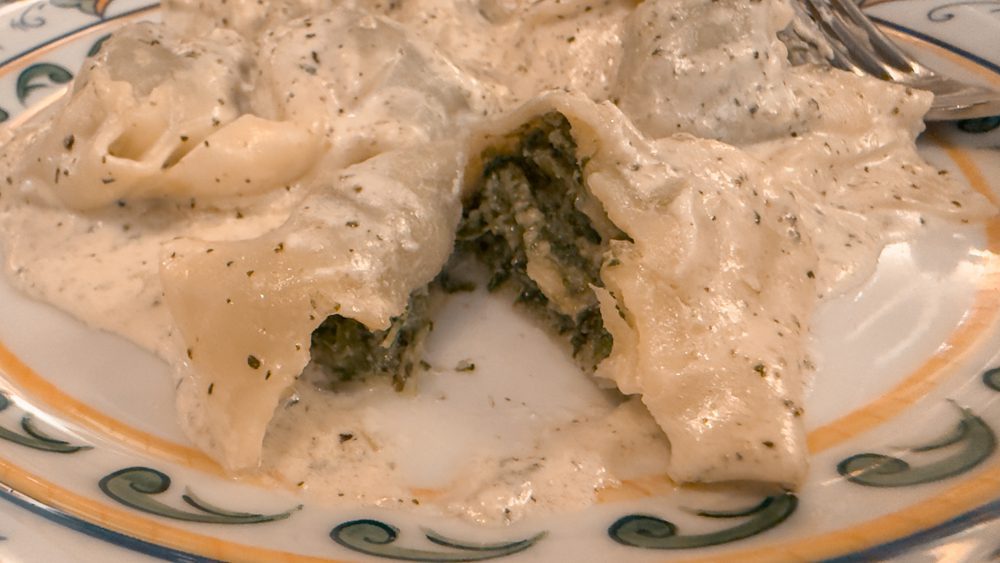
One of my meals in Genoa was at G. Migone, where I chose a spinach-filled ravioli.
It wasn’t one of the obvious pesto dishes that you might associate with Genoa, but that is part of the pleasure of eating in Italy. You don’t necessarily need to order the dish a destination is most famous for every time you sit down to eat.
The pasta was the highlight for me, though the tiramisu came a close second. G. Migone made a good stop during my time exploring the city. If you’re looking for somewhere to sit down over a proper plate of pasta rather than simply grabbing focaccia as you wander, it is worth considering.
Cambi


For a more traditional Genoese dining experience, I also ate at Cambi, a restaurant tucked into Genoa’s historic centre.
The setting feels very much in keeping with the city, making it a good place to stop after spending a few hours exploring the surrounding caruggi. The menu draws on Ligurian and Genoese cooking, with pasta, seafood and regional dishes among the options.
What I particularly liked was that eating here felt connected to the place rather than simply being somewhere to stop for a meal. In a city where food, history and the maze of streets are so intertwined, restaurants such as Cambi become part of the experience of exploring Genoa.
If you’re looking for somewhere atmospheric for dinner after a day of sightseeing, Cambi is worth considering.
Where to Stay in Genoa
Hotel Bristol Palace

For my stay in Genoa, I based myself at the historic Hotel Bristol Palace, an elegant hotel in the heart of the city.
Its central location made it particularly convenient for exploring Genoa on foot. Piazza De Ferrari and Palazzo Ducale are close by, while Via Garibaldi, the Palazzi dei Rolli and the narrow streets of the historic centre are all within easy walking distance.
The hotel itself has plenty of character, but its most striking feature has to be its magnificent white marble elliptical staircase, which spirals upwards through the heart of the building.

There is also an intriguing connection with Alfred Hitchcock. The director stayed at the Bristol Palace while in Genoa, and it is said that the dizzying spiral of the staircase may have helped inspire the recurring spiral imagery in his 1958 film Vertigo. Whether or not the story can ever be proved, standing at the top and looking down into the sweeping staircase certainly gives you an immediate sense of vertigo.
Staying centrally also meant I could head out early, return to the hotel during the day if I needed to, and go back out for dinner without having to rely on transport.
If you prefer historic hotels with a sense of place rather than anonymous modern accommodation, Hotel Bristol Palace makes an excellent base for discovering Genoa.
A Luxury Cultural Weekend in Genoa
Genoa works particularly well for a long weekend. Many of its main sights are relatively close together, but this is a city where it pays not to rush. Allow yourself time to wander through the caruggi, stop for coffee or focaccia and look beyond the grand façades.
If you have two days in Genoa, this is how I would combine the city’s palaces, food, maritime heritage and historic centre.
Day One: Palaces, Art and the Historic Centre
Start your morning on Via Garibaldi exploring the magnificent Palazzi dei Rolli. Palazzo Rosso and Palazzo Bianco make a natural pairing, while Palazzo Nicolosio Lomellino is worth looking out for if its garden is accessible during your visit.
From here, wander into Genoa’s historic centre rather than following the most direct route. Explore some of the narrow caruggi, seek out the historic botteghe and stop for focaccia along the way.
Continue to the Cathedral of San Lorenzo before reaching Piazza De Ferrari and Palazzo Ducale. Check what exhibitions are showing during your visit and, if Torre Grimaldina is open, head up for one of the best views across Genoa.
Finish your day with dinner in the historic centre before returning to Hotel Bristol Palace, or your chosen hotel.
Day Two: Genoa and the Sea
Devote your second day to the maritime side of Genoa.
Head towards Porto Antico and spend the morning at the Galata Maritime Museum, allowing plenty of time to explore the reconstructed galley. You can also go aboard the Nazario Sauro submarine moored outside, although I chose not to enter it during my visit.
Afterwards, have lunch around the historic centre or waterfront before spending some time exploring Porto Antico.
If the Amerigo Vespucci happens to be in Genoa and is open to visitors, don’t miss the opportunity to go aboard. Otherwise, use the afternoon to explore more of the city at a slower pace or take one of Genoa’s lifts or funiculars uphill for another perspective over the rooftops and harbour.
End your weekend with a leisurely dinner and one last wander through the streets of Genoa.
Getting to Genoa

Genoa is well connected with the rest of Italy and Europe, whether you arrive by air, rail, road or sea.
Flying to Genoa
Genoa’s Cristoforo Colombo Airport (GOA) is the closest airport to the city and is only a short distance from the centre. Flight schedules and direct routes vary seasonally, so if you’re travelling from the UK, it is worth comparing flights into Genoa with services to nearby airports.
Milan and Pisa can both be useful alternatives, particularly if you are combining Genoa with a longer trip through northern Italy or Tuscany.
Travelling to Genoa by Train
Train travel is one of the easiest ways to reach Genoa if you are already in Italy.
The city’s two principal railway stations are Genova Piazza Principe and Genova Brignole. Which is most convenient will depend on where you are staying, although both provide easy access to central Genoa.
There are rail connections with cities including Milan, Turin, Florence and Rome, as well as services running along the Ligurian coast. Travelling by train is also particularly convenient if Genoa forms part of a longer Italian itinerary.
Driving to Genoa
You can, of course, reach Genoa by car, but I wouldn’t choose to drive into the historic centre unless you have a particular reason to do so.The combination of narrow streets, restricted traffic zones and limited parking makes public transport and walking much easier once you arrive.
If Genoa is part of an Italian road trip, check whether your hotel offers parking or can recommend somewhere suitable before driving into the city.
Arriving in Genoa by Cruise Ship
Genoa is also one of Italy’s major cruise ports, so you may find yourself arriving here as part of a Mediterranean cruise.
The advantage is that the port is close to the historic city. Even with limited time ashore, you can explore parts of the historic centre, see some of the Palazzi dei Rolli and experience a little of Genoa’s food and maritime heritage before returning to your ship.
Getting Around Genoa
Genoa is a wonderfully walkable city, particularly if you are staying centrally. I found that walking was the best way to explore the historic centre, where many of the palaces, churches, shops and restaurants are relatively close together.
It is also the best way to experience the caruggi. These narrow lanes weren’t designed with modern transport in mind, and wandering through them on foot allows you to notice the tiny shops, architectural details and unexpected courtyards you might otherwise miss.
There is one thing to bear in mind: Genoa is hilly. The city rises steeply away from the waterfront, so what looks like a short distance on a map can sometimes involve a considerable climb.
Fortunately, Genoa has an excellent public transport network of buses, funiculars, lifts and a metro. The lifts and funiculars are particularly useful for reaching the higher parts of the city without tackling every hill on foot – and some offer wonderful views along the way.
Comfortable shoes are essential. The historic centre has uneven paving and cobbled streets, and you’ll probably walk considerably further than you expect.
For most visitors spending a few days in Genoa, I wouldn’t recommend hiring a car. Walking combined with public transport is generally a much easier way to explore the city, particularly around the historic centre.
Best Time to Visit Genoa
Genoa is a year-round city, but for comfortable sightseeing I would choose spring or early autumn, when temperatures are generally pleasant enough for spending long days exploring on foot.
Spring in Genoa
April to June is an excellent time to visit. The days are getting longer, temperatures are usually comfortable for walking, and you can spend plenty of time exploring the caruggi, palaces and waterfront without the intense heat of midsummer.
Spring is also a lovely time to see some of the city’s hidden gardens, including the garden at Palazzo Nicolosio Lomellino.
Summer in Genoa
July and August bring warmer temperatures and more visitors to Liguria, particularly along the coast. Genoa itself can still be explored, but the combination of heat, hills and lots of walking may make sightseeing more tiring.
If you visit during summer, I would plan the more energetic sightseeing for the morning, take things more slowly during the hottest part of the day and make the most of the longer evenings.
Autumn in Genoa
September and October are another good choice, particularly if your priority is culture, food and sightseeing rather than spending time on the beach.
The temperatures can be more comfortable for walking, while the city still has plenty of life without necessarily feeling as busy as the peak summer period.
Winter in Genoa
Winter can work surprisingly well for a cultural city break. You’ll have plenty of museums, palaces, churches and historic interiors to explore, although the days are shorter and the weather can be less predictable.
Whatever time of year you visit, bring comfortable shoes and something waterproof. Genoa is a city best explored on foot, and you’ll probably spend far more time wandering its streets than you originally planned.
Travel Tips for Visiting Genoa
- Wear comfortable shoes – the streets can be steep and uneven
- Don’t expect everything to be polished – embrace the authenticity
- Book key attractions in advance where possible, like the Rolli
- Allow time to wander without a plan
Day Trips from Genoa
Genoa makes an excellent base for exploring more of Liguria. Trains run along the coast, putting colourful fishing villages, seaside towns and some of the region’s best-known destinations within easy reach.
If you have an extra day or two, these are two places to consider.
Camogli
With its tall, colourful houses clustered around a small harbour, Camogli is a lovely contrast to the grand palaces and busy streets of Genoa.
Spend a few hours wandering along the waterfront, explore the lanes behind the seafront and stop for lunch overlooking the Ligurian Sea. It is compact enough to explore at a leisurely pace and makes an easy addition to a Genoa city break.
Portofino
Portofino may be one of the most famous destinations on the Ligurian coast, with its pastel-coloured buildings gathered around a tiny harbour filled with fishing boats and yachts.
Beyond the harbour, take time to wander away from the main piazzetta, explore the surrounding paths and enjoy the views along the coastline.
Portofino can be combined with nearby Santa Margherita Ligure, giving you the chance to experience more than one destination during your day out.
These are just two possibilities. From medieval villages and glamorous coastal resorts to the Cinque Terre and the wine country of Piedmont, there are plenty of places within reach of Genoa.
Discover More of Genoa’s Cultural Heritage
Genoa’s cultural heritage extends well beyond its grand palaces and maritime history. As you explore the city, you’ll find connections with explorers, musicians, artists and writers woven into its streets and historic buildings.
See the Casa di Colombo
Christopher Columbus was born in Genoa in 1451, and his connection with the city is still very visible.
Close to Porta Soprana you’ll find the small building known as the Casa di Colombo, where Columbus is believed to have spent part of his youth. The building visitors see today is probably an 18th-century reconstruction of the original medieval house, which was badly damaged during the French bombardment of Genoa in 1684.
It is a surprisingly modest building compared with the enormous historical consequences of the voyages with which his name became associated.
Today, Columbus’s legacy is also viewed within the much wider and more complex history of European exploration, colonisation and its consequences for the Indigenous peoples of the Americas.
Nearby, you can also see the medieval Porta Soprana and the reconstructed Cloister of Sant’Andrea, making this an interesting little historic corner of Genoa to explore.
Discover Genoa’s Musical Heritage
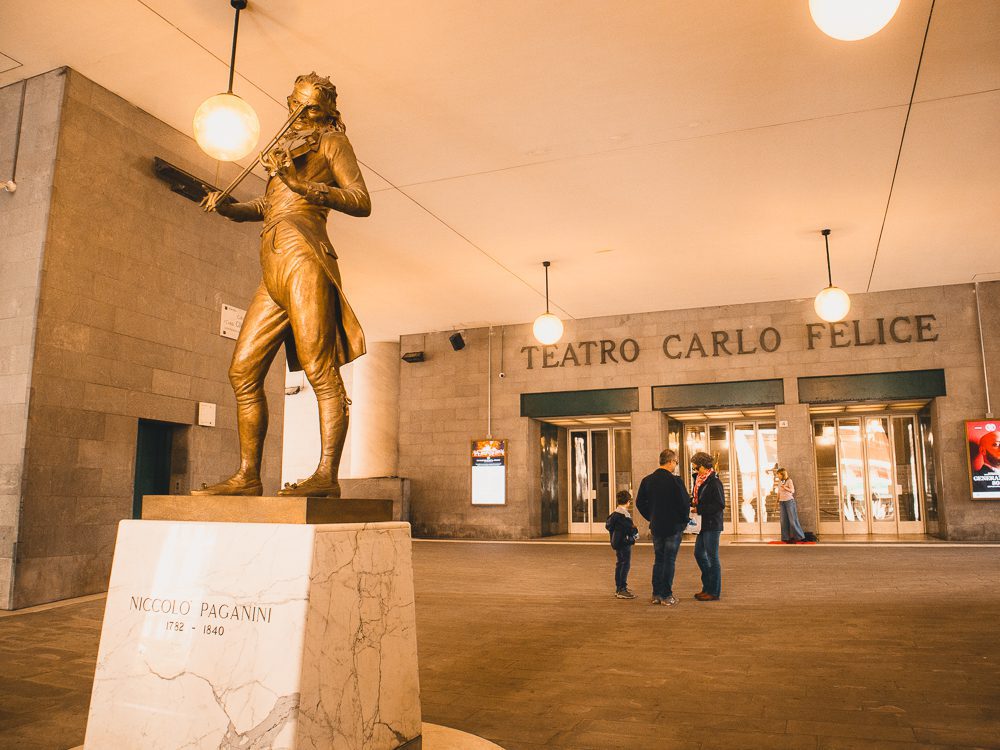
Genoa also has a rich musical tradition.
The city was the birthplace of violinist and composer Niccolò Paganini, while the Teatro Carlo Felice, beside Piazza De Ferrari, remains one of Genoa’s principal cultural venues.
Check the programme before your visit. An opera, concert or other performance can be a lovely way to experience another side of the city after a day spent exploring its palaces and historic streets.
Final Thoughts on Genoa
Genoa wasn’t a city I expected to fall for quite as much as I did.
Perhaps that’s because it doesn’t reveal itself immediately. At first, it can feel a little gritty and chaotic, particularly when compared with some of Italy’s more polished cities. But give Genoa time and start looking beyond the surface, and its character begins to emerge.
Behind seemingly ordinary façades are extraordinary palaces and hidden gardens. Narrow caruggi suddenly open into elegant piazzas. Historic shops continue traditions that have been part of the city for generations, while down at the harbour, Genoa’s connection with the sea is impossible to ignore.
For me, it was those contrasts that made the city so interesting.
I loved stepping inside the Palazzi dei Rolli, looking across the rooftops from Torre Grimaldina, disappearing into the maze of the historic centre and discovering just how much history was hiding behind Genoa’s rather understated exterior.
It is a city that rewards curiosity and, perhaps more importantly, rewards slowing down.
If you’re looking for an Italian city break filled with art, architecture, food and history, but want somewhere that still feels as though there is plenty left to discover, Genoa might surprise you too.
It certainly surprised me.
Are you planning to visit Genoa, or have you already been? Share your thoughts or questions in the comments below — I’d love to hear from you!
Planning a trip to Italy?
- Explore: Read these Italy Travel Guides.
- Stay: Find accommodation in Italy on Booking.com
- Connect: Arrange your India eSIM with Airalo.
- Enjoy: more about Italy withlocal experiences.
- Protect your trip: Compare travel insurance.
- Learn: Italian with anIntrepid Italian Course.
Save this post for later


